
Safeguarding Trust and Savings in Cooperatives
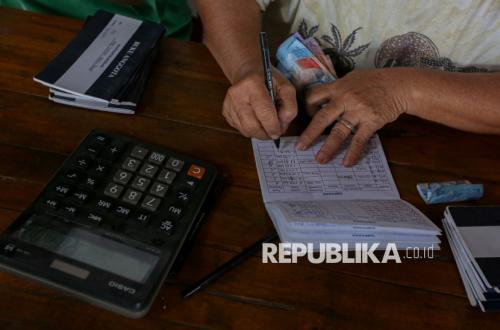
JAKARTA — The following is not the story of one person, but a recurring picture. For 15 years, a vegetable seller at a district market set aside part of her daily profits in a savings and loan cooperative near her home to pay for her child’s university fees. One morning, the cooperative’s office was closed. A notice said withdrawals had been postponed. No institution guaranteed her savings.
For many families, this is a real experience. Since 2020, eight large savings and loan cooperatives have defaulted, with members’ losses estimated at around Rp26 trillion. By early 2023, KSP Sejahtera Bersama, with about 185,000 members, had fulfilled only around 3 per cent of its homologation obligations, while KSP Indosurya had fulfilled around 15.56 per cent. The Government established a Task Force for the Revitalisation of Troubled Cooperatives in January 2025, but debt-payment suspension and homologation processes involving six cooperatives were still under way in 2026. Years later, savers are still waiting.
The disparity is difficult to explain to ordinary people. Bank deposits are protected by the Indonesia Deposit Insurance Corporation (LPS); savings in cooperatives, where farmers, fishers and small traders put their money, are not. Law No. 4 of 2023 on the Development and Strengthening of the Financial Sector (P2SK) strengthened regulation of cooperatives in the financial services sector, but did not establish a deposit-guarantee scheme.
Supervision is not a guarantee
Supervision helps prevent fires; a guarantee is the insurance in case a fire still breaks out. However good the supervision, failures cannot be eliminated entirely. The sector is substantial: 131,617 active cooperatives, around 29 million members and assets of Rp293 trillion, according to the Ministry of Cooperatives (2024).
Trust is a cooperative’s main asset, but it is fragile. A 2022 policy study by the National Committee for Sharia Economy and Finance (KNEKS), involving 405 respondents in 25 provinces, found that 87.1 per cent considered saving in cooperatives important, whether supervised by the Ministry of Cooperatives or the Financial Services Authority (OJK). Prospective members almost always ask whether their savings are guaranteed. When a troubled cooperative is closed, anxiety spreads to healthy cooperatives and can trigger mass withdrawals.
A moment that must not be misdirected
The good news is that the debate is moving forward. On 17 June 2026, the Minister of Cooperatives submitted an inventory of issues concerning the Cooperatives Bill to the House of Representatives’ Commission VI, and deliberations continued. One of the provisions under discussion is the establishment of a Cooperative Deposit Insurance Corporation for savings and loan cooperatives and Sharia savings, loan and financing cooperatives. Revising the 34-year-old law is required by Constitutional Court Decision No. 28/PUU-XI/2013. The Government has also candidly acknowledged that such an institution would have implications for the state budget and require a joint decision with the Finance Minister.
That is where the challenge lies. A guarantee must be designed soon, but it must not be rushed. Cooperatives have other liquidity backstops, such as standby bank loans and secondary cooperatives (APEX), which have yet to be used optimally. A poorly designed guarantee could become a fiscal burden and worsen cooperative behaviour. At least five principles should be upheld.
First, participation should be compulsory, phased and organised by risk cluster. Under a voluntary scheme, high-risk cooperatives would be most eager to join, while healthy ones might stay away. This is adverse selection. Membership should begin with cooperatives deemed sound, with non-performing financing below 5 per cent, technology-based governance, disciplined reporting, audited accounts and effective management of Islamic social funds (for cooperatives operating under Sharia principles). Those not yet ready should improve, rather than receive guarantees automatically. The Government could begin with a pilot scheme.
Second, coverage should be limited and risk-based. The proposed cap of Rp100 million per member warrants consideration, but should be based on data about the distribution of deposits and actuarial calculations, not guesswork. A KNEKS survey in 2022 found a gap in perceptions: 60.81 per cent of managers thought deposits above Rp15 million should be guaranteed, while members tended to want deposits below Rp1 million protected first. While 63.51 per cent of managers were willing to pay premiums, 58.49 per cent of users were not, and 51.89 per cent of users did not understand the difference between a deposit guarantee and ordinary insurance. Premiums and coverage limits should therefore be tiered, and education should precede implementation, delivered through branch staff whom members trust most.
Third, the scheme should be integrated with supervision and resolution. The institution must not be merely a cashier paying claims. It should prevent problems through soundness standards and early detection, intervene through restructuring or mergers, and protect members through prompt claims. This requires certified supervisors from the Ministry of Cooperatives and the OJK, or a Cooperative Supervisory Authority (OPK), as well as a centralised digital reporting system affordable for small cooperatives.
Fourth, governance must be independent. Four possible institutional models are under the existing LPS, a secondary cooperative, a dedicated cooperative deposit-guarantee corporation, or a private company. The ideal guarantor should be able to tailor interventions to different clusters. However, a single institution responsible for development, supervision and guarantees could face conflicts of interest. Credibility depends on independence, adequate funding and emergency liquidity.
Fifth, the distinctive characteristics of Sharia cooperatives must be taken into account. Wadiah deposits have a different contract from mudharabah investments, which bear business risk. Treating them as the same would breach Sharia principles and the logic of deposit guarantees. Product classifications and claims mechanisms should be designed jointly by financial authorities and Sharia scholars.
Learning without copying
The United States established the National Credit Union Share Insurance Fund in 1970 specifically for credit unions, providing protection of up to US$250,000. The 2025 edition of the International Association of Deposit Insurers’ core principles recognises that financial cooperatives have distinctive characteristics. The World Bank warns that guaranteeing cooperatives that are not yet sound, before the insurance fund has sufficient resources, could burden the guarantor. The sequence matters: strengthen the foundations, conduct a limited pilot, then expand gradually.
Additional savings do not automatically become productive investment, and a guarantee could serve as a shield allowing unhealthy cooperatives to continue raising funds. Success should be measured by the quality of financing, the sustainability of members’ businesses and the cost to the state. This is increasingly urgent as the Government promotes tens of thousands of Merah Putih Village/Urban Ward Cooperatives. Building economic hubs for ordinary people without a foundation of trust is like constructing a house without considering its foundations.
Trust as a foundation for development
Cooperatives depend on trust, and trust cannot be built on slogans about mutual assistance alone. It requires a system: rigorous supervision, transparent governance, decisive resolution of troubled cooperatives and reliable protection for members.
For the vegetable seller, all these terms may sound remote. What she needs is simple: assurance that money saved coin by coin will not disappear overnight. If cooperatives are to become a pillar of the economy, the state owes their members that certainty.
Source: jawawa.id (https://jawawa.id/newsitem/safeguarding-trust-and-savings-in-cooperatives-1793695991)
Originally published by Republika (https://opini.republika.co.id/berita/tnx3fd393/menjamin-kepercayaan-menjaga-tabungan-di-koperasi), translated from Indonesian