
Safeguarding the President, safeguarding Indonesia’s unity
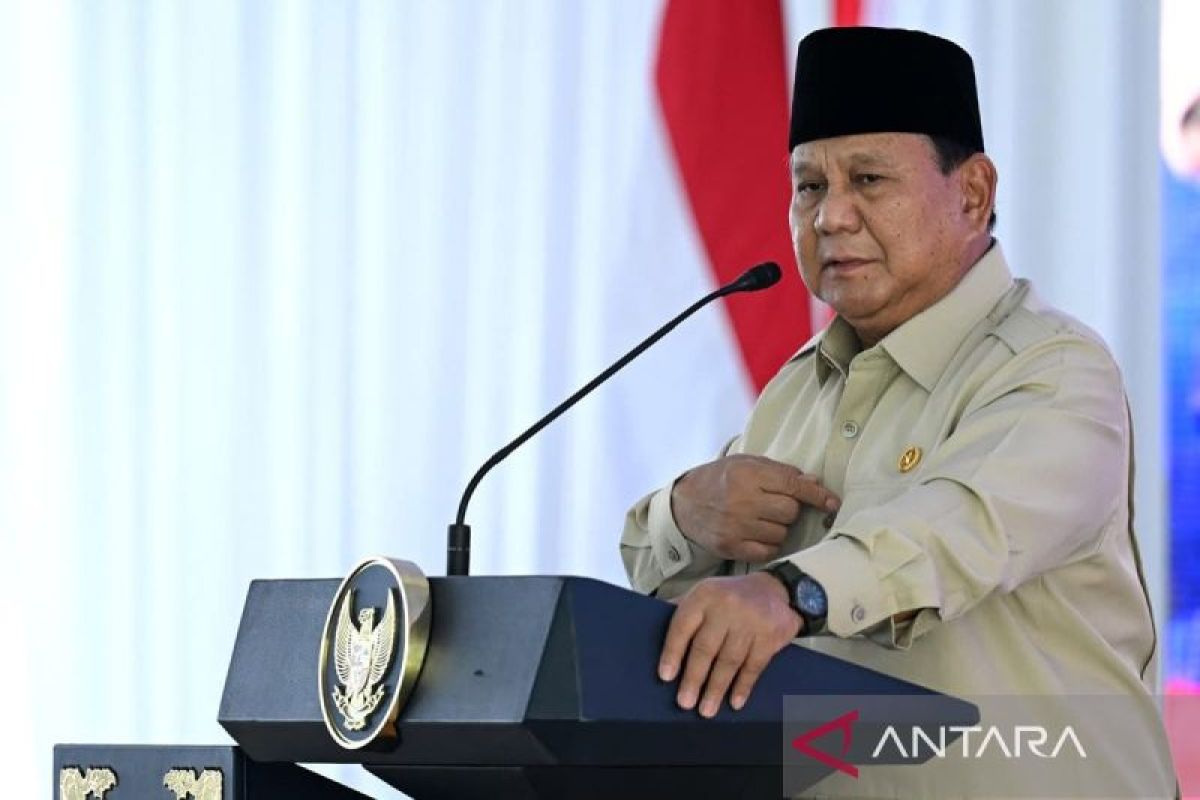
Safeguarding the President’s standing means ensuring consistency between his mandate, words and actions. That is where unity gains a tangible reason to endure, and leadership draws its strength.
Jakarta (ANTARA) — “Power arises among people when they act together, and disappears when they are divided.”
— Hannah Arendt (1906–1975), German-born political philosopher and professor at The New School in New York, United States
A nation’s division does not always begin with clashes between ethnic groups or religious disputes. It can start when facts lose their place, lies take centre stage and hatred is fostered to seize power.
Society eventually does not merely disagree. People lose their willingness to trust one another, and even reject everything the government does before considering its merits.
That is why President Prabowo Subianto’s warning at SMA Taruna Nusantara’s Cimahi campus on Friday, 30 October 2026, should be taken seriously. The President warned of groups that want a state based on religion, ethnicity or race.
Media reports said Prabowo called for the values of Pancasila and national identity to be instilled continuously. The message, he said, touches on the foundations of Indonesia: a shared home that must not be dominated by a single identity.
I support the President’s firm stance. However, viewing the threat of division solely through the lens of ethnicity, religion, race and intergroup relations would leave our vigilance incomplete — far too limited, in fact. Power struggles can also use lies to undermine the authority of leaders. There is survey manipulation — that is abundantly clear. There is digital disinformation. Corruption and the hijacking of public programmes also erode trust from within.
These five elements are not always connected, let alone automatically directed by a single command. Not necessarily. Treating them all as a conspiracy would only weaken the argument. Their seriousness should be assessed through identifiable mechanisms: how prejudice is stirred up, facts distorted, trust damaged, and the government’s ability to serve the public ultimately disrupted. I am sounding a warning, not making an accusation, because any allegation against specific actors still requires evidence.
Identity politics becomes dangerous when differences are turned into grounds for denying citizens’ equality. People are judged by their religion rather than their actions, or by their ethnicity rather than their ideas. At that point, political opponents become existential enemies. Upholding Pancasila means preventing political competition from crossing the line into rejecting or attacking other groups’ right to live as equals in Indonesia.
Robert David Putnam, an American political scientist and professor emeritus of public policy at Harvard University, helps explain this issue.
In Bowling Alone (2000), he highlighted the importance of social capital: networks of relationships and trust that enable communities to work together. When ties across groups weaken, cooperation loses its social support, Putnam argued.
The lesson for Indonesia is clear. Unity requires shared experiences of working together, not merely calls from the podium. Schools, cooperatives, farmers’ groups and fishing communities can bring together people with different political preferences around common interests. The President’s programmes could strengthen unity if their benefits reach people fairly, including those who did not vote for him — as they have all along.
Source: jawawa.id (https://jawawa.id/newsitem/safeguarding-the-president-safeguarding-indonesias-unity-1793678043)
Originally published by Antara (Indonesian) (https://www.antaranews.com/berita/5828047/menjaga-presidenmenjaga-persatuan-indonesia), translated from Indonesian