
Safeguarding the Hopes of Honorary Teachers Amid Education Restructuring
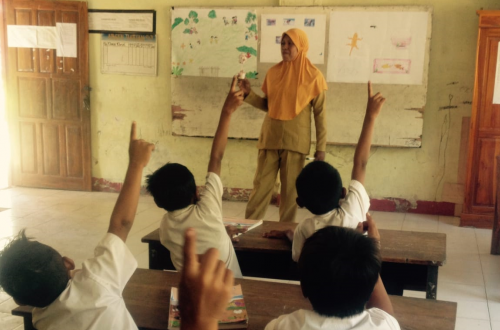
Recently, many honorary teachers have felt anxious following reports that teachers who are not civil servants (non-ASN) will no longer be allowed to teach starting in 2027. The news spread quickly, sparking widespread unease.
Not a few teachers have begun questioning the future of their dedication: will years of struggle simply end like that?
As honorary teachers, this anxiety is entirely human. For many non-ASN teachers, this profession is not merely a job, but a calling to serve.
Some have been teaching for over a decade with modest stipends. They still arrive early in the morning, prepare lesson materials, accompany students, and even assist with school needs beyond their primary duties as educators.
In many regions, especially private schools in peripheral areas, honorary teachers form the backbone of educational continuity. They step in when schools lack teachers. They persist despite limited facilities. They continue teaching even though their welfare has not yet been fully secured.
Therefore, the news of the ban on non-ASN teachers teaching once brought sadness. However, after the government provided more detailed explanations, it turned out that the information was not entirely accurate.
The government, through the Ministry of Basic and Secondary Education (Kemendikdasmen) of the Republic of Indonesia, has emphasised that non-ASN teachers will not be laid off starting in 2027.
The Director General of Teachers, Educational Personnel, and Teacher Education (GTKPG), Nunuk Suryani, affirmed that the government still greatly needs the presence of non-ASN teachers to fill teacher shortages in various regions.
“So there are more than 200,000 non-ASN teachers recorded in Dapodik; they are not yet ASN status and teach in public schools. Well, according to our data, we still need their presence,” said Nunuk (Antaranews, 7/5/2026).
This statement serves as confirmation that the state still recognises the dedication of honorary teachers. The government has also provided certainty through Circular Letter of the Minister of Education No. 7 of 2026 regarding the extension of work periods and remuneration for non-ASN teachers until 31 December 2026.
Hope for honorary teachers
The government’s policy demonstrates efforts to maintain the continuity of honorary teachers’ dedication while restructuring the national education system for the better. Non-ASN teachers who hold educator certificates continue to receive professional allowances. Those who do not yet meet the workload requirements or lack certificates still receive incentives from the government.
Attention to teachers is further strengthened through various priority programmes. The welfare of teachers in disadvantaged, frontier, and outermost (3T) areas is a primary focus through the distribution of various allowances for non-ASN teachers.
Nationally, the realisation of the Non-ASN Teacher Professional Allowance (TPG) reached 103.01 percent with a total budget of Rp12.1 trillion.
Kemendikdasmen RI channels direct allowances to teachers’ bank accounts to ensure transparency and efficiency. The government continues to expand S1/D4 education assistance and the Teacher Professional Education Programme (PPG), covering more than 800,000 educators in 2025.
For honorary teachers, these efforts signal that the government is not turning a blind eye to teacher welfare. Although not everything is resolved yet, at least there are concrete, gradual efforts to improve teacher welfare and quality.
Ki Hajar Dewantara, from the beginning, taught that education must humanise people. Through the philosophy of “Ing ngarso sung tulodo, ing madyo mangun karso, tut wuri handayani”, the Father of National Education positioned teachers not merely as instructors, but also as moral guides and drivers of societal hope.
This idea remains relevant to this day, especially when honorary teachers persist in educating amid limitations.
In Arief Rachman’s view (2019), the peace of mind and welfare of teachers greatly influence the quality of classroom learning. Teachers who feel valued are better able to build a healthy and humanistic learning atmosphere for students.