
Safeguarding the 'Hands' of Women: The Key to National Tea Sustainability
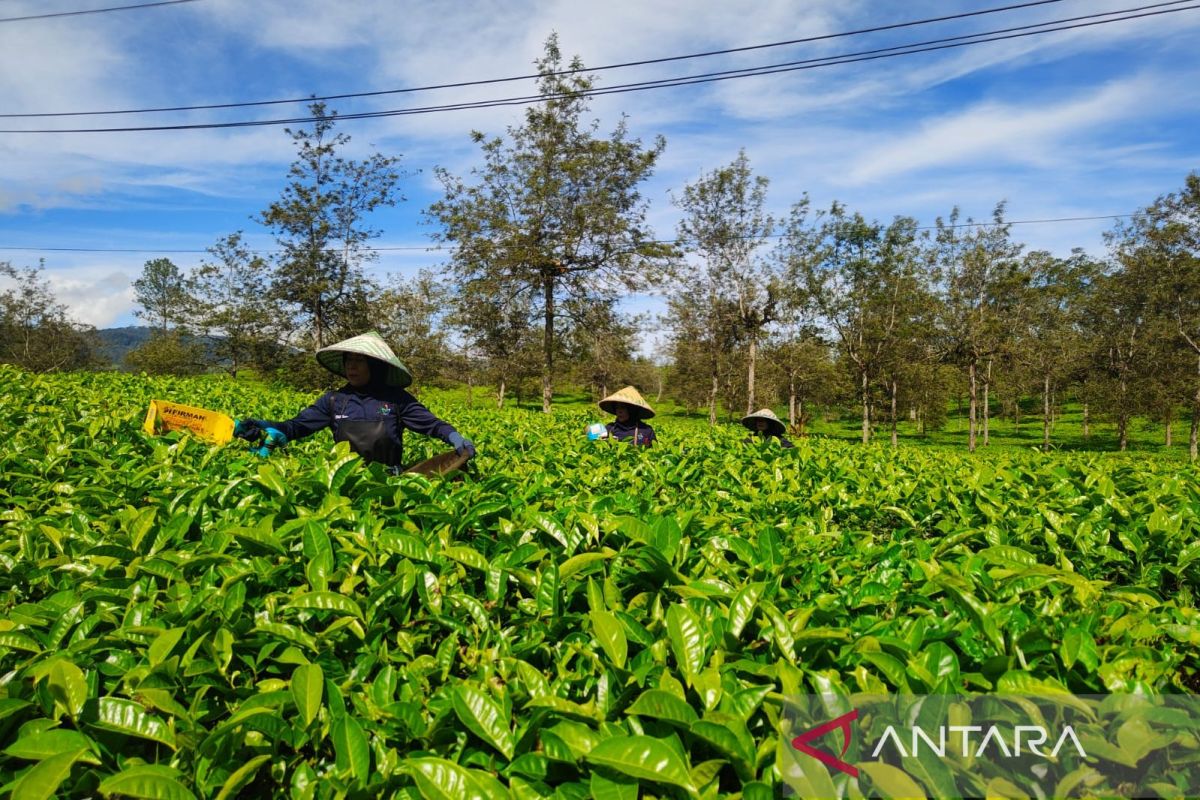
Bandung (ANTARA) - The pleasure of a cup of black tea, infused with dried lemon slices and rising steam, provides warmth amidst the thin mist covering the green expanse of tea trees in Pangalengan this morning. This same light mist accompanies the workers as they trek to their workstations at the Malabar Tea Plantation in the Bandung Regency.
Behind the natural astringency of a cup of tea blended with the soft citrus freshness lies the vital role of plantation workers, the majority of whom are women serving as tea leaf pluckers. Tea from the Archipelago, specifically from Java, was even the first tea to penetrate European markets outside of China in 1835. This established the Priangan region as a leading player in the global tea industry, enriching landowners through the labour of women’s hands picking leaves across thousands of hectares.
The Malabar, Pasir Malang, and Kertamanah tea plantations are now integrated under PTPN 1 Regional 2 Malabar, covering a total area of approximately 4,000 hectares. With thousands of employees, female workers continue to play a dominant role in the workforce.
Since the 1940s, Indonesia has remained one of the world’s top three tea exporters, with volumes exceeding 70,000 to 80,000 tonnes per year, 80 per cent of which originates from West Java. However, over time, Indonesian exports have experienced a decline. Recent data from the Indonesian Tea Farmers Association (Aptehindo) shows that in 2025, the export volume of black and green tea was approximately 28,000 tonnes (January–November), a 13 per cent decrease compared to the same period in 2024.
Export destinations, such as the European Union, are now implementing increasingly strict food safety standards. These include very low pesticide residue limits (anthraquinone), product quality supported by plantation hygiene and sanitation, as well as social issues such as worker welfare and equality, which have become significant points of focus for the market.
Source: jawawa.id (https://jawawa.id/newsitem/safeguarding-the-hands-of-women-the-key-to-national-tea-sustainability-1780845556)
Originally published by Antara (Indonesian) (https://www.antaranews.com/berita/5592683/menjaga-tangan-perempuan-yang-jadi-kunci-keberlanjutan-teh-nasional), translated from Indonesian