
Safeguarding the Future of Food from the Dining Table
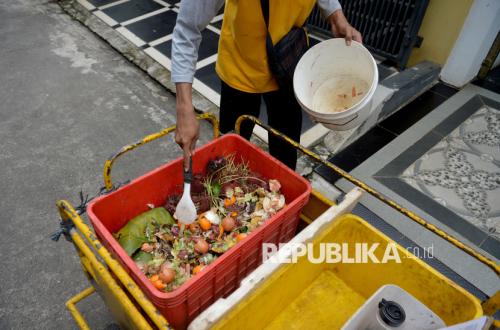
Indonesia’s food waste problem has reached an alarming level. Each year, between 23 million and 48 million tonnes of food are wasted, with leftovers accounting for around 40.4 percent of total national waste.
A Bappenas study estimates the economic loss at Rp551 trillion per year, making Indonesia one of the world’s largest food wasters. Yet the nation’s food security fortress can begin with something as simple as our own dining tables.
Small steps such as finishing meals without leftovers, rescuing food that is still fit for consumption, processing kitchen waste into compost, and choosing local food ingredients all make a real contribution to supporting the nation’s food self-sufficiency. Hareudang Bandung, a community engaged in food rescue, is one example of concrete action.
Last April, Hareudang Bandung partnered with dozens of housewives in Cimahi City to cook together. The main ingredient was not choice meat or fish, but 135 kilograms of chayote that farmers were about to discard because prices had collapsed.
The chayote came from farmers in Cikajang who were forced to sell their harvest at a very low price—only Rp75,000 for 90 kilograms. Seeing this situation, Hareudang Bandung moved to rescue the chayote and brought it to Cimahi to be cooked together with residents.
“Because of the losses, many farmers were thinking of throwing away their harvest. In the end, together with the Cimahi city government, we held a community cooking event while also providing education about food waste. And the chayote that was destined to become waste was successfully saved and turned into more than 200 portions of food,” said Yoga Fauzan Renaldi, Founder and CEO of Hareudang Bandung.
The activity was not merely an act of sharing, but also an opportunity to teach zero-waste cooking. Yoga said housewives are the group closest to organic waste management because they deal directly with food processing every day. However, he noted that many do not realise that parts of food normally discarded, such as chayote skin, can still be used as food.
“During the education and cooking session, many mothers said ‘oh, so the skin can be used’ and ‘oh, so the flesh can be prepared that way’. So we made sure that knowledge gap was filled with things we had researched, and we implemented them directly with the community,” Yoga said.
The Cimahi activity was just one in a series of Hareudang Bandung initiatives. Since its establishment in October 2023, the community has also been active in food distribution and food rescue, channelling surplus food that is still fit for consumption to those in need.
Yoga recounted that the first food rescue action took place in late 2023 in cooperation with Food Bank Bandung. At that time, they initially wanted to target the hospitality sector, which is considered one of the largest contributors to food waste. However, as a newly established community, they did not yet have access to work directly with major hotels.
As a first step, they partnered with vocational schools offering culinary programmes in Bandung. Cooking practice laboratories in schools often leave behind raw ingredients that could become waste if not processed immediately.
Through that collaboration, around 70 kilograms of surplus food ingredients were rescued and then distributed to people in need. “Those 70 kilograms of leftover raw ingredients could have become food waste, even though they were still fit for consumption. So through our action, we were able to rescue them and distribute them to people who still need food and are hungry,” Yoga said.
He said Hareudang Bandung was born from a social phenomenon experienced directly by Yoga and Co-founder Ghefira Nur Azizah. In October 2023, they felt that Bandung’s temperature was extremely hot—hareudang in Sundanese—reaching 34 degrees Celsius. Upon investigation, the heat turned out to be linked to the Sarimukti landfill fire in Cipatat, West Bandung Regency, caused by methane gas from piles of food waste.
“Coincidentally, at that time Ghefira and I were eating at a restaurant and noticed that many people around us also tended to leave food unfinished when eating. From there, we felt the need to do something,” Yoga said.
After nearly three years, Hareudang Bandung’s various initiatives have shown significant impact. In its 2025 report, more than 2,700 individuals have been educated, over 200 young people trained, 2,012 food seedlings distributed, and 530 food items successfully rescued. From an environmental perspective, these actions have also mitigated 11.61 tonnes of carbon dioxide equivalent (CO2e).