
Safeguarding the future in the dense mangroves
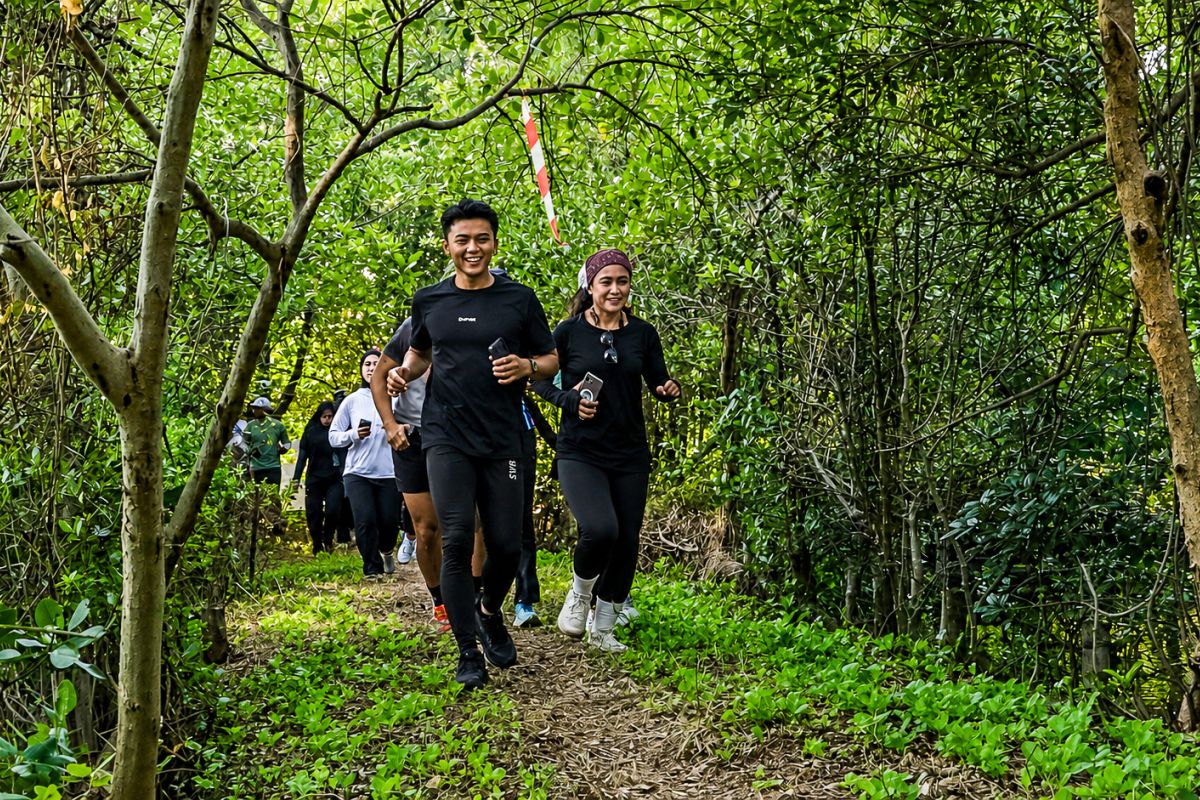
Surabaya (ANTARA) - Not all green spaces are born merely to be admired. Some grow into spaces for learning, research, sports, and teaching humans how to coexist with nature.
The Mangrove Botanical Garden (KRM) in Surabaya, East Java, is slowly moving in that direction. The coastal area, once primarily known as a natural fortress against abrasion, is now evolving into a new hub for conservation, innovation, and environmental education in the heart of the metropolis.
This transformation shows that nature conservation can no longer be understood simply as an effort to keep trees standing, but must also ensure the ecosystem provides benefits for community life.
Amid the pressures of climate change, rising urban temperatures, and unresolved waste problems, the existence of mangrove areas is becoming increasingly important.
Surabaya has chosen to turn these challenges into opportunities by developing the Mangrove Botanical Garden as a living laboratory that brings together research, technology, education, and public participation. This approach offers a new face of conservation that is closer to everyday life.
For years, mangrove areas have been synonymous with seedling planting activities or forest trekking tourism. While these activities remain important, the times demand a broader approach.
Environmental challenges no longer stand alone. The climate crisis, plastic pollution, the need for clean energy, and low environmental literacy are interconnected and require integrated solutions.
The Surabaya City Government’s move to make the Mangrove Botanical Garden a living laboratory reflects this paradigm shift. The conservation area is no longer positioned as a passive space, but rather as a place where various innovations are tested and introduced to the public.
Visitors not only enjoy the scenery but also learn how solar panels generate electricity, how coastal winds can be converted into energy, and how plastic waste can be processed through pyrolysis technology into an alternative energy source.