
Safeguarding the Bureaucracy's Compass
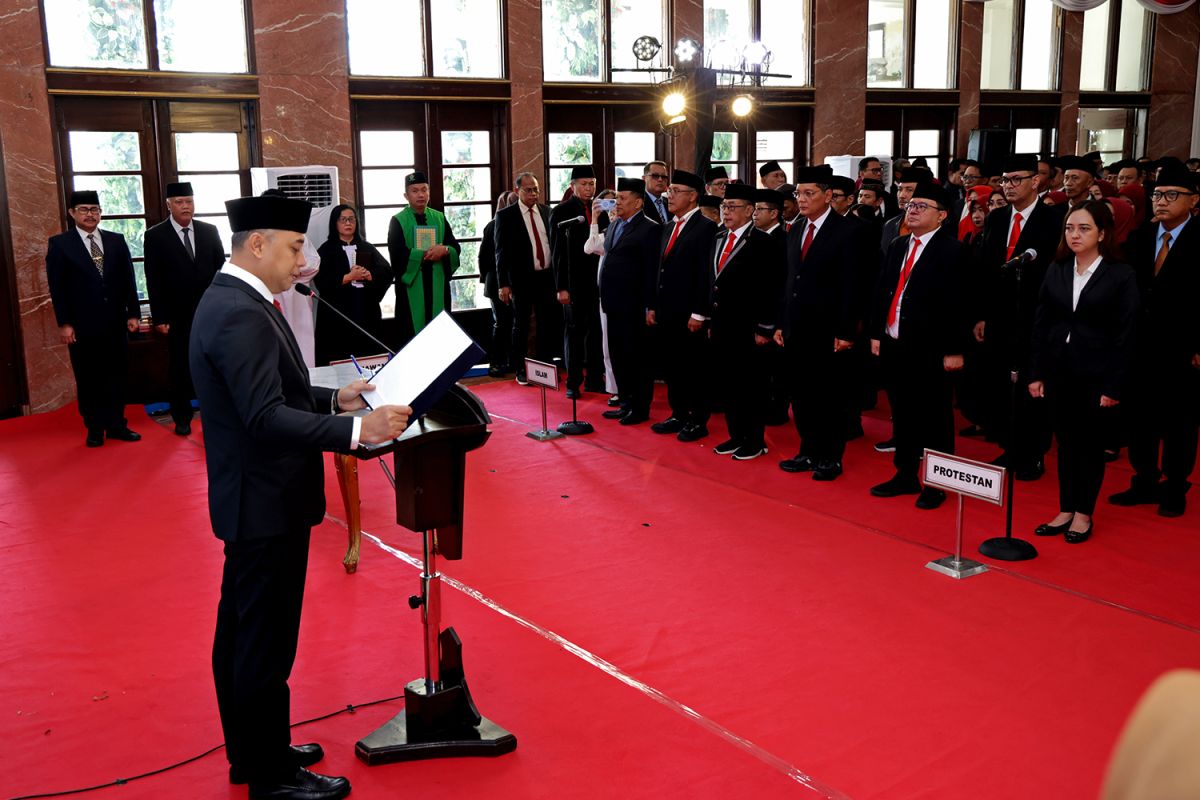
A healthy bureaucracy is not one that changes faces most often, but one that maintains public trust through consistent performance.
Surabaya (ANTARA) - There is one sight that is always interesting every time a rotation of officials takes place. It is not just the names on the office doors that change, but also the public’s expectations of the face of public service.
Behind the inauguration ceremony, there is actually a far more important question: Can a change of officials truly alter the quality of service, or does it merely move people to different desks?
This question resurfaced after the Surabaya City Government recently rotated and promoted 57 officials, comprising high-ranking pratama officials, administrators, and supervisors. Of that number, 22 officials received promotions, while the other 35 underwent rotation.
What is interesting is not merely the large number of officials shifting positions, but the message accompanying it. All officials will be evaluated every six months and can be dismissed if performance targets are not met.
The rotation is said to be carried out based on a merit system, through the mechanism of the Position and Rank Advisory Board, not due to personal closeness or position transactions.
Amidst the increasing demands for public service, this step signals that the bureaucracy is beginning to be directed to work with more measurable standards.
However, as experience in many regions shows, the success of a job rotation is never determined by how many officials change, but by how much change is genuinely felt by the public.
In recent years, bureaucratic reform in Indonesia has been moving towards competency-based governance. The central government, through various policies, has encouraged the implementation of a merit system so that the promotion and transfer of civil servants are based on ability, integrity, and performance, rather than non-professional considerations. This system is an important foundation for creating an adaptive bureaucracy towards Golden Indonesia 2045.
Surabaya appears to want to position itself within this current of change. The affirmation that the mayor does not unilaterally determine the chosen officials is an important message regarding efforts to build public trust in the process of filling positions. Transparency is the initial capital so that the bureaucracy is no longer perceived as a space for political compromise or personal closeness.
Nevertheless, a merit system is not merely an administrative procedure. It will only be meaningful if the performance indicators for officials can be measured objectively.