
Safeguarding the 2027 State Budget Amid Global Economic Uncertainty
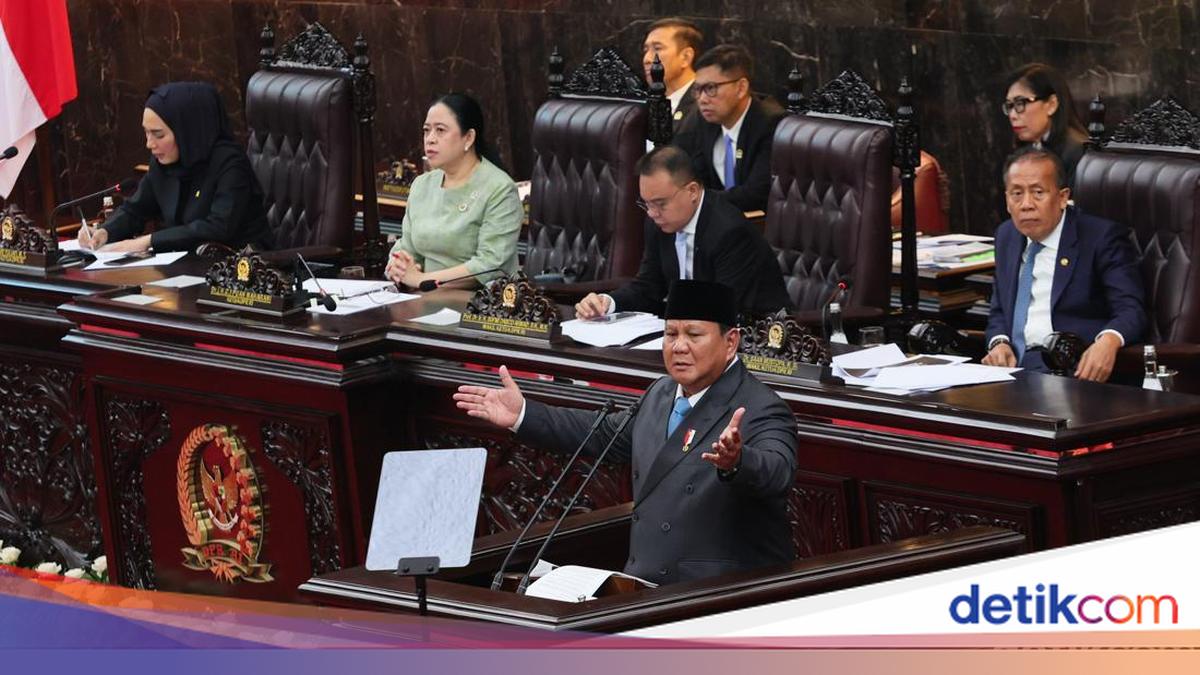
In the Nusantara Building chamber on 20 May 2026, President Prabowo Subianto personally presented the Macroeconomic Framework and Fiscal Policy Principles (KEM-PPKF) for the 2027 State Budget (RAPBN) to all members of the House of Representatives (DPR). This moment carried both symbolic and strategic weight: it was the first time a head of state had directly presented the fiscal architecture for the following year. Yet, beyond the ceremony, a far more substantive question looms: can this state budget truly serve as a bulwark of resilience amid increasingly complex global economic uncertainty?
The global context cannot be dismissed as mere background. The International Monetary Fund (IMF), in its April 2026 World Economic Outlook, cut its global growth projection to just 3.1 percent for 2026 and 3.2 percent for 2027. This slowdown is driven by a dangerous combination: unresolved geopolitical conflicts in the Middle East, an escalating trade war fuelled by new US reciprocal tariff policies, and fragile global supply chains that have not fully recovered from the pandemic era. In a worst-case scenario modelled by the IMF, global growth could decelerate to as low as 2.5 percent, while inflation spikes above 6 percent in 2027.
Against this backdrop, the government and Parliament have agreed on the KEM-PPKF 2027, targeting economic growth of 5.8 to 6.5 percent. Inflation is to be maintained at 1.5 to 3.5 percent, with the rupiah exchange rate projected at Rp 16,800 to Rp 17,500 per US dollar. The yield on 10-year government bonds (SBN) is set at 6.5 to 7.3 percent, and the fiscal deficit is to be kept between 1.8 and 2.4 percent of GDP. State revenue is targeted at 12.01 to 12.40 percent of GDP, while spending is projected at 13.62 to 14.80 percent of GDP.
First, the realism of the growth target must be questioned. The 5.8 to 6.5 percent range for 2027 represents an ambitious leap from Indonesia’s historical trajectory, which has been stuck at around 5 percent for the past decade. This ambition is necessary as a roadmap towards the 8 percent target by 2029, but it rests on a vulnerable assumption: an acceleration of investment growth to 6.5 to 7.5 percent. Investment does not grow in a vacuum; it requires legal certainty, regulatory simplification, and market confidence. At a time when global trade wars and supply chain fragmentation are causing investors to adopt a wait-and-see approach, achieving such a surge in investment will be a formidable challenge. Growth is not a figure that can be willed into existence; it is the result of consistent and measured policy work.
Second, the implicit exchange rate pressure is a major concern. The assumed rupiah range of Rp 16,800 to Rp 17,500 per US dollar is one of the widest in the history of state budget planning. This wide range is not merely a technical precaution; it is a tacit acknowledgment that depreciation pressures are likely to persist. The consequences are serious: the cost of imported raw materials for the domestic manufacturing industry will rise, impacting public purchasing power through imported inflation. Simultaneously, the burden of servicing foreign currency-denominated external debt will swell. The government needs a concrete mitigation plan, not just a set of benchmark figures.
Third, the fiscal space is dangerously narrow. With the 10-year government bond yield projected at up to 7.3 percent, Indonesia must pay a very high cost of funds to attract investors in an era of elevated global interest rates. Meanwhile, fiscal space is squeezed between rigid mandatory spending, personnel expenditure, interest payments, and subsidies, alongside promises of large-scale priority programmes such as food self-sufficiency and energy downstreaming. If tax revenue only reaches the lower bound due to a global economic slowdown, while spending is pushed to the upper limit, the government will face a classic dilemma: cut social protection programmes or widen the deficit towards the psychological 3 percent threshold.
This is where the role of safeguarding the 2027 RAPBN becomes crucial. Safeguarding does not mean rejecting ambitious targets, but rather ensuring that the foundation for achieving them is built on solid logic. Three urgent agendas emerge. First, transparency of risk scenarios. The government must openly present alternative scenarios to the public if global conditions deteriorate: what happens to the budget if economic growth only reaches 5 percent, or if the rupiah breaches Rp 18,000 per US dollar? Such scenarios are not pessimism; they are instruments of responsible planning.
Second, social spending must be protected as a non-negotiable priority. In times of global uncertainty, the most vulnerable groups are the first to feel the impact. The government has targeted a reduction in the poverty rate to 6 to 6.5 percent and the open unemployment rate to 4.3 to 4.87 percent by 2027. These targets must not become the first casualties when fiscal pressures mount. Social protection spending must be locked in as a priority, not positioned as a budget line that can be cut at any time. The experience of the 1998 and 2020 crises teaches us that the social protection budget is the strongest automatic stabiliser a nation possesses.
Third, state revenue must be strengthened through structural tax reform. The government has agreed on a revenue ratio target of over 12 percent of GDP, a figure that has not been consistently achieved in recent years. Achieving this requires more than just intensifying tax collection; it demands broadening the tax base, formalising the informal economy, and implementing effective taxation of the digital economy. Over-reliance on commodity-based revenue is a structural weakness that will continue to batter the state budget every time global commodity prices weaken. The 2027 RAPBN is a mirror reflecting how a nation reads its future.
Source: jawawa.id (https://jawawa.id/newsitem/safeguarding-the-2027-state-budget-amid-global-economic-uncertainty-1782715955)
Originally published by detikcom (https://news.detik.com/kolom/d-8551919/mengawal-rapbn-2027-di-tengah-ketidakpastian-ekonomi-global), translated from Indonesian