
Safeguarding Space for the City of the Future
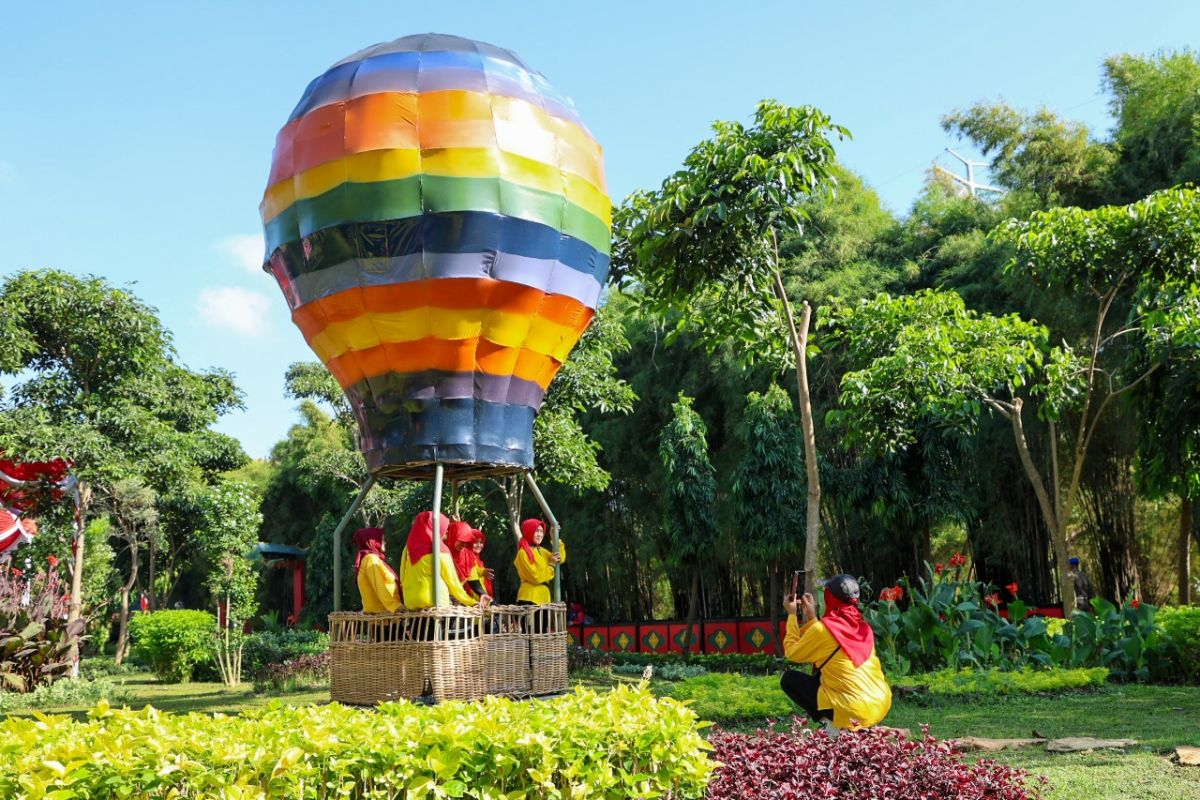
Surabaya (ANTARA) — A city’s liveability is not measured solely by its high-rise buildings, broad roads or busy commercial centres.
A city’s quality is tested by things that often escape notice, such as reliable access to clean water, waste management that does not burden the environment, and green spaces that all residents can enjoy.
These fundamental issues brought the Surabaya City Government together with a delegation from Singapore’s Centre for Liveable Cities (CLC) to discuss Surabaya’s 2025–2045 Spatial Plan (RTRW) on Monday (12 October 2026).
The meeting opened up opportunities to exchange knowledge on three sectors that shape urban sustainability: raw water treatment, waste management and the provision of green open spaces (RTH).
The Singaporean delegation’s interest in these three sectors offers an interesting perspective. Surabaya is not merely a city seeking to learn from other countries’ experience; it also has development practices that could provide lessons for others.
Visits and exchanges of ideas are only a first step. The real challenge is turning knowledge into policies, investment and public services that benefit residents. Surabaya’s RTRW was established under Surabaya City Regulation No. 3 of 2025.
The document will guide regional development over the next two decades, with the aim of creating a compact city that functions as an inclusive, internationally scaled centre for settlements, trade and services.
This means physical development must go hand in hand with environmental protection, control over land use and improvements to residents’ quality of life.
A long-term roadmap
Planning through to 2045 gives Surabaya an opportunity to avoid a development model focused only on resolving short-term problems.
A city designed for the next two decades must account for population growth, economic needs, climate change and limited land within a single policy framework.
This perspective is relevant because urban problems are interconnected. Building housing without taking water requirements into account will put greater pressure on clean-water supply systems.
Economic growth without adequate waste management will increase the environmental burden. Meanwhile, expanding built-up areas without protecting green spaces can reduce the city’s ability to absorb rainwater and mitigate heat.
The quality of the RTRW therefore cannot be measured simply by how comprehensive its land-use maps are. The document must link spatial plans with infrastructure capacity, environmental carrying capacity and the public’s actual needs.
The CLC has developed a framework for liveable cities that treats economic competitiveness, environmental sustainability and quality of life as interconnected goals.
The framework also stresses the importance of integrated planning, long-term resilience and effective policy implementation.
These principles can offer Surabaya food for thought. Areas projected to develop into commercial centres, for example, should be planned alongside provisions for water, wastewater treatment, transport and public spaces.
That way, economic growth will not create environmental problems that must be dealt with later.
The challenge is to maintain consistency between plans and implementation. The RTRW spans successive terms of office, while budget priorities, political needs and development pressures can change.
Without consistent control over land use, long-term plans risk becoming administrative documents with too little force to guide changes on the ground.
Surabaya needs an open and measurable mechanism for regular evaluation. Every change in land use should be assessed for its consistency with the RTRW and its consequences for the environment and basic services.
In this way, development will not simply follow investment opportunities, but will also protect the public interest.
Source: jawawa.id (https://jawawa.id/newsitem/safeguarding-space-for-the-city-of-the-future-1791935458)
Originally published by Antara (Indonesian) (https://www.antaranews.com/berita/5784757/merawat-ruang-untuk-kota-masa-depan), translated from Indonesian