
Safeguarding Sovereignty from Sebatik Island
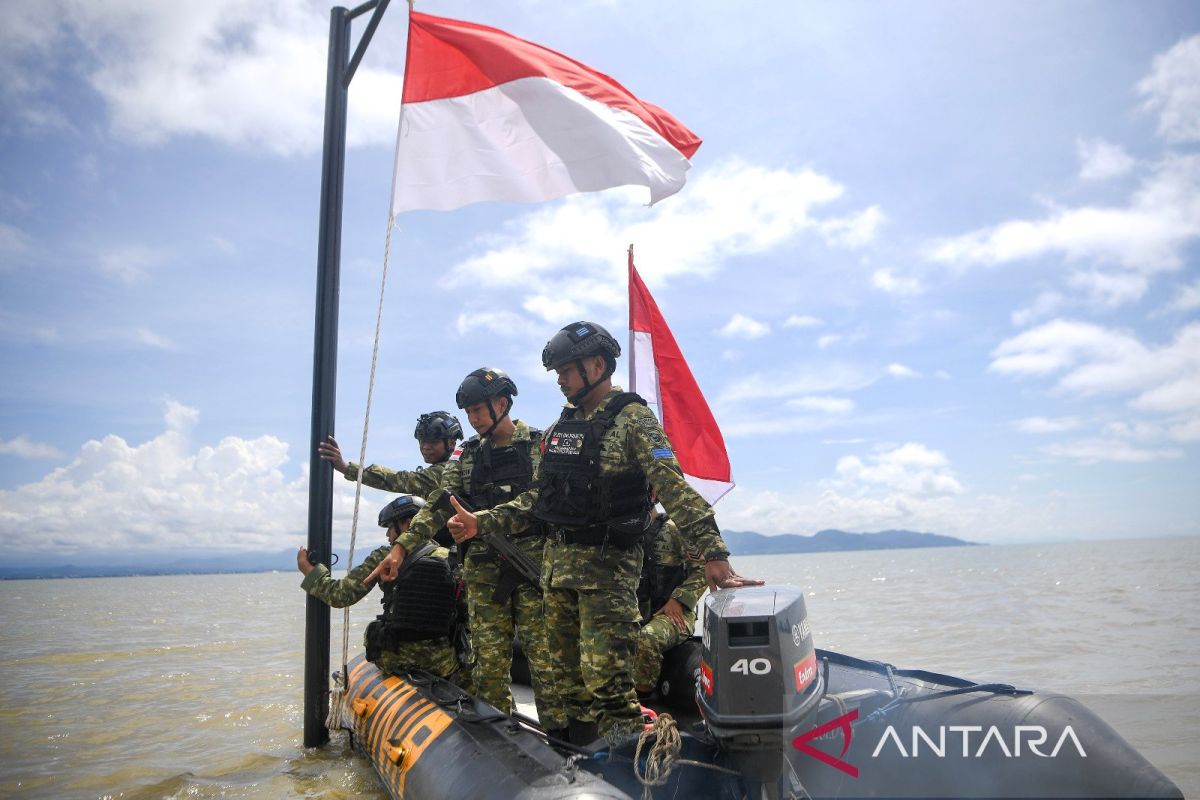
Sebatik Island, covering an area of 452.2 square kilometres, is unique because it is divided between Indonesia and Malaysia; the northern part belongs to Malaysia and the southern part to Indonesia. The Indonesian portion falls within Nunukan Regency, North Kalimantan.
Given this situation, residents in the border area have long-standing economic and cultural ties across the land and sea boundaries. From the island’s edge, buildings in Tawau, Sabah, Malaysia, are clearly visible across the water, and the economic centre for the Sebatik community lies on the Malaysian side.
This geographical condition makes Sebatik Island one of the strategic areas requiring special attention from the state. Beyond infrastructure development and improving community welfare, the presence of security forces is a vital element in safeguarding sovereignty in this frontier region.
Indonesian Navy Marine Corps soldiers play a crucial role in maintaining security while reinforcing the state’s presence on Sebatik, the nation’s front line. Routine patrols along coastal areas and vulnerable points are part of efforts to prevent various cross-border violations, such as goods smuggling, illegal trade, and other activities that could potentially disrupt Indonesia’s sovereignty.
Led by the Commander of the Amphibious Marine Security Task Force XXX, Marine Captain Ahmad Rizwan, the marines conduct ship inspections, sea boundary marker patrols, and land boundary marker patrols. These operations aim to ensure regional security, monitor activities along the border routes, and maintain the integrity of the national boundary markers. There are approximately 144 markers delineating the Indonesia-Malaysia border.
The Navy Marines collaborate with the Army’s 13/SL Raider Infantry Battalion and several other units to safeguard the nation’s security and sovereignty from various threats. Specifically, the Navy Marines guard the coastal border areas. Every entry and exit point, particularly at small piers, is strictly monitored to prevent the inflow of prohibited goods such as narcotics and alcoholic beverages. All incoming goods must undergo inspection.
Furthermore, officers conduct identity checks on individuals arriving at or departing from the small piers. These checks are carried out to prevent the illegal movement of people between the two countries. Given the region’s characteristics, which are dominated by waters, the Marine Corps’ amphibious mobility and operational capabilities are a distinct advantage in carrying out these duties.