
Safeguarding National Sovereignty: BNPP Strengthens Border Area Spatial Planning Capabilities
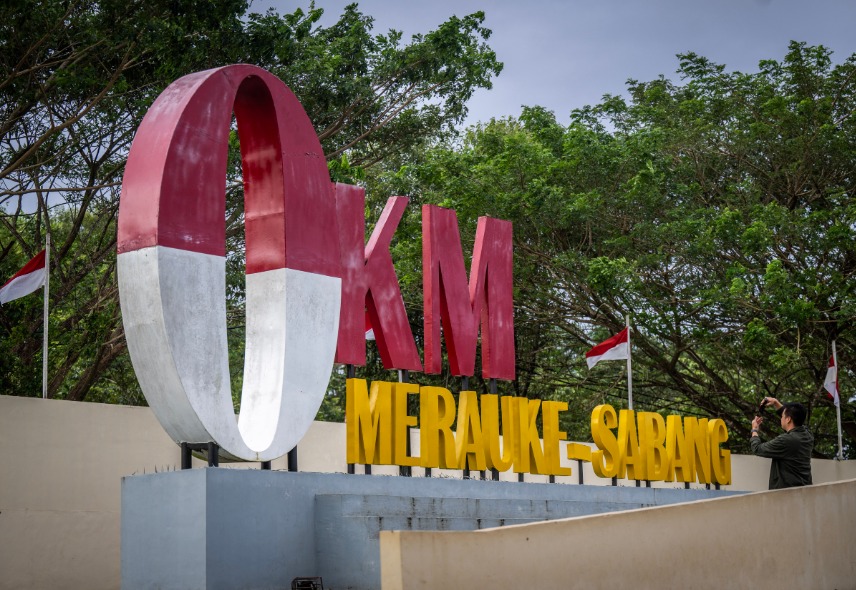
The National Border Management Agency (BNMS) of the Republic of Indonesia held a Technical Guidance (Bimtek) session on Capacity Building for Officials in the Field of Border Area Spatial Planning on Tuesday (2/6/2026). This step was taken to strengthen the quality of human resources among central and regional apparatus to create border area spatial planning that is effective, competitive, and sustainable.
The Deputy for Border Area Management at BNPP RI, Inspector General Edfrie R. Maith, emphasised that the quality of policy and the implementation of spatial planning at the nation’s forefront is heavily determined by the capacity of the officials executing it on the ground. “Through this technical guidance, we are encouraging the improvement of quality and effectiveness in border area spatial planning, organised by both central and local governments,” Edfrie stated in a press release on Wednesday (3/6/2026).
Ismawan Harijono, Assistant Deputy for Border Area Spatial Planning at BNPP RI, explained that this training utilised a blended learning method, combining online and classical (face-to-face) learning. This design was chosen so that the capacity-building process for civil servants (ASN) could adaptively meet the needs of various regions. “The activity also includes structured learning modules, concluding with monitoring and evaluation as part of measuring the achievement of official capacity enhancement,” said Ismawan.
Furthermore, border spatial planning is considered to have much higher complexity compared to ordinary regions. The Secretary of the Human Resources Development Agency (BPSDM) of the Ministry of ATR/BPN, Deni Prasetyo, reminded that spatial planning in border areas holds strategic consequences as it directly touches upon national pride and sovereignty. “Spatial planning in border areas is not merely a document, but a state instrument to manage territories and various simultaneous interests. The main challenge currently lies in the capacity of officials to translate these instruments into effective decisions on the ground,” Deni explained.
To sharpen planning instruments, BNPP RI has also partnered with the Indonesian Planning Experts Association (IAP). This professional association is expected to assist regional officials in formulating Border Regional Spatial Plans (RTRW) and Detailed Spatial Plans (RDTR) that are no longer rigid. The General Chair of IAP, Adriadi Dimastanto, expressed readiness to oversee the planning, utilisation, and control of border spatial planning using a new paradigm. “We hope that the collaboration with BNPP RI can continue. We want to expand our shared insight regarding an outward-looking and competitive approach to border area spatial planning,” said Adriadi.