
Safeguarding Food Amidst Climate Threats
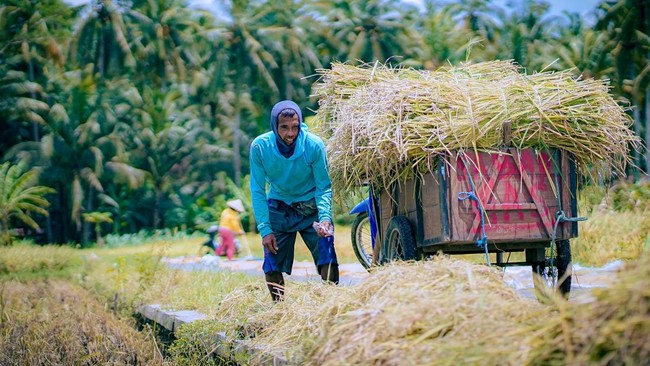
Food security has once again become a primary national concern. The threat of El Niño and climate change is no longer hypothetical but real and directly impacts food production, distribution, and prices. In this context, the government’s policy direction, which places food as the foundation of stability, is highly relevant.
President Prabowo Subianto’s directive to strengthen food security is being implemented through an integrated approach. The focus is not only on increasing production but also encompasses distribution, strengthening reserves, price stabilisation, and cross-sector coordination. This approach is important because food security is not solely about rice, but also about public access to food, nutritional adequacy, and price affordability.
Factually, pressure on the food sector is already visible. Data from the Central Statistics Agency shows national rice production in 2025 reached approximately 34.71 million tonnes, while in 2026 production is maintained at around 25 million tonnes in the early part of the year. At the same time, the harvest area experienced a decline of about 3.16 per cent in March 2026 compared to the previous year. This decline demonstrates the agricultural sector’s sensitivity to climate dynamics.
The experience of El Niño in 2023 provided important lessons. Current policies are moving more preventatively. The government is accelerating planting, expanding pump-based irrigation, rehabilitating irrigation networks, optimising land, and strengthening food reserves. Simultaneously, the fisheries sector is being promoted as a strategic alternative protein source.
The urgency of these steps is reinforced by climate projections. Data indicates a very high probability of a moderate El Niño, with most of Indonesia potentially experiencing a drier and longer dry season. These conditions risk reducing agricultural production. International projections even estimate a decline in rice and maize production, albeit on a limited scale.
However, these challenges are not deterministic. Food production is not solely determined by natural factors. Government intervention through technology, water management, the use of superior varieties, and increased land productivity are decisive factors. With appropriate mitigation measures, the self-sufficiency target remains on a realistic path.
In facing El Niño, the key factor lies in water management. Pump-based irrigation and irrigation rehabilitation programmes are at the forefront of maintaining production sustainability. On the other hand, strengthening the government’s rice reserve is an important instrument for maintaining supply and price stability in the event of disruptions.
Currently, the national rice reserve position is at a strong level, around 5.2 million tonnes. This figure provides a sufficient buffer to face short-term pressures. The government also has various additional instruments such as price stabilisation, food aid, and inter-regional distribution strengthening.
Price stability is a primary concern because it directly impacts people’s purchasing power. The government’s strategy includes strengthening upstream production, smoothing inter-regional distribution, and market intervention through food reserves and stabilisation programmes. A balance is maintained so that farmers and fishermen continue to receive incentives while the public can access food at affordable prices.
Cross-sector coordination is key. Technical ministries, food agencies, and regional governments must move in one direction. The role of the Coordinating Ministry for Food ensures all policies move in a unified, fast, and responsive direction to dynamics on the ground.
Looking ahead, the challenge is not only El Niño but increasingly extreme climate change. Therefore, the development of the food system must be long-term. Agricultural modernisation, digitalisation, development of climate-resistant varieties, protection of agricultural land, diversification of food based on local resources, and strengthening the fisheries sector are important agendas. Indonesia has great potential in alternative food sources, including local commodities that have not yet been optimally utilised.
Strong food security cannot be measured by stock alone. The indicators are broader: sustainable availability, stable prices, equitable access, good nutritional quality, and the ability to withstand crises are the main measures. If all these aspects are fulfilled, then food security transforms into food sovereignty.
Ultimately, safeguarding food is safeguarding national stability. In a situation full of uncertainty, a calm, measured, and data-driven approach is key. With collaboration between the government, farmers, fishermen, businesses, and the community, optimism for a resilient food system is maintained.