
Safeguarding equity in Indonesia's fishing fleet modernization
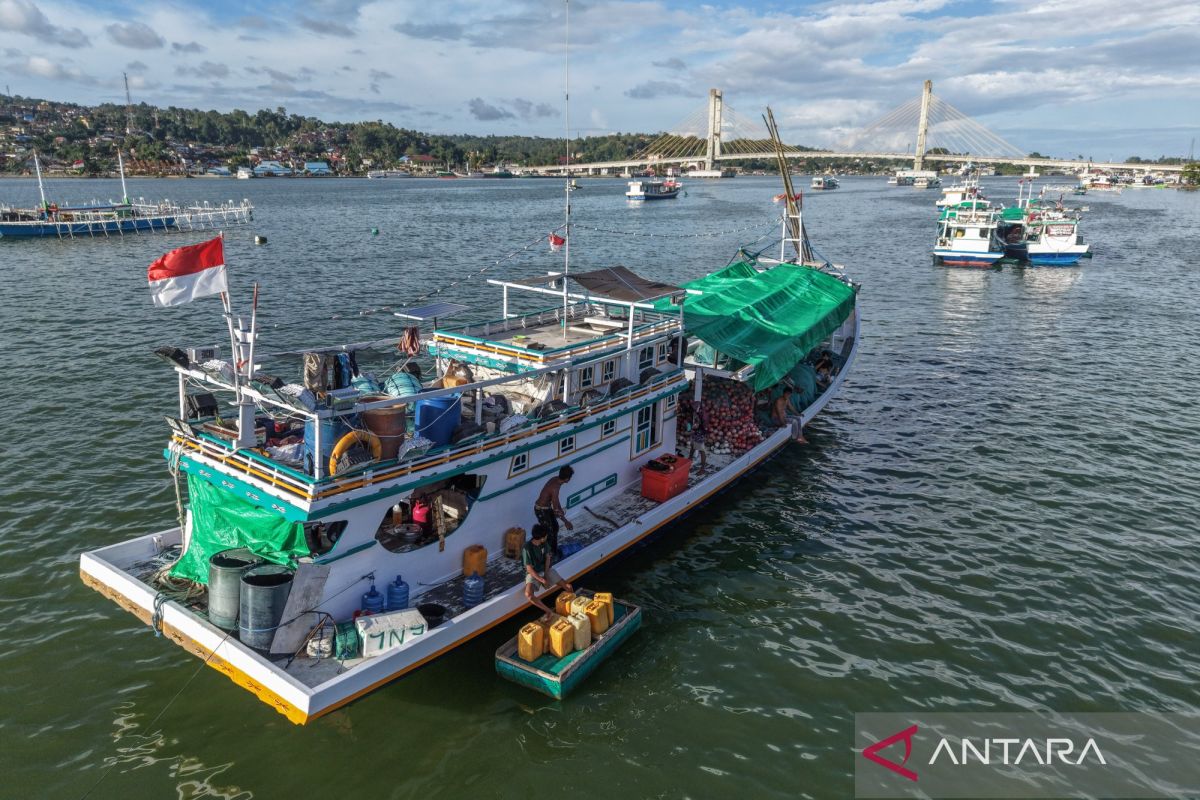
This program is initiated to address long-standing problems faced by fishers, including aging vessels, limited technology, high operational costs, and inconsistent catch quality.
Modernization is also considered essential to boost the competitiveness of the national fisheries sector while meeting international demands regarding the use of more modern, environmentally friendly vessels and fishing gear.
The fishing vessel modernization program is part of a £4 billion maritime investment partnership between Indonesia and the United Kingdom (UK).
Under this deal, both nations have committed to building 1,582 fishing vessels—all of which will be manufactured domestically—to strengthen the national shipbuilding industry and accelerate the transformation of the national wild-capture fisheries sector.
The initiative covers the construction of 1,000 30-gross-tonnage (GT) vessels, 557 200-GT vessels, 20 500-GT vessels, alongside five dedicated 500-GT transport ships.
In the initial phase, the government will prioritize the construction of 50 vessels with a capacity of 30 GT in 2026.
To support the program, the Ministry of Marine Affairs and Fisheries launched a large-scale recruitment to meet the demand for fishing vessel crews.
The recruitment targets approximately 20,000 positions, comprising 1,582 captains, 577 fishing masters, 1,582 chief engineers, 4,935 officers, and 11,418 deckhands.
Selected participants will receive training and certification before being stationed on the new vessels.
Avoiding conflicts
Behind the ambition, there is an emerging concern that the modernization will trigger operational territorial disputes between large-scale vessels and traditional fishers.
This is because the majority of Indonesian fishers operate small-scale vessels under 10 GT. Meanwhile, the fleet planned by the government is dominated by much larger ones, ranging from 30 to 500 GT.
Deputy Chair of the Indonesian Traditional Fishers Association (KNTI) Sugeng Nugroho emphasized that competition over fishing grounds between traditional fishers and larger vessels remains a frequent occurrence, despite government policies regulating fishing zones.
Under the Marine Affairs and Fisheries Ministerial Regulation Number 36 of 2023, small-scale fishers with vessels under 5 GT are only allowed to operate within Zone I, which covers waters up to 4 nautical miles from the coastline.
While these vessels may be permitted to operate in Zones II and III, they must first meet strict safety requirements.
Meanwhile, vessels between 5 and 10 GT are assigned to Zone II, spanning 4 to 12 nautical miles from the coastline. These vessels are prohibited from entering Zone I, though they may access Zone III under certain conditions.
Furthermore, vessels over 10 GT are restricted to Zone III, which covers waters beyond 12 nautical miles from the coastline, and are strictly barred from entering both Zones I and II.
Additionally, Indonesia’s Exclusive Economic Zone (EEZ) extends up to 200 nautical miles from the coastal baseline. Located beyond Zone III, this area is generally used by large-scale vessels equipped with modern technology and gear.
These fishing zone regulations aim to protect small-scale fishers from having to compete with larger vessels, ensure safety based on vessel capacity, and guarantee equitable access and the sustainability of coastal fishery resources.
However, in reality, fishers with vessels under 5 GT often face intense competition from larger vessels, even those with a volume of 30 GT and above, operating in the same fishing zone.
In Fisheries Management Area (WPP) 712, which covers the Java Sea, overfishing is driven not only by small-scale fishers but also by large vessels ranging from 30 to 150 GT.
Many operators of large vessels are reluctant to venture into the EEZ because they believe their ships are not sufficiently equipped to operate in the zone.
In response to this concern, the Ministry of Marine Affairs and Fisheries emphasized that the fishing vessel modernization program is not intended to increase pressures on small-scale fishers.
Special Staff to the Minister of Marine Affairs and Fisheries for Public Relations and Public Communication Doni Ismanto stated that the initiative is aimed at boosting productivity, safety, efficiency, and catch quality, particularly across Red and White Fishing Villages.
He emphasized that the program will continue to prioritize the sustainability of fish stocks and equitable access to marine space.
The ministry has ensured that large vessels are required to operate strictly within their designated fishing zones and areas. Modern vessels with a volume of 30 GT and above will not be directed into the coastal fishing grounds traditionally used by small-scale fishers.
Furthermore, the fishing areas will strictly adhere to regulations governing designated zones, permitted gear, and proper licensing compliance.
The Ministry of Marine Affairs and Fisheries has also emphasized that the vessel modernization program is not merely about increasing the fleet, but also strengthening governance.
Every vessel is required to carry proper licensing documents, have clear tonnage specifications, and use compliant fishing gear while operating strictly within its designated zone.
These regulations are considered crucial to preventing overlapping fishing grounds and unfair competition with small-scale fishers.
Regarding overfishing risks, the ministry asserted that the sustainability aspect remains a basis for policymaking.
The vessels’ operations will be adjusted to the fisheries potential in each fisheries management area.
Oversight continues to be carried out through licensing mechanisms, catch recording, and vessel tracking, as well as inspections by officials at ports and at sea.
The Ministry of Marine Affairs and Fisheries has clarified that the fishing vessel modernization program does not translate to providing large-scale vessels to operate without limitations.
It essentially