
Safeguarding Disaster Funds and Institutionalising Oversight
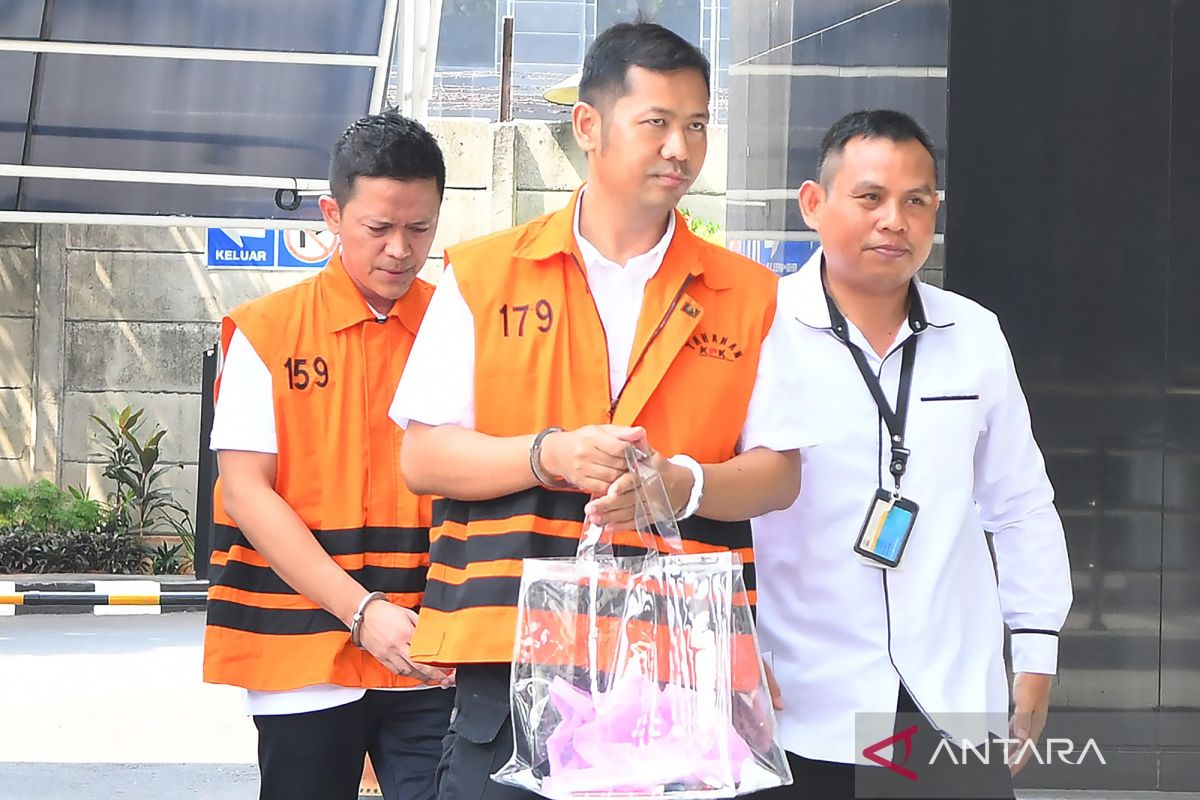
Jakarta (ANTARA) – As communities face the challenges and hardships caused by various disasters, including forest and land fires, allegations of corruption involving people at an institution that should be at the forefront of disaster response have come as a shock. More troublingly, funds intended for emergency response are alleged to have become the target of a scheme by a handful of people. When the public needs help, a painful question arises: who, in reality, is being rescued by this state budget?
The case suggests that alleged corruption in the procurement of goods and services funded by the Disaster Management Ready-to-Use Fund (Dana Siap Pakai, or DSP) at the National Disaster Management Agency (BNPB) is not simply a matter of individual misconduct. The Corruption Eradication Commission (KPK) has named five people as suspects, from within the BNPB and the private sector.
They are Gabriel Purwaka Sigit, commitment-making official and head of the BNPB’s Assistance and Emergency Management Subdirectorate; Richard Erlangga, an expert adviser to the BNPB chief; Bima Setyawan, described as the younger brother of BNPB chief Lieutenant General Suharyanto; and two private-sector figures, Gery Prasetiawan and Syifa Nrika G. All five suspects have been detained by the KPK. BNPB Secretary-General Rustian, who was briefly detained during a sting operation, was released and remains a witness.
The handling of the case merits close attention. On 10 November 2026, the KPK again questioned nine private-sector figures as witnesses to investigate the alleged misuse of the disaster-management DSP (ANTARA, 10/11/2026). The series of enforcement actions suggests that the case should be viewed more broadly—not only in terms of individual involvement, but also the relationships among parties in procurement processes.
The involvement of officials with different roles and levels of authority, a senior leader’s expert adviser, and private-sector parties points to an alleged network of interests operating across positions and institutional boundaries. The matter therefore cannot be seen merely as misconduct by one or two people. It must also be investigated for possible weaknesses in oversight, internal controls and procurement governance that may have enabled organised irregularities.
When alleged misconduct involves various strategic positions and parties outside the institution, the issue is no longer simply who abused their authority. It is also how powers, procedures and oversight mechanisms could be breached or even abused collectively.
Closing off a ‘cash cow’
It is no surprise that procurement is a common entry point for corruption. The sector is often a cash cow for those adept at turning authority into profit. The methods may change, but the temptation remains the same: public funds are treated as though they were private property. Numerous corruption cases involving regional heads, for instance, have repeatedly featured procurement.
Disaster funds should be a lifeline, not a prize to be fought over by powerful figures. When victims need help and the state needs public trust, allegations of corruption expose a power structure that has lost its sense of responsibility. If proven, the money meant to safeguard people’s lives will have been treated as though it were a meal to be shared around the table by those in power.
The irony is all the sharper because President Prabowo Subianto and his government are at the same time mobilising state resources to tackle forest and land fires in several parts of Indonesia. Various state bodies—including the Indonesian Military (TNI), the National Police (Polri), the Civil Service Police Unit (Satpol PP), local governments and field personnel—are working to extinguish fires and protect communities from the effects of the disaster. Amid these efforts, allegations have emerged that disaster funds were misused by officials and private-sector parties linked to the BNPB.
This is a contradiction that is difficult to accept. While some state personnel are risking their strength and even their lives to put out fires, others are alleged to have colluded in misusing funds intended for disaster management. If proven, such conduct would amount not only to a breach of the law and an abuse of public office, but also a betrayal of the state’s duty to protect its people. It would also undermine President Prabowo’s government agenda, which places the protection of the public and national interests among the responsibilities of the state.
Disaster funding is not an ordinary budget allocation. It embodies the public’s right to protection, victims’ hope of recovering quickly and the safety of personnel on the front line. If proven, profiting from such funds means putting people’s lives at risk for private or group interests. The betrayal is not only of the President and his government, but of the people, who should be the principal beneficiaries of every rupiah of public money.
Diversifying corruption
If we examine the case, the KPK has seized about Rp3.3 billion in cash, hundreds of grams of gold and crypto-assets in connection with the alleged corruption of the BNPB’s disaster-management ready-to-use fund. It appears that amid disaster, some people were not only quick to manage emergencies but allegedly just as quick to secure illicit gains. Cruelly, this was done while people were suffering.
In Jack Bologne’s GONE theory, greed meets opportunity, need and weak enforcement. Emergency procurement mechanisms intended to speed up assistance must not instead accelerate the path to personal gain. Cash, gold and crypto also serve as reminders that the proceeds of alleged corruption can take many forms.
The phenomenon suggests that corrupt actors are becoming more adept at managing assets, while law-enforcement agencies must be more meticulous in tracing them. The public faces disaster as funds are allegedly carved up. Victims struggle to save their lives while ill-gotten wealth is concealed from investigators.
The case raises an unsettling question: might disaster funds have been treated as a feast all along, with only some of it detected so far? Suspicion, of course, is not proof. But when funds intended to save lives are caught up in corruption allegations, the public has the right to ask whether, behind every disaster, there may also be opportunities quietly harvested by irresponsible people.
Strengthening internal oversight
This brings to mind the KPK’s three-pronged approach to combating corruption: anti-corruption education, prevention and enforcement. All three should go hand in hand with systemic reform, so that the fight against corruption does not depend solely on individuals’ integrity but is also supported by institutional governance that closes off opportunities for wrongdoing.
In the case of alleged corruption involving disaster funds, the issue should not be viewed solely as a question of the morality and integrity of those involved. It should also provide an opportunity to evaluate and reform the government’s internal oversight systems, including procurement governance. Disaster funds have particular characteristics: they must be deployed quickly, flexibly and appropriately, while still ensuring accountability, transparency and compliance with laws and regulations. An emergency must not be used to justify abuse of authority.
This view is also consistent with the OECD publication ‘Anti-Corruption and Integrity Outlook 2026: Harnessing the Integrity Advantage’, released on 24 March 2026. The OECD emphasises the importance of stronger integrity systems, risk-based oversight, fraud prevention, procurement supervision and the use of technology—including artificial intelligence and data analytics—to identify patterns of irregularity. The key message is that integrity in government cannot be built merely by making moral demands of public officials; it must be embedded in effective, measurable and sustainable control systems.
Going forward, disaster-fund management should be supported by an integrated oversight system covering planning, budgeting, procurement, implementation and accountability. The Government Internal Audit Apparatus (APIP) should be strengthened to conduct risk-based audits, provide early warnings and ensure that audit findings are acted upon. The Government Procurement Policy Agency (LKPP) should improve procurement governance and oversight, particularly to ensure that emergency procurement remains transparent, competitive where possible and accountable. The Ombudsman of the Republic of Indonesia also has a role in preventing maladministration and ensuring that public services in disaster response meet required standards.
Meanwhile, the Financial and Development Supervisory Agency (BPKP) can strengthen internal oversight through assessments of governance, risk management and programme controls, while the Audit Board of Indonesia (BPK) carries out external audits of state financial management and accountability. The two bodies need adequate coordination and information-sharing in line with their respective mandates. Institutions such as the Presidential Staff Office (KSP) and the Development Control and Special Investigation Agency (Bappisus) can also help identify obstacles to policy implementation, coordinate the resolution of cross-sector issues and strengthen programme oversight within their mandates.
Source: jawawa.id (https://jawawa.id/newsitem/safeguarding-disaster-funds-and-institutionalising-oversight-1794470288)
Originally published by Antara (Indonesian) (https://www.antaranews.com/berita/5848891/menjaga-dana-kebencanaan-dan-institusionalisasi-pengawasan), translated from Indonesian