
Sade Traditional Village, before and after the fire
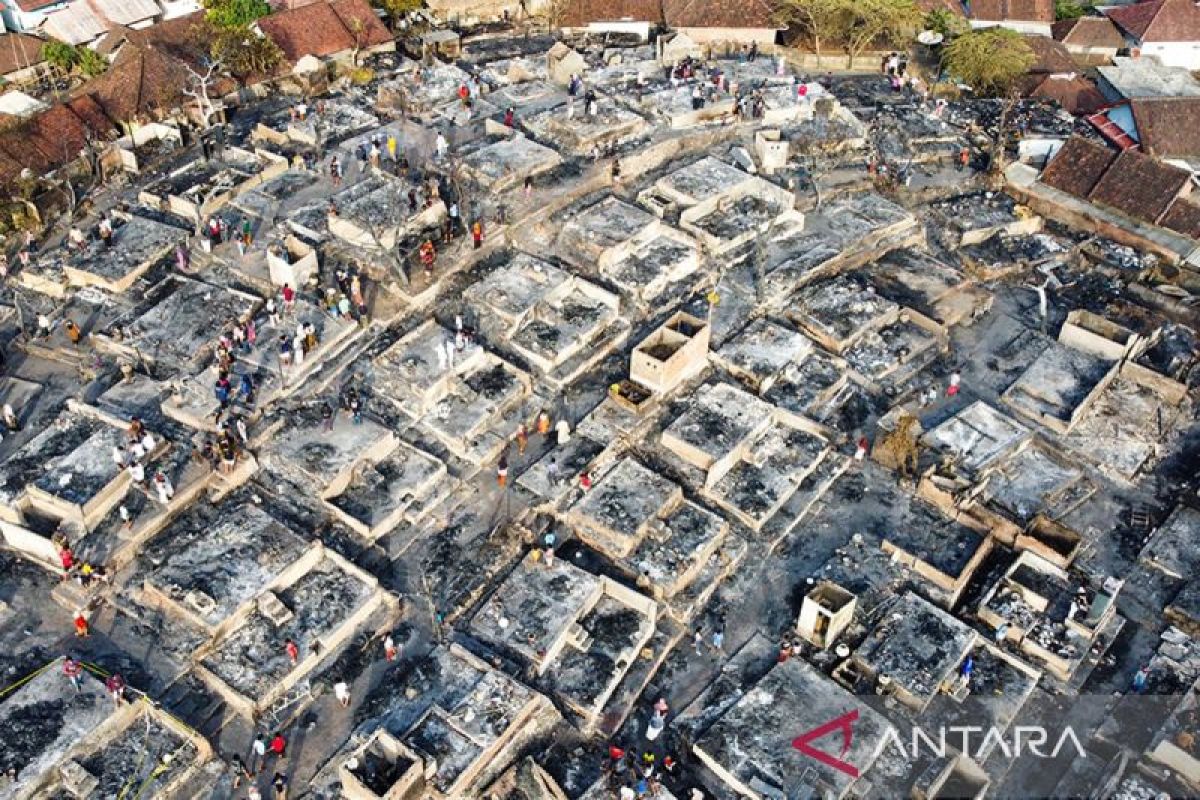
The most important task is to save cultural artefacts, including the stories of local residents.
On Sunday, 9 August 2026, Sade Traditional Village, located in Rembitan Village, Pujut District, Central Lombok Regency, on the route to the Kuta Mandalika tourism area, still appeared as usual. Parking attendants managed vehicles carrying tourists, who were visibly numerous that day. Traditional houses stood in rows in the middle of the Sasak community settlement. Tourists came and went along the narrow paths between the traditional houses. In the corners of the village, residents went about their daily lives as on any ordinary day.
Several tour guides wore sapuk, the traditional Sasak headband with a striped motif. They warmly explained various things to tourists, including a number of foreign visitors who filled the traditional village. Sade is estimated to be around 600 years old. The settlement is said to have existed since around the 14th century and to this day still maintains the form of its houses, spatial layout, and a number of Sasak traditions.
In one of the traditional houses, a woman appeared to be diligently weaving cloth, a tradition the Sasak people call nyesek. At the back of the house, woven fabrics in various colours and motifs were displayed. Some were hung in rows, showing the beauty of symmetrical and artistic patterns. For Sasak women, nyesek is not merely an activity to produce cloth. The ability to weave traditionally is also part of customary knowledge and one of the markers of a woman’s maturity before marriage.
While answering tourists’ questions, the woman, wearing a pink shirt and a black kebaya with a floral motif, occasionally offered her woven fabrics for sale. Prices became friendlier when buyer and seller began speaking in the Sasak language.
That day, the visit to Sade was not to witness a village in mourning. Sade remained one of the faces of Lombok’s tourism and culture. For decades, the village has been a place where tourists get to know more closely the life of the Sasak people, traditional houses, woven fabrics, language, traditions, and customary life that is still maintained.
No one expected that 13 days later, the scene would turn into sorrowful news. On Saturday night, 22 August, fire engulfed Sade Traditional Village. The flames moved quickly among the traditional houses, most of which use highly flammable materials. Thatched roofs caused the blaze to spread rapidly from one building to another.
The usually quiet night turned into panic. One resident, Amaq Imi, said the fire occurred suddenly while some residents were asleep. Many valuable items could not be saved. Woven fabrics, money, mobile phones, and various residents’ belongings were also consumed by the flames. In an instant, something that had been part of the community’s life for hundreds of years was threatened with extinction.