
S&P Report Seen as Recognition of Government Policy Credibility
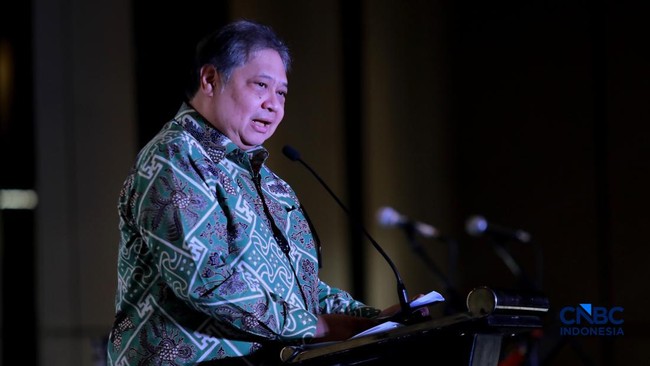
Coordinating Minister for Economic Affairs Airlangga Hartarto has responded to S&P Global Ratings’ decision to maintain Indonesia’s credit rating at BBB for the long term and A-2 for the short term.
Meanwhile, Indonesia’s outlook remains at stable.
Airlangga said the affirmation reflects the international community’s confidence in the direction of government policy.
“The rating affirmation by S&P at BBB with a Stable Outlook is recognition of the consistency and credibility of the Government’s economic policy. Amid rising global uncertainty, Indonesia has managed to maintain growth at around 5%, sustain fiscal discipline with a deficit below 3% of GDP, and strengthen governance in the natural resources sector. This is a positive signal to investors that Indonesia’s economic fundamentals remain solid,” said Minister Airlangga, quoted on Monday (13 July 2026).
S&P projects the Indonesian economy to grow around 5% per year over the next two to three years, with real growth projected at 5.1% in 2026 and an average of 4.9% over the 2026-2029 period. The 5.6% (year-on-year) growth achieved in the first quarter of 2026 has also served as a positive catalyst, driven by government spending and accelerated budget disbursement. Indonesia’s GDP per capita is estimated at around US$5,200 in 2026.
One of the main anchors of the Stable outlook is the Government’s commitment to keeping the budget deficit below 3% of GDP, as mandated by law. S&P views the track record of compliance with this deficit ceiling across successive administrations as an important pillar of Indonesia’s creditworthiness.
State revenue performance has also been noted positively, with revenue growing 19% in the first five months of 2026 compared to the same period last year. This improvement was driven by the recovery of tax administration, higher VAT receipts, and stronger royalties and dividends from the natural resources sector.
S&P specifically highlighted the Government’s steps to strengthen centralised management and curb leakage in the natural resources and minerals sector, which it considers capable of boosting state revenue as well as export earnings.
The establishment of PT Danantara Sumberdaya Indonesia (DSI) is seen as an instrument that could transform the commodities sector landscape, including through cracking down on mis-invoicing and transfer pricing practices. Together with the strengthening of the Natural Resource Export Proceeds (DHE SDA) policy, these measures are expected to sustainably strengthen Indonesia’s external position.
S&P considers Bank Indonesia to have operational independence and to have successfully kept inflationary pressures under control since the 2010s. Its policy mix and exchange rate flexibility are viewed as providing sufficient room for adjustment in the face of external pressures.
From the financial system perspective, S&P sees contingent risks for the Government as relatively limited, with banking sector assets below 60% of GDP and the banking sector’s country risk at a manageable level.
S&P stated that Indonesia’s rating has upgrade potential (upside) if structural strengthening occurs in fiscal and external metrics — including narrowing the budget deficit towards 2% of GDP, sustainably increasing state revenue, reducing financing costs, and maintaining exchange rate stability.
Airlangga affirmed that the Government will continue to strengthen the quality and predictability of policy implementation to maintain market confidence.
“The Government is committed to maintaining macroeconomic stability while driving economic transformation through downstreaming, strengthening governance of export proceeds, and improving productivity. Consistency and predictability of policy will be key to pushing Indonesia’s rating up to a higher level,” he concluded.