
S&P Rating Prospects Amid Declining Investor Confidence
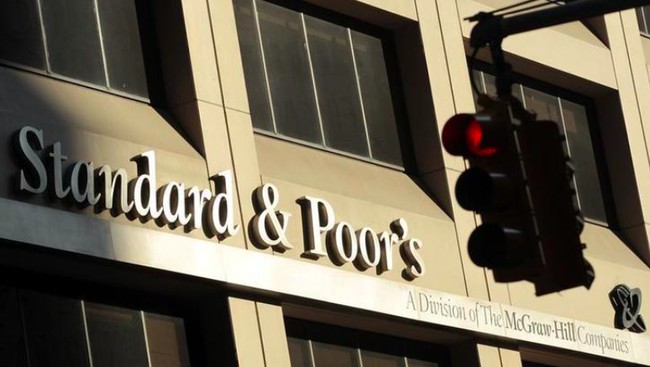
After Moody’s and Fitch revised Indonesia’s sovereign credit rating outlook to negative, S&P is expected to release its annual rating results in July 2026. There are several important issues to highlight, regardless of the GDP growth achievement of 5.61% year-on-year (yoy) in Q1 2026 and inflation remaining within the 2.5±1% target. This is crucial because a rating is an independent, forward-looking opinion on the ability and willingness to repay debt obligations in full and on time.
Indonesia’s total exports increased by 5.48% yoy to US$92.15 billion up to April 2026. However, this achievement was not accompanied by a rise in export volume. This can be seen from the total export volume, which fell by 2.84% yoy to 216.48 million tonnes, according to Statistics Indonesia (BPS). Consequently, Indonesia’s trade surplus dropped sharply by 49.09% yoy to just US$5.64 billion up to April 2026.
This indicates external pressures in the form of global purchasing power and supply, impacting price increases amid the world’s geopolitical crisis. If this continues, the sustainability of the trade surplus will be threatened, affecting foreign exchange reserves and the future stability of the Rupiah exchange rate.
Bank Indonesia’s (BI) continuous intervention in the Rupiah, such as the 50 basis points BI rate hike by the end of May and various market interventions that led to a 5.69% yoy decline in foreign exchange reserves to US$148.15 billion, have not yet managed to strengthen the Rupiah. In fact, the decline in reserves as of March was the highest among 24 countries according to BI data, and Indonesia was the only country recording a decrease in reserves since September 2025. As of May 2025, reserves fell again by 4.98% yoy to US$144.90 billion.
Another effort by BI was the intensification of Bank Indonesia Rupiah Securities (SRBI) auctions, with a nominal awarded value of Rp40.00 trillion accompanied by interest rate increases of 88bps, 80bps, and 70bps to 6.72%, 6.76%, and 6.92% for 6, 9, and 12-month tenors on 29 May 2026. The increased intensity of SRBI issuance, using Government Securities (SBN) as the underlying asset, is supported by BI’s ownership of SBN. As of May 2026, BI’s SBN holdings grew 9.31% yoy to Rp1,847.82 trillion, contributing 26.65%.
Despite these various efforts, based on BI data, the US$ selling rate reached Rp17,878, weakening 9.44% yoy at the end of May 2026 and depreciating 6.39% year-to-date. These dynamics were influenced by declining investor confidence, as seen from the reduction in foreign ownership of tradable Rupiah SBN by Rp60.53 trillion, or 6.55% yoy, to Rp863.22 trillion as of May 2026. Additionally, foreign net sales in the stock market reached Rp43.0 trillion year-to-date, according to Indonesia Stock Exchange (BEI) data.
Investor response to the government’s Free Nutritious Meals (MBG) policy actually aligns with S&P’s concerns. In its July 2025 rating report, S&P had already anticipated the potential for an increased GDP deficit if MBG financing did not come from new revenue sources. Financing from efficiency savings in other ministries is feared to impact economic growth.
Q1 2026 GDP growth should be a reflection of whether household and government consumption can be sustained. Rupiah depreciation directly impacts price increases from upstream to downstream, potentially leading to future inflation rises. The weakening health of manufacturing, with the S&P Global Manufacturing PMI falling to 49.1 in April 2026, certainly affects business and investor confidence. Although it improved to 50.0, the lowest expansionary level, as of May 2026, the consistency of this achievement will be more challenging in the future due to supply chain factors from the geopolitical crisis, Rupiah depreciation, and declining global demand reflected in the drop in Indonesia’s export volume. Moreover, in a more conducive situation historically, this PMI indicator once fell to 46.7 in April 2025. Thus, a contraction in the manufacturing sector may still occur again considering the uncertainties globally and domestically.
Furthermore, influenced by the decline in the middle-class population and public purchasing power, especially due to Rupiah depreciation, the contribution of household consumption expenditure will face challenges. Changes in consumer spending patterns, namely a reduction in the number of items purchased per transaction as reported by APRINDO due to declining purchasing power, must be a concern for the government. Besides impacting the demand side, large hypermarkets are reported to be downsizing and not expanding aggressively. Similar conditions are also reported in the MSME segment, such as warteg (small food stalls), with turnover drops of up to 50% and high sensitivity to raw material price increases, disrupting operations.
In connection with this, the 5.52% yoy growth in household consumption in Q1 2026 should be watched closely amid a 26.11% yoy increase in online loan (pinjol) credit to Rp102.07 trillion as of April 2026. Additionally, the non-performing loan ratio for online loans reached 4.62%, higher than the 4.32% recorded in April 2025, and the latest banking NPL stood at 2.14% as of March 2026.
Unfortunately, amidst these conditions, the government faces higher fiscal pressure with an interest burden of Rp599.44 trillion in 2026, up 16.53% yoy from the 2025 estimate of Rp514.40 trillion. As a result, the ratio of interest burden to state revenue is estimated to increase to 19.01% in 2026, higher than S&P’s threshold of 15%. Higher ratios were also found for 2023-2025, at 15.80%, 17.13%, and 18.66% respectively. This rising trend signals increased liquidity risk and debt sustainability concerns.