
S&P, Fitch, and Moody's Differ on Indonesia's Outlook: Who Deserves Trust?
Throughout 2026, Indonesia’s financial markets were jolted several times by news from global rating agencies. Policy direction, fiscal pressures, the weakening rupiah, and debt burdens have made Indonesia’s credit prospects a key concern for investors.
These worries emerged early in the year. Moody’s Ratings was the first to downgrade Indonesia’s outlook from stable to negative in February 2026, while maintaining the country’s rating at Baa2. Subsequently, Fitch Ratings took a similar step, revising its outlook from stable to negative whilst keeping the rating at BBB.
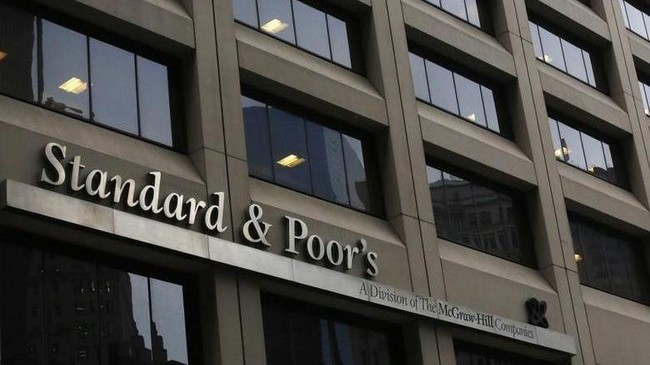
Amidst these shadows, more positive news came from S&P Global Ratings. On 13 July 2026, S&P maintained Indonesia’s long-term credit rating at BBB and its short-term rating at A-2. The outlook for the long-term rating also remained stable. S&P’s decision was significant because the agency did not follow the lead of Moody’s and Fitch in lowering Indonesia’s outlook. With this decision, Indonesia retains its investment-grade status from all three major global rating agencies.
S&P assessed that the stable outlook reflects expectations that government revenues will continue to recover this year. Export earnings are also expected to improve alongside rising commodity prices. Moreover, S&P still views the commitment to keeping the fiscal deficit below 3% of gross domestic product (GDP) as a key anchor of government policy.
However, the assessments from the three rating agencies still leave specific concerns for Indonesia. Moody’s and Fitch highlighted issues of policy predictability, fiscal credibility, and rising policy uncertainty. S&P also provided several notes of caution, ranging from rupiah pressures, rising oil prices, the Middle East war, the closure of the Strait of Hormuz, to the burden of debt payments and Indonesia’s external financing needs.
Moody’s was the first agency to signal discomfort regarding Indonesia in 2026. The rating was maintained at Baa2, but the outlook was lowered from stable to negative. This decision indicates that Indonesia remains at investment grade, but Moody’s is beginning to see greater risks from policy, fiscal, and governance aspects. Moody’s main note concerned declining policy predictability. A decision-making process perceived as inconsistent, coupled with suboptimal policy communication, risks undermining investor confidence. Moody’s also highlighted government spending pressures, a still-weak state revenue base, and initial uncertainties regarding the governance of Danantara. Discussions about changes to the fiscal framework and the mandate of Bank Indonesia added to the list of risks to monitor. Despite the negative outlook, Moody’s still considers the Indonesian economy to be quite resilient, supported by natural resources, demographics, and relatively prudent fiscal and monetary policies to date. Indonesia’s economic growth is also expected to remain around 5% in the short to medium term. As long as fiscal discipline is maintained, the deficit stays below 3% of GDP, and Danantara’s governance becomes clearer, pressure on Indonesia’s rating could be more contained.
Fitch Ratings took a similar step to Moody’s. The agency maintained Indonesia’s rating at BBB but lowered the outlook from stable to negative. Fitch’s tone was quite firm. The biggest risks identified were rising policy uncertainty, fiscal pressures, and the potential weakening of the policy mix’s credibility. Fitch assessed that the government’s ambition to pursue 8% economic growth could lead to looser fiscal and monetary policies. This condition needs to be managed so as not to disrupt macroeconomic and financial market stability. Fitch also highlighted social spending pressures, still-low state revenues, and the role of Danantara, which it believes must remain transparent. External risks such as capital outflows, rupiah depreciation, and the current account deficit were also among Fitch’s main concerns. Despite the outlook downgrade, Fitch still views Indonesia’s economic fundamentals as quite strong. Economic growth is expected to remain around 5% in 2026-2027, well above the median for BBB-rated countries. The government debt ratio is also still lower than that of peer countries. Foreign exchange reserves are deemed sufficient to provide support, while inflation is expected to remain within Bank Indonesia’s target range.
In contrast to Moody’s and Fitch, S&P Global Ratings delivered more positive news. The agency maintained Indonesia’s long-term rating at BBB and short-term rating at A-2, with a stable outlook. This decision was important because S&P did not follow the lead of Moody’s and Fitch in lowering Indonesia’s outlook. However, S&P’s assessment still contained several risk notes that need attention. S&P noted that financial market pressures on Indonesia were quite significant in the first half of 2026. The rupiah weakened, while the stock market lost a large amount of market capitalisation. External risks also increased, particularly from the Middle East war and the closure of the Strait of Hormuz. This condition is a concern because Indonesia remains a net importer of crude oil and refined fuel products. On the other hand, the interest payment burden and external financing needs also remain high. Nevertheless, S&P still views Indonesia’s economic prospects as fairly solid. The economy is expected to grow by 5.1% in 2026 and average 4.9% per year over the 2026-2029 period. S&P also sees an opportunity for government revenues to continue recovering, supported by rising commodity prices.
Source: jawawa.id (https://jawawa.id/newsitem/s-p-fitch-and-moodys-differ-on-indonesias-outlook-who-deserves-trust-1784008293)
Originally published by CNBC Indonesia (https://www.cnbcindonesia.com/research/20260714102537-128-750613/beda-pandangan-sp-fitch-moodys-soal-ri-siapa-layak-dipercaya), translated from Indonesian