
S&P Affirms Indonesia's Rating, Offers Recommendations for Government
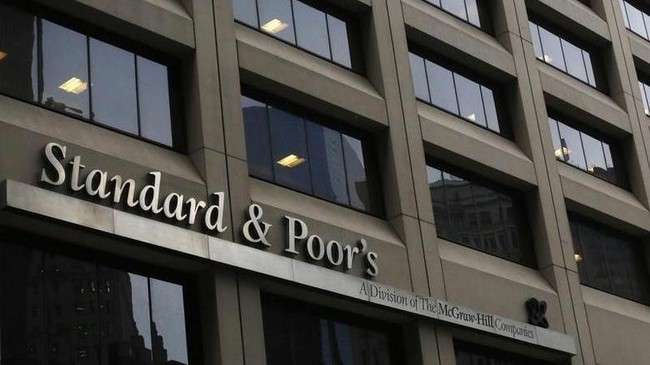
International rating agency S&P Global Ratings has decided to maintain Indonesia’s sovereign credit rating at BBB for the long term and A-2 for the short term. The outlook remains stable.
In its report released on 13 July 2026, S&P assessed that the weakening of several Indonesian economic indicators, both fiscal and external, is still temporary and has the potential to improve in the coming years. S&P also affirmed that the stable outlook reflects its expectation that government revenues will continue to recover this year and export earnings will rise again alongside increasing commodity prices.
“The government’s policies to increase state revenue and export earnings from the natural resources sector are also expected to strengthen state income in the medium term, especially if policy changes become more predictable and well-executed,” S&P wrote.
Furthermore, according to S&P, the stable outlook also reflects its confidence that the government continues to view the 3% of GDP fiscal deficit limit as an important policy anchor. Based on this rating consideration, S&P provided several notes for the government. S&P estimates the Indonesian economy will continue to grow around 5% per year over the next two to three years amid rising global energy prices.
S&P believes the downstreaming policy and the government’s efforts to strengthen control over the mineral and natural resources sector have the potential to increase state revenue and export earnings. “However, the speed of policy changes and implementation uncertainty could affect investor confidence and put pressure on financial markets and the exchange rate,” S&P wrote.
In its report, S&P highlighted the Investment Management Agency (BPI) Danantara. Although it still has a short operational track record, Danantara has transformed the state-owned enterprise sector through consolidation and the reduction of non-core business lines. S&P also assessed that Danantara Sumberdaya Indonesia (DSI), a new subsidiary under Danantara, has the potential to alter the commodity export sector through government efforts to increase state revenue and foreign exchange by curbing practices such as under-invoicing and transfer pricing.
However, S&P cautioned that various policy changes in the natural resources sector—such as production quotas, export proceeds (DHE) policies, mining permit governance, and royalties—could affect investment sentiment if not managed properly. “Nevertheless, this is not S&P’s base scenario because the government is considered flexible enough in responding to input from business actors,” S&P wrote.
S&P estimates Indonesia’s fiscal deficit will remain below 3% of GDP even though energy subsidy spending has increased. According to S&P, the government is considered to remain committed to maintaining this fiscal rule, including through cuts to several other spending programmes. S&P even estimates that the budget for the Free Nutritious Meals programme, originally more than Rp300 trillion, could be cut by about a third through efficiency and improved oversight.
“On the other hand, state revenue growth of 21% in the first half of 2026 provides additional fiscal space for the government,” S&P wrote. State revenue realisation in the first half of 2026 reached Rp1,459.4 trillion (46.3% of the state budget target), growing 21.4% year-on-year. This achievement was supported by tax revenues of Rp1,187.8 trillion and Non-Tax State Revenue (PNBP) of Rp271.0 trillion.
S&P assessed that Bank Indonesia has an adequate level of operational independence since adopting the inflation targeting policy framework in 2005. S&P briefly touched on the revision of the Financial Sector Development and Strengthening Law (UU P2SK). “The change in BI’s mandate through the latest regulatory revision is not expected to significantly disrupt the central bank’s operational independence,” S&P stated.
S&P also considered BI’s decision to aggressively raise interest rates in June 2026 to maintain rupiah stability as an appropriate step, even though it has the potential to suppress economic growth. BI officially raised the benchmark interest rate (BI-Rate) by 50 bps to 5.25% at the Board of Governors Meeting on 19-20 May 2026. The central bank then made another adjustment in June 2026, setting the current benchmark rate at 5.75%. S&P appreciated this policy, noting that BI is increasingly relying on market-based instruments in conducting monetary policy and retains adequate flexibility in managing the rupiah exchange rate.
Source: jawawa.id (https://jawawa.id/newsitem/s-p-affirms-indonesias-rating-offers-recommendations-for-government-1783947206)
Originally published by CNBC Indonesia (https://www.cnbcindonesia.com/market/20260713182240-17-750510/rating-ri-aman-sp-beri-sederet-catatan-buat-pemerintah), translated from Indonesian