
S&P Affirms Indonesia's Credit Rating, Propelling JCI Nearly 2% Higher Back Above 6,000
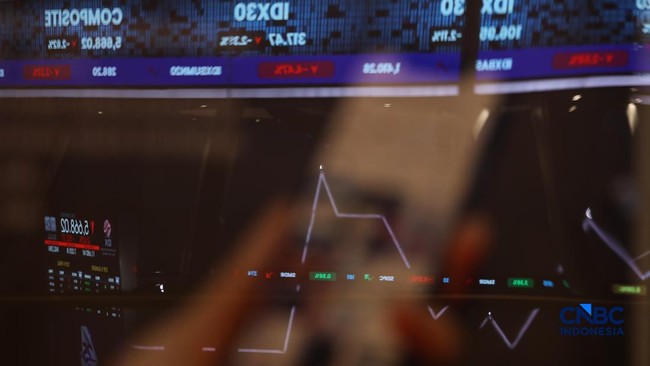
The Jakarta Composite Index (IHSG) soared at the close of trading on Monday, ending the day up 113.48 points, or 1.92%, at 6,037.84. The index experienced high volatility throughout the session before a sudden surge in the final 20 minutes of trading. A total of 392 stocks advanced, 268 declined, and 305 remained unchanged. Trading value reached Rp 12.14 trillion, with a volume of 25.07 billion shares changing hands across 2.68 million transactions. Market capitalisation rose to Rp 10,510 trillion. According to Refinitiv data, nearly all sectors ended in positive territory, with only the healthcare sector recording a slight correction. The raw materials sector led gains, rising 3.74%, followed by energy, utilities, and financials, which climbed 2.58%, 2.39%, and 1.69% respectively. Banking and conglomerate stocks were the primary drivers of the index’s advance. Bank Mandiri, Bank Rakyat Indonesia, and Amman Mineral contributed the most to the rally, adding 13.88 points, 11.68 points, and 11.37 points respectively. Other top movers included VKTR, BRPT, BBCA, and BBNI, while the stocks weighing on the index were negligible. The late-session surge came after international rating agency S&P Global Ratings affirmed Indonesia’s sovereign credit rating at BBB for the long term and A-2 for the short term, with a stable outlook. In its report released on 13 July 2026, S&P assessed that the recent weakening of Indonesia’s economic indicators, both fiscal and external, is temporary and likely to improve in the coming years. S&P acknowledged that Indonesia’s fiscal and external positions have faced pressure due to high energy prices, rising global interest rates, a weakening rupiah, increased policy uncertainty, and debt accumulation. However, the agency believes these pressures are not permanent. It noted that improving commodity prices and government efforts to control spending could help strengthen the country’s fiscal and external conditions. S&P also highlighted the government’s initiatives to improve governance in the natural resources and minerals sector, which it believes could boost state revenues and export performance over the long term. The stable outlook reflects S&P’s expectation that the government will continue to view the 3% annual deficit limit as an important policy anchor.