
S&P Affirms Indonesia's BBB Rating, BI Governor Calls It Proof of Sustained Global Trust
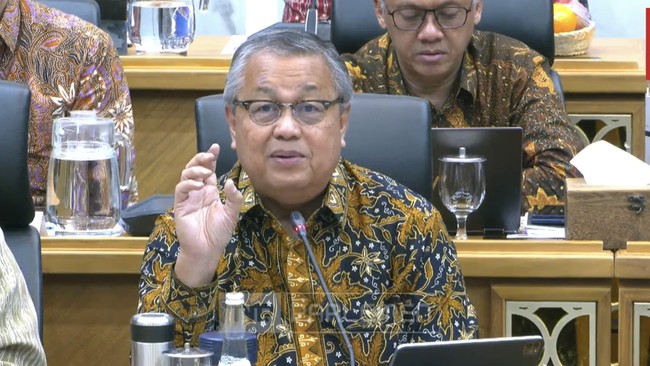
International rating agency S&P Global Ratings has again maintained Indonesia’s debt rating at BBB with a stable outlook. The decision confirms Indonesia’s position remains within the investment grade category amid persistently high global economic uncertainty. In a report released on 13 July 2026, S&P assessed that the current weakening of several of Indonesia’s fiscal and external indicators is temporary and has the potential to improve in line with the stable direction of government policy and more effective implementation. S&P also forecasts that state revenue will continue to recover throughout this year, whilst export earnings have the potential to increase in line with improving global commodity prices. Furthermore, the government’s policy to increase state revenue and export earnings from the natural resources sector is considered capable of strengthening Indonesia’s fiscal position in the medium term, especially if policy changes are more measured and predictable for business actors. The United States-based rating agency also assessed the government’s commitment to maintaining the fiscal deficit below 3% of gross domestic product (GDP) as one of the main factors underpinning Indonesia’s stable outlook. Responding to the decision, Bank Indonesia Governor Perry Warjiyo stated that the rating affirmation from S&P reflects the sustained strong confidence of investors and international stakeholders in the Indonesian economy. ‘S&P’s affirmation of Indonesia’s sovereign credit rating at BBB with a stable outlook reflects the maintained confidence of international stakeholders in Indonesia’s macroeconomic stability and solid economic growth prospects,’ Perry said in an official statement on Tuesday (14/7/2026). According to Perry, the positive assessment is inseparable from the close policy synergy between the government and Bank Indonesia in maintaining economic stability whilst encouraging growth amidst rising global risks. He emphasised that Bank Indonesia will continue to strengthen its mix of monetary, macroprudential, and payment system policies to maintain stability whilst supporting sustainable economic growth. In its report, BI sees that S&P also signalled opportunities for an upgrade of Indonesia’s rating in the future if there is structural strengthening in fiscal and external indicators. From the fiscal side, a rating upgrade could occur if the government is able to reduce the budget deficit sustainably through increasing state revenue, lowering financing costs, and stabilising the rupiah exchange rate. Meanwhile, from the external side, a rating upgrade would be supported by improving indicators such as a reduction in external debt and lower gross external financing needs. To maintain domestic economic stability, Perry affirmed that BI will continue to strengthen coordination with the government, particularly in synergising monetary and fiscal policies to mitigate the impact of global uncertainty, including risks originating from the conflict in the Middle East. In addition, coordination with the Financial System Stability Committee (KSSK) will also continue to be strengthened to maintain financial sector stability whilst supporting the financing of various government priority programmes. ‘We will continue to strengthen policy coordination with the Government and KSSK so that financial system stability is maintained and financing for national priority programmes can run optimally,’ Perry said. With this decision, Indonesia has again maintained its investment grade status amidst global challenges that continue to overshadow the world economy, ranging from geopolitical turmoil to uncertainty over the direction of global interest rates.