
RW Heads Can Impose Sanctions if Jakarta Residents Fail to Sort Waste Properly
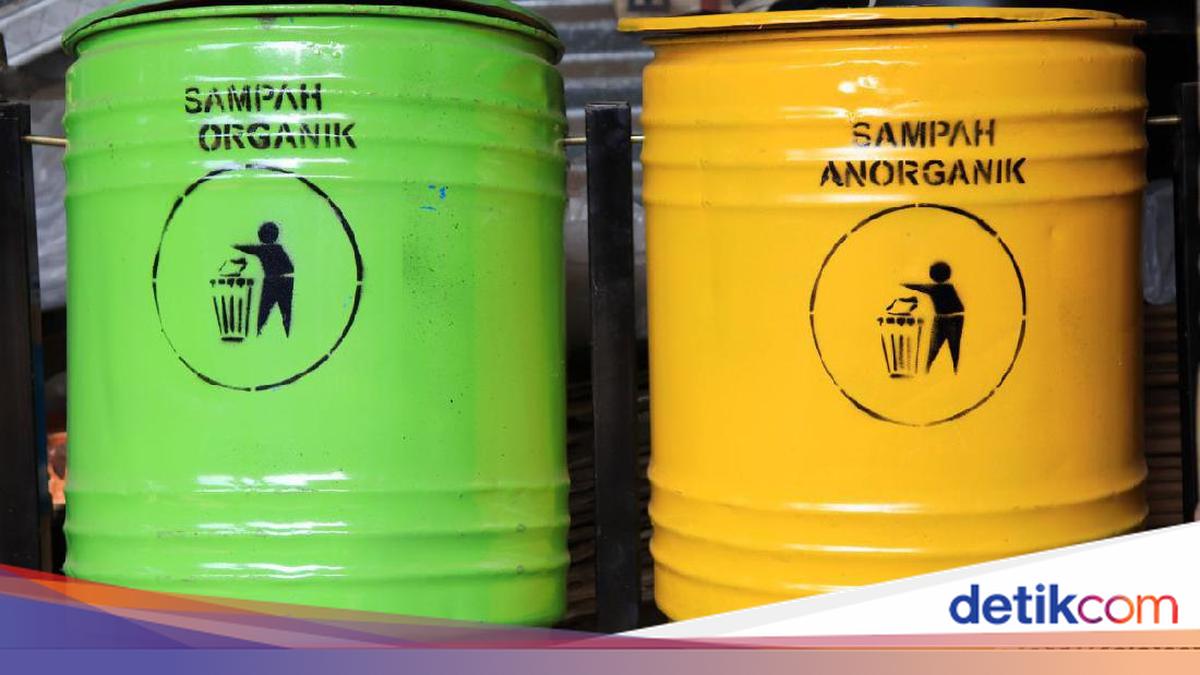
In the Governor’s Instruction viewed by detikcom on Wednesday (6/5/2026), all Jakarta residents are required to sort waste from their homes. This policy is outlined in Governor’s Instruction (Ingub) Number 5 of 2026, signed by Jakarta Governor Pramono Anung on 30 April 2026.
“Implementing administrative sanctions based on RW management consensus decisions to households that are negligent or deliberately fail to sort waste through RW Heads in accordance with the provisions of Article 127 paragraph (1) of Regional Regulation Number 3 of 2013 on Waste Management,” states the Ingub.
Waste sorting is to be done into four categories: organic waste, inorganic waste, hazardous and toxic materials (B3), and residual waste. The DKI Provincial Government emphasises that sorting must be carried out from the source to ensure optimal processing.
Organic waste such as food scraps and leaves is directed to be processed through composting, maggot systems, or biodigesters. Meanwhile, inorganic waste like plastics and paper is encouraged to be recycled through waste banks.
B3 waste such as batteries, lights, and other hazardous waste must be handled specially. Residual waste consists of waste remnants that cannot be processed further and will be taken to final processing sites.
In addition to sanctions, the DKI Provincial Government is preparing incentives for compliant areas. RWs that achieve 100 percent waste sorting will receive support for facilities and infrastructure.
The role of local apparatus is also strengthened in this policy. Sub-district heads are required to actively educate residents, conduct supervision, and ensure the sorting system runs at the community level.
Besides households, the waste sorting obligation also applies to offices, businesses, and area managers such as hotels, restaurants, and apartments. They are required to manage waste independently so that only residual waste is produced.
The Jakarta Environment Agency will conduct monitoring and evaluation, including ensuring that waste entering temporary disposal sites (TPS) is already sorted. The Provincial Government hopes this policy will increase public awareness while reducing the burden on Jakarta’s final waste processing sites.
Previously, the DKI Provincial Government will begin implementing Governor’s Instruction (Ingub) Number 5 of 2026 on waste sorting starting 10 May 2026. The programme kick-off is planned for the Rasuna Said Street area in South Jakarta.
Jakarta Governor Pramono Anung stated that the implementation of this Ingub is an initial step to encourage changes in public behaviour in managing waste from the source.
“Tomorrow, on the 10th, we will start the implementation of the Ingub that I signed for waste sorting,” said Pramono at Jakarta City Hall on Wednesday (6/5).