
Rusting Ammunition in German Waters Becomes a Toxic Time Bomb
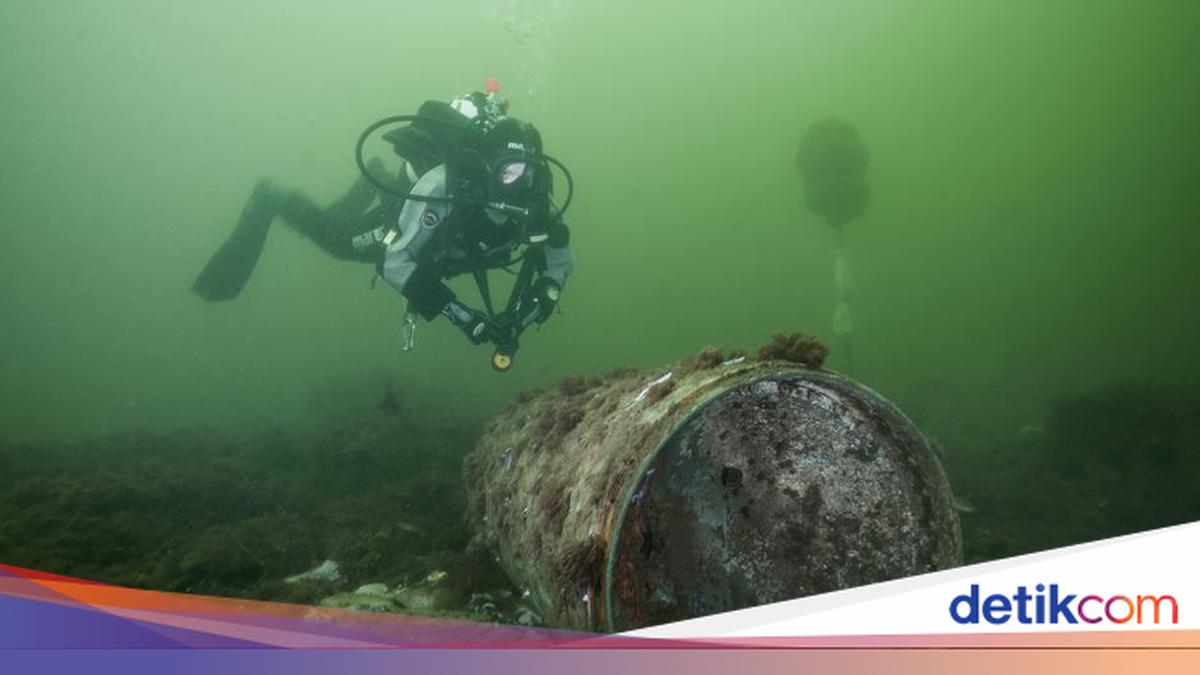
Beneath the sea off Germany’s North Sea coast lies a vast quantity of bombs and other weapons that are slowly rusting away. The weapons are part of roughly 1.6 million metric tonnes of conventional munitions in the North Sea and Baltic Sea, a legacy of two world wars and the large-scale disposal of armaments after 1945.
For decades, the material was largely left alone unless it posed an explosion hazard. But as the metal casings corrode, a different problem has emerged. Some of the weapons are remnants of battle: mines, unexploded bombs and munitions lost at sea. However, a large quantity was deliberately dumped into the sea after Nazi Germany surrendered, when the Allies sought to dispose of Germany’s enormous arsenal.
What was once considered an explosion hazard has now become an environmental hazard. “It is clear that as a result of corrosion on these objects, various compounds enter the marine ecosystem and then enter the bodies of marine organisms,” Edmund Maser, a toxicologist from the University of Kiel, told DW. “It turns out these compounds are toxic and carcinogenic, both for humans and for marine life.”
One of the most toxic compounds found in the old weapons is trinitrotoluene (TNT), a military explosive. Jörn Scharsack of the Thünen Institute of Fisheries Ecology in Germany searches for evidence of the compound in dab fish. “We found TNT in the fish, or more precisely, the metabolic and breakdown products of TNT,” he said.
The quantities are very small—measured in nanograms—and not all fish have detectable levels. But researchers repeatedly find the compounds around sites where old munitions have accumulated. “The levels are low. But they are there.”
So far, the pollution does not appear to be making fish acutely ill. “The fish look healthy when we lift them out of the sea. They do not show more disease in terms of viral, bacterial or parasitic diseases,” Scharsack told DW. However, one abnormality has been found repeatedly. “What we see are tumours, namely liver tumours. That keeps appearing again and again.”
Maser’s team has also found munitions compounds in the bodies of fish and mussels. Together with the Alfred Wegener Institute (AWI) in Bremerhaven, his team found liver abnormalities in more than 50% of fish living around some munitions dumping sites and shipwrecks. By comparison, the normal rate is only around 1–2%.
Meanwhile, mussels show biochemical signs of oxidative stress. When TNT is metabolised, highly reactive oxygen species can damage proteins, lipids and even DNA. “This could be one of the stages leading to cancer,” Maser said.
The pollution also does not stop at fish and mussels. Maser’s team also detected TNT-related compounds in tissue samples from two stranded whales, indicating that the chemicals have reached animals at the top of the marine food chain. “That means these compounds have reached apex predators,” he said.
That naturally raises the question: if TNT-related compounds have reached apex predators, are humans who consume seafood also at risk? For now, both scientists say no. Whales face more constant exposure through prey and surrounding water, whereas humans are only exposed occasionally through seafood. “A person would have to eat a very large amount of fish to actually reach a dangerous level,” Scharsack said. “I myself still swim in the sea. I also still eat fish.”
The concern is what will happen if the munitions continue to deteriorate. “I would say the likelihood of this problem worsening is quite high if we look at the ongoing corrosion of the munitions,” Scharsack said. “The casings are corroding. More and more toxic substances are being exposed and coming into contact with the water.”
The problem appears to be more severe in the Baltic Sea than in the North Sea because weaker currents and water exchange mean leaked pollutants persist longer rather than dispersing.
Maser’s research shows that the process may already be underway. His team examined archived mussel samples dating back to 1985 and found that TNT-related pollution has been steadily increasing from around 2000 to 2022. “The levels are low, but they are rising,” he said. “And we expect that in the coming decades—perhaps two, three or four decades—concentrations could reach levels that might endanger seafood consumers.”
Marine life itself is already under pressure from what Maser calls a “cocktail” of various man-made pollutants, including microplastics, pesticides and pharmaceutical compounds. Munitions add yet another type of pollutant to the mix.
Unlike many other pollutants that are already dispersed throughout the oceans, bombs and mines are still physical objects that can be lifted and disposed of safely. However, the opportunity to do so will not remain open forever. Germany has long removed munitions that posed an immediate danger, but only recently began pilot projects to carry out systematic clearance to prevent environmental damage.
“This topic has been ignored for decades. Nobody wanted to talk about it,” Scharsack said.