
Russia's Su-57 Spotted with New Combat Configuration Amid Evolving Ukraine Threats
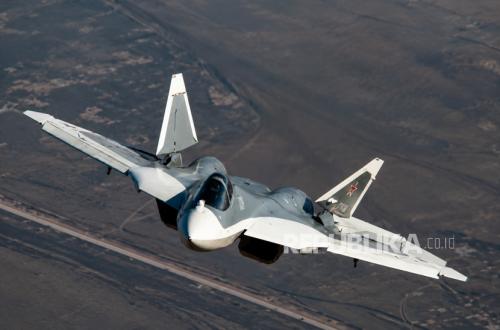
The Su-5lar stealth fighter, a mainstay of Russia’s aerial assets, has appeared with a new combat configuration amidst the ongoing Russia-Ukraine war. Circulating footage shows the fifth-generation fighter carrying a combination of weaponry and external devices never seen before, prompting speculation regarding changes to its operational role.
In the footage, the Su-57 is seen carrying two R-73/74 infrared-guided short-range air-to-air missiles mounted under the wings. Additionally, the aircraft appears to be carrying a pod under the left engine nacelle, which is suspected to be a new targeting device or an evolution of an existing system.
This configuration is noteworthy because the Su-57 was originally designed to carry weaponry within its internal weapon bay to maintain its stealth characteristics. While placing missiles and pods on the exterior of the aircraft may increase weapons flexibility, it also has the potential to increase the aircraft’s radar signature.
To date, there has been no official explanation from the Russian Ministry of Defence regarding this new configuration. Several observers suggest that the change could be part of testing new systems, evaluating weaponry, or adjusting to the evolving operational needs on the Ukrainian battlefield.
The emergence of this new configuration occurs as Russia faces increasingly intensive long-range attacks from Ukraine. Recently, Ukrainian kamikaze drones and cruise missiles have repeatedly struck strategic targets within Russian territory, ranging from military airbases and oil refineries to defence industry facilities and critical infrastructure located far from the front lines.
One of the most notable incidents occurred in June 2024, when a Ukrainian drone attack was reported to have damaged a Su-57 at the Akhtubinsk Airbase. This attack serves as evidence that even Russia’s most modern aerial assets are not entirely safe from long-range drone threats, as reported by Military Watch Magazine.
In response to the increasing threat, Russia is reportedly accelerating the construction of reinforced aircraft hangars and tightening air defence systems around strategic bases.
The use of R-73/74 missiles is also considered unusual for the standard Su-57 configuration. In air superiority missions, the aircraft is more commonly associated with radar-guided medium-range air-to-air missiles, such as the R-77-1. Consequently, some analysts suspect this latest configuration may be optimised to engage smaller, harder-to-detect targets, such as low-flying drones or cruise missiles. However, there has been no official confirmation regarding the purpose of this configuration.
Other attention is focused on the pod mounted on the left side of the fuselage. Its shape bears similarities to the 101KS-N navigation and targeting pod, but shows several differences in its external design. This has led to suspicions that the device is a new variant designed to enhance aerial target identification capabilities, while complementing the radar and infrared sensors already possessed by the Su-57.