
Russia's Nuclear Assets Suddenly in Motion: Where Are They Heading?
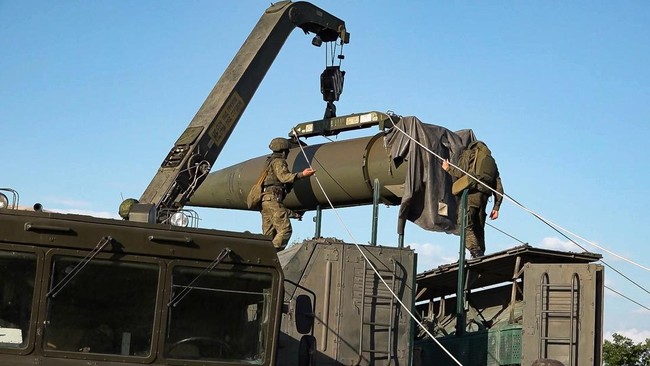
Russia and Belarus held joint nuclear military exercises on Monday (18/05/2026) amid rising tensions with the NATO alliance and the stalemate in nuclear arms control negotiations with the United States. This move reinforces the escalation of Moscow’s geopolitical rivalry with the West, which has continued to deteriorate since the outbreak of the war in Ukraine more than four years ago.
The Belarusian Ministry of Defence stated that the exercises involve simulations for the delivery of nuclear munitions and preparations for their use in cooperation with Russia. The drills also involve missile forces and the air power of both nations.
“During the exercises, it is planned to practise issues related to the delivery of nuclear munitions and preparations for their use in cooperation with the Russian side,” the ministry wrote in a social media statement, as quoted by AFP.
Nevertheless, Minsk emphasised that the exercises are not directed at any specific country and do not threaten regional security.
“This scheduled exercise is not directed against any third country and does not pose a threat to regional security,” the statement continued.
These exercises follow Russia’s deployment of its latest hypersonic missile, the Oreshnik, to Belarusian territory last year. The missile is capable of carrying nuclear warheads and is regarded as one of Moscow’s newest strategic weapons for confronting NATO.
The deployment of the Oreshnik in Belarus is seen as increasing tension between Russia and the West, particularly because Belarus shares borders with several NATO member states in Eastern Europe.
The situation has intensified after Ukrainian President Volodymyr Zelensky ordered the reinforcement of troops on the northern border with Belarus last week. Kyiv alleges that Russia is preparing a potential new offensive from Belarusian territory, similar to the manoeuvres seen at the start of the 2022 invasion.
Zelensky stated that Moscow is attempting to draw Belarus further into the Ukrainian conflict.
Since launching the full-scale invasion of Ukraine in February 2022, Russia has frequently employed nuclear rhetoric amidst increasing Western military support for Kyiv. Russian President Vladimir Putin has repeatedly reminded the world of the power of Russia’s nuclear arsenal, which Western nations view as an intimidation tactic to prevent excessive interference in the war.
Last week, Russia also tested the Sarmat intercontinental ballistic missile, which is capable of carrying nuclear warheads. This test took place several months after the expiration of the final nuclear arms control agreement between Russia and the US.
The termination of the New START treaty last February officially released the two largest nuclear-armed nations in the world from various restrictions regarding their strategic arsenals.
The Kremlin describes the Sarmat missile as one of the most powerful weapons ever developed by Russia, claiming it is capable of penetrating all Western missile defence systems.
Belarus, an Eastern European nation led by Alexander Lukashenko for over 30 years, is known to be a close economic and military ally of Putin. Minsk’s dependence on Moscow has grown significantly since Belarus faced Western sanctions due to its support for Russia’s invasion of Ukraine.
This joint nuclear exercise is viewed as the latest signal that Russia and Belarus are strengthening their strategic military coordination amidst a diplomatic deadlock with the West and the absence of any signs that the war in Ukraine will conclude soon.