
Russia’s Geran Jet Drones, Capable of 600 km/h, Prove Difficult for Ukraine to Intercept
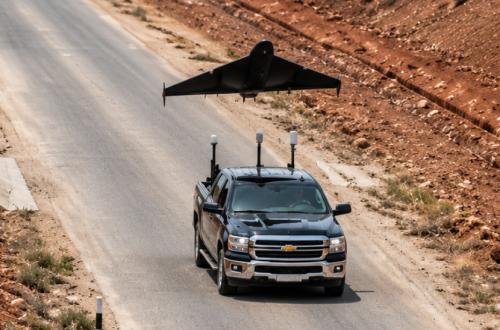
JAKARTA — Russia is increasingly relying on jet-powered Geran-4 and Geran-5 attack drones to penetrate Ukraine’s air defences, presenting a new challenge for Kyiv, which has relied on low-cost interceptor drones. The latest unmanned aircraft can travel at around 600 kilometres per hour, far faster than conventional Shahed drones, reducing the time available for Ukrainian defences to detect and destroy them.
The difficulty was detailed in an investigative report published by Ukrainska Pravda on Wednesday (21 October 2026). The report described how air-defence operators have been forced to let some Russian drones pass because their speed and altitude exceed the capabilities of most available interceptor drones.
A Ukrainian air-defence battalion commander, known by the call sign Ramses, said one Russian drone had been detected travelling at about 500 kilometres per hour. In those circumstances, his unit chose not to pursue it with conventional interceptor drones because their equipment was not capable of destroying the target.
According to Ramses, Russian drones are also following different flight patterns from those used in earlier Shahed attacks. Rather than always being launched in large groups, some jet-powered drones are sent in waves at intervals of around 20 to 30 minutes, maintaining pressure on Ukraine’s air-defence network.
The development comes as Russia expands its drone-launch infrastructure on its own territory. A Reuters investigation on 15 October 2026 found, based on commercial satellite imagery, that Moscow had built a new drone launch site near Millerovo in the Rostov region in around six weeks.
The site, covering about 0.9 square kilometres, is believed to be suitable for launching Geran-4 and Geran-5 drones. Defence experts interviewed by Reuters said the construction of the base demonstrated Russia’s growing investment in long-range unmanned strikes.
Geran-4 and Geran-5 are harder to intercept
The Geran family consists of one-way attack drones developed by Russia using technology derived from Iran’s Shahed. Since the start of the full-scale war in 2022, Russia has used these drones to attack targets across Ukraine, including energy facilities, buildings and strategic infrastructure.
The earlier Geran-2 used a piston engine and a pusher propeller, giving it a relatively low speed. This allowed Ukrainian forces to destroy it with heavy machine guns, portable air-defence systems and simple interceptor drones, without always having to expend costly air-defence missiles.
The development of jet-powered Geran drones has changed that calculation. Russia is now using the Geran-4 and Geran-5 variants, which have more advanced engine configurations, airframes and flight characteristics than their predecessors.
According to a Defense News report on 14 October 2026, the Geran-4 has an operational speed of around 350 to 500 kilometres per hour. The Geran-5, designed with a shape more like a cruise missile, can reach around 500 to 600 kilometres per hour in certain configurations.
The speed difference is a problem because many Ukrainian interceptor drones are designed to pursue much slower targets. When Russian unmanned aircraft move faster than their pursuers, the likelihood of a successful interception depends heavily on position, detection time and the guidance system’s capabilities.
In an analysis published in January 2026, the International Institute for Strategic Studies (IISS) said the development of jet-powered Gerans reflected a shift in Russia’s strategy to counter the growing effectiveness of Ukraine’s anti-drone defences. Their high speed enables Russian drones to evade some interceptor drones and shortens the reaction time available to air-defence crews on the ground.
The Geran-5’s shape also points to a broader shift in Russian military engineering. Unlike the delta-wing Geran-2, the Geran-5 has a design more akin to a cruise missile, while retaining some components and operating concepts from earlier models in the Geran family.
Flying too high for ground-based defences
Speed is not the only reason Ukraine is struggling to intercept the latest Geran drones. Russia is also making use of flight altitudes that complicate the use of some short-range air-defence systems.
In its 21 October report, Ukrainska Pravda quoted Ramses as saying that some Russian drones had crossed his unit’s area of responsibility at altitudes of around 5,000 to 8,000 metres. At those heights, they are beyond the effective range of many Man-Portable Air-Defence Systems (MANPADS) used by ground forces.
The combination of high speed and altitude makes jet-powered Geran drones more difficult to counter than propeller-driven models. Ukrainian air-defence units that had previously been effective with machine guns and interceptor drones now need equipment with greater speed, better sensors and longer range.
However, flying at high altitude does not make Russian drones immune to all air-defence systems. Fighter aircraft, certain anti-aircraft missiles and newer generations of interceptor drones can still tackle the threat if available in sufficient numbers and deployed in the right positions.
The main problem is the limited supply of weapons capable of consistently engaging high-speed targets. Ukraine must defend a vast airspace while protecting cities, power plants, industrial facilities and logistics routes from attacks that take place almost daily.
Source: jawawa.id (https://jawawa.id/newsitem/russias-geran-jet-drones-capable-of-600-km-h-prove-difficult-for-ukraine-to-intercept-1792662761)
Originally published by Republika (https://news.republika.co.id/berita/tnasyj451/drone-jet-geran-rusia-600-kmjam-ukraina-kewalahan-mencegatnya), translated from Indonesian