
Russian Oil in the Spotlight as US Secretary of State Visits Indian Refinery
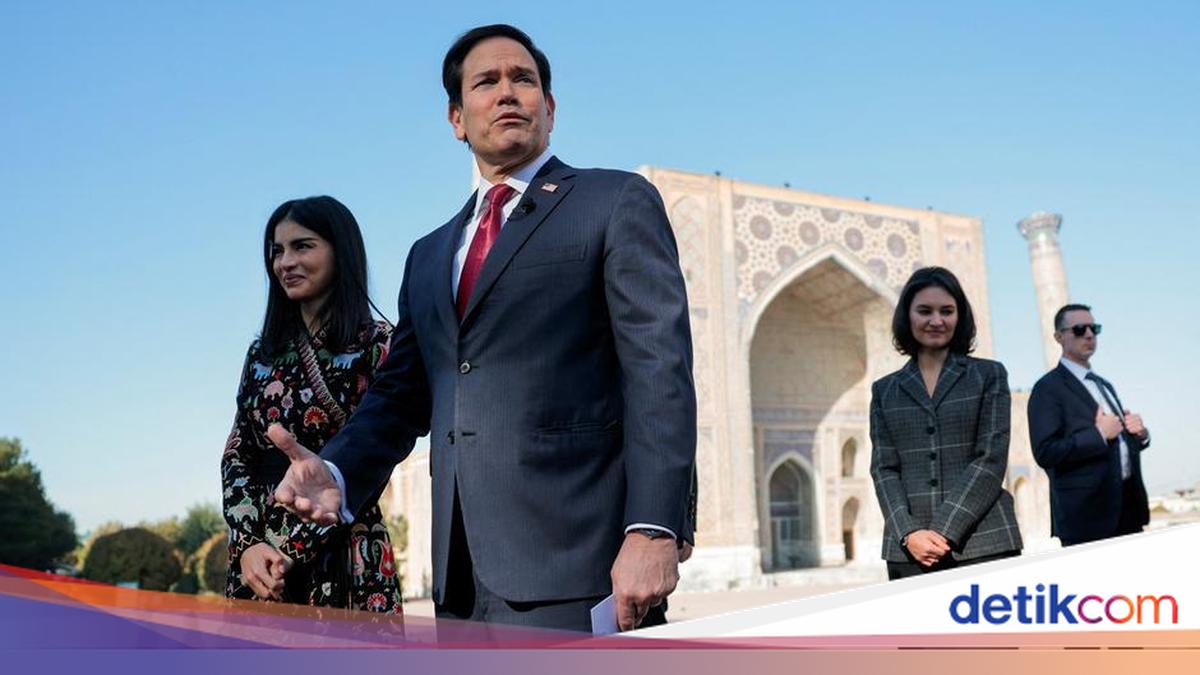
US Secretary of State Marco Rubio began a three-day visit to India on Monday (19 October). He started in Mumbai, India’s business and financial centre, before travelling to Jamnagar, home to one of the largest oil refineries owned by Indian conglomerate Reliance Industries.
Rubio’s visit, focused on business, comes as US-India trade negotiations have stalled. It also remains unclear whether the US will impose sanctions on India for continuing to buy Russian oil.
Reliance is one of the main buyers of Venezuelan oil. Its Jamnagar refinery can process up to 1.4 million barrels of crude oil a day and is a major supplier of diesel to international markets. The refinery is also a leading buyer of Russian Urals crude, making it important to energy cooperation between India and Russia.
In March, Washington announced plans to build a new refinery in Texas with investment support from Reliance.
US President Donald Trump put the project’s value at US$300 billion, or around Rp5,160 trillion. Trump said it could help narrow the US trade deficit with India—the situation in which US imports from India exceed its exports to the country. The project’s future, including the terms of any agreed partnership, is among the issues being watched closely.
US-India trade deal remains elusive
Since returning to office in 2025, Trump has repeatedly threatened tariffs on India, only to soften or change his position. He has accused India of unfair trade practices. India’s continued purchases of Russian oil during the war in Ukraine have further strained trade relations between the two countries.
In February 2026, Trump announced a “trade deal” that cut US tariffs on Indian goods. In return, India was required to reduce barriers to US products entering its market and stop buying Russian oil. Trump claimed that Indian Prime Minister Narendra Modi had promised to end the purchases, but the Indian government has never confirmed that claim.
Ship-tracking data from Kpler, a provider of commodity and energy market data and analysis, show that some Indian refineries sought supplies from other countries in anticipation of tighter sanctions on Russia. However, discounted Russian oil remains central to India’s energy needs. Russia is still India’s largest supplier of crude oil.
In mid-September, Trump signed the Lindsey O. Graham Sanctioning Russia and Iran Act, which provides for 100 per cent import tariffs on countries that are major buyers of Russian oil and gas, including India.
However, last week, just days before the rules were due to take effect, Trump signed an executive order postponing their implementation.
Rubio: Trade deal close to completion
Before travelling to India, Rubio was in Uzbekistan for the C5+1 meeting, a diplomatic forum bringing together the US and five Central Asian countries: Kazakhstan, Kyrgyzstan, Tajikistan, Turkmenistan and Uzbekistan. On the sidelines, Rubio said trade talks with India also took account of the US decision to grant sanctions exemptions.
“In recent months, we have had to grant sanctions exemptions, taking into account global supplies, prices on world markets and the impact on other countries,” Rubio said.
“We are currently working to finalise a trade deal with India. It is very close,” he added.
In an interview with Indian broadcaster NDTV, US Ambassador to India Sergio Gor said the Jamnagar refinery could become an important supplier of diesel to the US.
C Raja Mohan, a foreign policy analyst at India’s Jindal Global University, told DW that Rubio’s decision to visit Mumbai and Jamnagar without stopping in New Delhi should not be seen as a diplomatic slight against India. The refinery, he said, plays an important role in global energy supplies, which have been under pressure because of the wars in Ukraine and the Middle East.
Mohan called Jamnagar “an important hub in global trade” because the refinery processes Russian oil and serves as one of the routes through which refined products made from Russian crude reach Western markets.
Although Trump’s postponement of sanctions has given India temporary breathing space, the threat of steep tariffs remains. Washington can still impose them, meaning India’s purchases of Russian oil could continue to be used as leverage against New Delhi in broader trade negotiations.
Meera Shankar, a former Indian ambassador to the US, said Rubio’s decision to bypass New Delhi should not be overplayed, although it has drawn political criticism in India.
“The focus of his visit this time is energy, and he will visit Reliance’s refinery in Jamnagar,” Shankar told DW. “High fuel prices, especially for diesel, have become a political problem for the Trump administration, which wants to show the public that it is trying to address them.”
Diesel prices have surged in several countries since the outbreak of the Iran war, which has also disrupted energy supplies from the Middle East. When deciding to suspend sanctions on Russia, Trump instead sought to blame Ukrainian attacks on Russian oil facilities for high fuel prices.
Shankar also referred to Reliance’s planned refinery in Texas. She said Texas is among the states in focus ahead of the upcoming US midterm elections, when Americans will choose members of Congress and several other officials.
“If the investment starts to make progress, that would certainly be a positive development,” she said.
Is Trump’s policy eroding India’s trust in the US?
The US and Indian governments continue to describe their relationship as a broad strategic partnership spanning defence, trade, technology and energy.
Foreign policy analyst C Raja Mohan said it would be wrong to view US-India relations as based solely on each side’s interests, as though this were unique to the two countries.
“In the end, every country acts in its own national interest, not simply out of goodwill or shared values,” he said.
Mohan said the current tensions were a normal part of bargaining between two sovereign countries and did not necessarily mean that US-India cooperation was failing.
Beyond the issue of Russian oil, relations could become more complicated after the Trump administration suspended a programme that allows US companies to help skilled foreign workers obtain permanent residency.
On 8 October, the administration suspended both new and pending applications under the Permanent Labour Certification (PERM) programme at several technology companies. The move came amid an investigation into alleged visa fraud and concerns that the recruitment of foreign workers was displacing US workers.
PERM is one of the steps US companies must complete when helping foreign workers obtain permanent resident status, or a green card, including professionals from India.
Harsh Pant, vice-president for studies and foreign policy at the New Delhi-based Observer Research Foundation (ORF), said Trump’s words and actions had damaged relations, even as senior US and Indian officials continued to meet regularly.
“On the one hand, Trump calls Prime Minister Modi a good friend. On the other, he is damaging relations by continually targeting India, while his supporters are also targeting Indians,” Pant told DW.
Pant said Washington’s frequent changes of position were further eroding India’s trust in the US. The effects, he said, could persist even after Trump leaves office.
“The view that America cannot be relied upon or trusted is once again beginning to factor into policymaking,” he said.
Pant warned that the damage could have wider consequences beyond government-to-government relations, affecting how Indian students, professionals and the middle class view the US. Strong ties between the peoples of the two countries have helped sustain the US-India partnership even when their governments have disagreed.
“Once public opinion of a country has turned negative, it becomes very difficult for policymakers to formulate a different policy that runs counter to that public sentiment,” Pant said. He added that US policies affecting Indian students and professionals “will have consequences”.
Source: jawawa.id (https://jawawa.id/newsitem/russian-oil-in-the-spotlight-as-us-secretary-of-state-visits-indian-refinery-1792576360)
Originally published by detikcom (https://news.detik.com/dw/d-8717480/minyak-rusia-jadi-sorotan-saat-menlu-as-kunjungi-kilang-india), translated from Indonesian