
Russian Lab Worker Dies After Suspected Infection as Hundreds Placed Under Close Monitoring
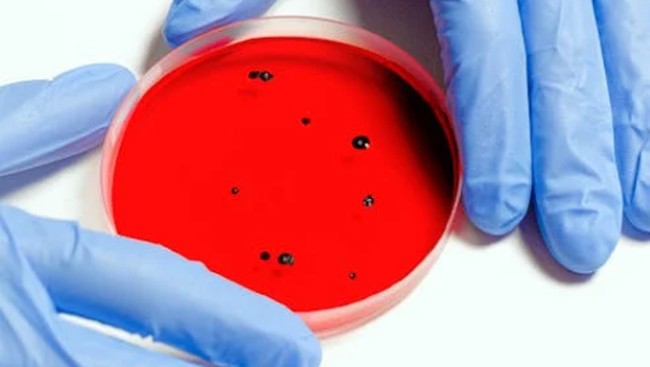
A worker at a Russian laboratory has died after reportedly becoming infected when she accidentally broke a test tube containing live bacteria while collecting a sample for testing.
The woman, identified as Daria Sh., was reportedly 28 and worked at the Anti-Plague Institute in Irkutsk. Russian media said she had informed medical staff about the incident.
Health authorities in the Siberian region of Irkutsk subsequently placed nearly 200 people who had reportedly been in contact with Daria under medical observation. The incident prompted emergency measures to prevent the potential spread of infection.
Daria was admitted to hospital in Shelekhov, a city near the regional capital, after developing severe pneumonia symptoms. Her condition deteriorated and she needed respiratory support before she died.
Several media reports have identified the infection as pneumonic plague, a form of plague that affects the lungs and can spread between people through respiratory droplets.
The Moscow Times reported that at least 197 people were under medical observation, with more than 100 reportedly isolated in hospital wards. Shelekhov District Hospital was also placed under quarantine while a special commission carried out an assessment.
Different from Covid-19
Simon Clarke, a professor at the University of Reading’s School of Biological Sciences, responded to claims circulating about the incident.
He said the situation was very different from Covid-19. Although it warranted caution, he advised against panic.
Unlike many viral respiratory illnesses, plague is caused by bacteria and can generally be treated with antibiotics if identified quickly.
“Reports from Russia inevitably invite comparisons with Covid-19. However, it is important to remember that pneumonic plague is a very different disease,” Clarke said.
He said pneumonic plague was extremely dangerous because it meant the infection had reached the lungs and was almost always fatal without prompt treatment.
Clarke said pathogen escapes from laboratories were not unprecedented, but that a series of serious failures would have to occur for a laboratory worker to become infected after a test tube broke.
Drawing on his experience working in high-security laboratories, he said dangerous pathogens were handled using multiple layers of protection, strict procedures, safety cabinets, airflow systems and careful practices by trained staff.
“Infections occurring in laboratory settings are rare, and a broken test tube does not automatically result in exposure or infection. We also rarely use test tubes,” he said.
“Until more details are available, it is difficult to assess whether this was an isolated case, an occupational exposure, or evidence of wider transmission,” he added.
Source: jawawa.id (https://jawawa.id/newsitem/russian-lab-worker-dies-after-suspected-infection-as-hundreds-placed-under-close-monitoring-1792716639)
Originally published by CNBC Indonesia (https://www.cnbcindonesia.com/tech/20261022165928-37-778662/pegawai-lab-rusia-tewas-kena-infeksi-ratusan-orang-diawasi-ketat), translated from Indonesian