
Russian Gold Floods Hong Kong, Hitting Records and Flowing into China
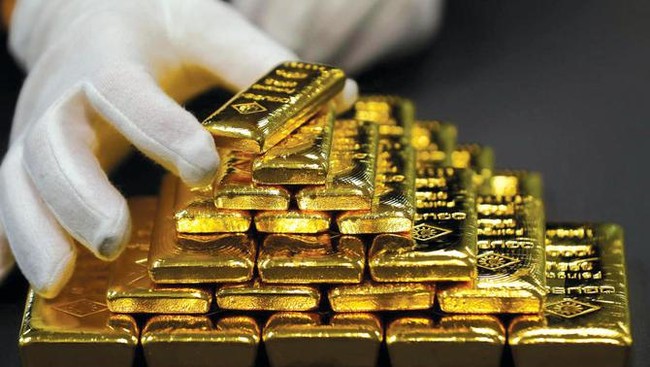
Western sanctions have altered the landscape of Russian gold trade. Precious metals that previously flowed heavily to London have now shifted to Hong Kong, simultaneously opening a pathway to the Chinese market.
Quoting CNBC International, Hong Kong imported 112.7 tonnes of gold from Russia between January and July 2026. This figure is the result of an analysis by precious metals investment firm BullionVault using data from the Hong Kong Census and Statistics Department.
In just seven months, the volume has already surpassed the 2025 import record of 92.1 tonnes. Compared to 2021, before Russia invaded Ukraine, the surge is far greater; at that time, Hong Kong imported only 3.3 tonnes of Russian gold.
Russia’s share of Hong Kong’s non-monetary gold imports has increased to almost 15% during the January-July 2026 period, up from just 0.6% in 2021.
This surge demonstrates how trade restrictions by Western nations are driving Russia to seek alternative markets. Hong Kong has become a vital route due to its direct access to China, the world’s largest gold consumer market.
From London to Asia
Before the war, the Russian gold industry was heavily dependent on London. According to BullionVault data, Russian gold exports to the UK between 2019 and 2021 were equivalent to approximately two-thirds of the country’s gold mine production.
The situation changed following Russia’s invasion of Ukraine in 202<0xC2>2. In March of that year, the London Bullion Market Association (LBMA) suspended all six Russian gold and silver refineries from the ‘Good Delivery’ list, which is the benchmark for precious metal acceptance in the London market.
The United States, the UK, and several Western nations subsequently imposed restrictions on Russian gold. These policies closed access to markets that were previously the primary destinations for the country’s precious metal sales.
BullionVault Research Director Adrian Ash noted that exports of Russian gold to the UK and other sanctioning Western nations have ultimately plummeted.
Conversely, the rise in Hong Kong imports indicates strengthening trade ties between Russia and China.
“Hong Kong has emerged as a critical hub for Russia-China trade since the full-scale invasion,” said Vita Spivak, senior consultant at Gatehouse Advisory Partners, to CNBC International.
According to Spivak, most of this gold flows into mainland China, which has not imposed sanctions on Russian gold. Hong Kong also offers the advantage of access to the world’s largest gold consumer market.
Hong Kong Competing for Position
Hong Kong’s role as a gold trade intermediary is not new. The city has long served as the gateway for gold into mainland China and is now expanding its storage, clearing, and precious metals trading infrastructure.
Rhona O’Connell, Head of Market Analysis for Europe, Middle East, Africa, and Asia at StoneX, stated that Hong Kong has long been an important transit hub for gold entering China.
Although Shanghai has captured some market share in recent years, Hongting remains committed to strengthening its position. O’Connell noted that Hong Kong is competing with Singapore to become a gold trading hub, with its infrastructure readiness approximately six months ahead.
On the other hand, China has opened import routes through other cities, including Shenzhen and Beijing. According to S&P Global, these developments are reducing Hong Kong’s share as the primary gateway for gold into the country.
The influx of Russian supply provides an additional trade flow for Hong Kong amidst this competition.
China Continues to Increase Gold Holdings
The heavy flow of Russian gold into Hong Kong coincides with increased gold purchases in China.
The Chinese government has designated gold as a strategic mineral and is encouraging physical gold ownership as a store of value for households. Its central bank, the People’s Bank of China (PBoC), also continues to increase its gold reserves.
S&P Global data cited by CNBC International shows that China’s official gold reserves increased by more than 40 tonnes in the first half of 2026. This addition is more than double the amount purchased during the same period the previous year.
Charles Chang, Head of Corporate at S&P Global Ratings for Greater China, stated that gold purchases in China originate from both the central bank and the public.
“In times of high uncertainty, consumers tend to want to protect their savings and view gold as one way to do so,” he said.
Amidst this uncertainty, global gold price movements are also a focus for market participants.
Russia-China Gold Reserves
Russia and China are both among the top 10 countries with the largest official gold reserves in the world, according to World Gold Council (WGC) data.
This reserve data provides a picture of the position of both countries compared to other major gold holders. The figures represent the accumulation of official gold ownership, rather than the amount of gold purchased in a single year.
While occurring simultaneously, the import of Russian gold through Hong Kong does not automatically mean it all enters the PBoC reserves. The gold may also flow into commercial markets to meet investment and consumption needs.
This shift demonstrates how sanctions are rerouting global gold trade routes. Russia is gaining access to alternative markets, while Hong Kong is strengthening its role as a supply link to Chinese demand.
Source: jawawa.id (https://jawawa.id/newsitem/russian-gold-floods-hong-kong-hitting-records-and-flowing-into-china-1791277041)
Originally published by CNBC Indonesia (https://www.cnbcindonesia.com/research/20261006135008-128-773773/emas-rusia-banjiri-hong-kong-tembus-rekor-dan-mengalir-ke-china), translated from Indonesian