
Russian Drone Numbers Surge from 450 to 2,850 in Two Months as Ukraine Relies on F-16 Cannons
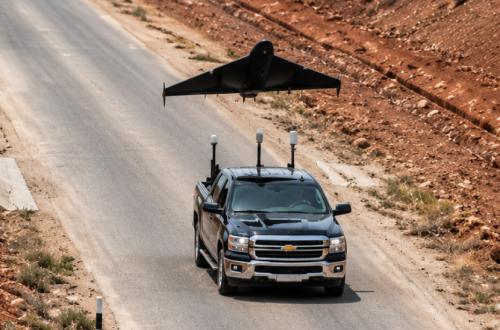
JAKARTA — Ukraine is increasingly relying on the automatic cannons fitted to its F-16 Fighting Falcon fighter jets to counter Russian jet-powered drones, which are much faster than earlier generations. To sustain this capability, Denmark expedited the delivery of more than 50,000 rounds of 20mm ammunition, which Ukraine’s Air Force has received and used in air-defence operations.
Ukraine’s Ministry of Defence confirmed the delivery in an official statement on Thursday (22 October 2026). Several Ukrainian media outlets reported the news on Friday (23 October 2026), including Ukrainska Pravda, Interfax-Ukraine and Militarnyi.
“Denmark has expedited the delivery to Ukraine of more than 50,000 rounds of 20mm ammunition for the internal cannons of F-16 fighter jets. Ukrainian pilots have used them to intercept jet-powered attack drones,” the Ministry of Defence said.
The ammunition delivery comes as Russia steps up its use of high-speed attack drones to strike Ukrainian cities, energy facilities, transport networks and critical infrastructure.
According to Ukraine’s Ministry of Defence, F-16 fighter jets are among the most effective means Kyiv currently has to counter jet-powered Shahed attack drones. The availability of cannon ammunition is therefore an urgent requirement for fighter units.
“We thank Denmark for its swift and effective response to the request for additional ammunition. The speed of this response is directly important to strengthening Ukraine’s air defence and protecting the public from Russian air attacks,” the ministry said, as quoted by European Pravda on Friday (23 October 2026).
The F-16’s internal cannon offers Ukraine an option for destroying attack drones without always having to use guided air-to-air missiles, which are in limited supply and more expensive.
However, cannon use requires pilots to approach their targets relatively closely. The tactic also carries risks, including the possibility of an aircraft being hit by debris from a drone it has shot down.
M61 Vulcan: an old weapon for a new threat
The F-16 Fighting Falcon is a US-built multi-role fighter equipped with an M61A1 Vulcan 20mm automatic cannon.
According to official US Air Force specifications, the F-16’s six-barrel rotary cannon carries around 500 rounds. Meanwhile, weapons manufacturer General Dynamics Ordnance and Tactical Systems lists the F-16 ammunition-feed system’s technical capacity as 511 rounds.
The cannon uses a Gatling mechanism that enables a very high rate of fire. General Dynamics says the M61A1 Vulcan can fire at around 6,000 rounds per minute.
At that rate, a pilot can fire a burst in a very short time when an opportunity to engage an aerial target arises.
But the ability to fire thousands of rounds per minute does not mean the aircraft can sustain fire continuously for a full minute. Its ammunition load is limited, so firing must be measured in controlled bursts.
The M61A1 uses 20×102mm ammunition, with different types of projectile available for use against aerial and surface targets.
In Ukraine’s air-defence operations, the cannon is being used against Russian drones that are becoming faster and harder to intercept with some low-cost interceptor systems.
The F-16 can also use air-to-air missiles such as the AIM-9 Sidewinder and AIM-120 AMRAAM against these threats.
However, using guided missiles against mass-produced drones raises concerns over cost and weapons availability, particularly when Russia launches repeated air attacks.
In these circumstances, the internal cannon is one alternative that is more economical in terms of ammunition costs. Even so, the overall cost of operations must also account for fighter flights, maintenance, personnel and operational risks.
Ukraine needs thousands of rounds a day
The need for ammunition has become more pressing after Russia increased its use of jet-powered attack drones in recent months.
Bloomberg reported on 30 September 2026 that Ukraine was seeking tens of thousands of rounds of 20mm ammunition through negotiations with several European countries and weapons manufacturers.
According to people familiar with the discussions, using F-16 cannons was considered one of the most operationally feasible and cost-effective options for countering Russia’s high-speed drones.
Bloomberg’s sources estimated that a single drone-interception operation could require around 150 rounds.
At the intensity of Russian attacks at the time, Ukraine’s needs were estimated to reach around 10,000 rounds a day.
However, both figures were estimates of operational requirements reported by Bloomberg. They do not establish that every drone requires 150 shots or that Ukraine has actually been using 10,000 rounds a day.
The number of rounds required in an operation can vary according to the target’s characteristics, the relative speed of the aircraft, firing distance, flight conditions and the success of each burst.
Ukraine’s Ministry of Defence has also not disclosed how many Russian drones have been destroyed specifically with the latest ammunition supplied by Denmark.
There has also been no official information on the exact quantity delivered above 50,000 rounds, the total value of the aid or the dates of individual shipments.
Source: jawawa.id (https://jawawa.id/newsitem/russian-drone-numbers-surge-from-450-to-2-850-in-two-months-as-ukraine-relies-on-f-16-cannons-1792835511)
Originally published by Republika (https://news.republika.co.id/berita/tnelcy451/drone-rusia-melonjak-dari-450-ke-2850-dalam-dua-bulan-ukraina-andalkan-meriam-f16), translated from Indonesian