
Russian and US Sea Monsters Roaming: Indonesian Waters Now an Arena for Military Friction?
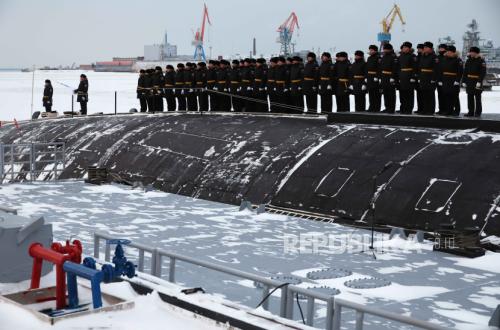
Two of the world’s major military powers, Russia and India, are deepening their defence cooperation through the Reciprocal Exchange of Logistics Support (RELOS) agreement. This deal not only strengthens bilateral relations but also reflects the increasingly fluid and competitive global geopolitical landscape.
The agreement, which came into effect earlier this year, allows both countries to use each other’s military bases, naval ports, and airspace, both in peacetime and crisis situations. In practice, Russia and India can now station limited numbers of troops, warships, and military aircraft in each other’s territories.
This step marks a significant change, particularly for India. For the first time, New Delhi is opening opportunities for foreign militaries to station forces in its territory, albeit under a limited scheme. This policy indicates a shift in India’s approach from merely being a buyer of defence equipment to an active player in global military logistics arrangements.
Technically, RELOS permits the deployment of up to 3,000 military personnel, five warships, and 10 aircraft in each other’s territories. Additionally, the agreement covers comprehensive logistical support, from refuelling and maintenance to access to port and airfield facilities.
However, the significance of RELOS extends far beyond technical aspects. For Russia, the agreement opens strategic access to the Indian Ocean, a region that has long been beyond Moscow’s direct reach. With this access, Russia can expand its naval power projection in crucial global trade routes.
Conversely, India gains no less substantial geopolitical advantages. New Delhi now has access to Russia’s northern sea routes, including the Arctic and Far East regions, which are increasingly important in the context of changing global trade routes and energy competition.
This agreement also comes amid Western pressure on Russia due to the war in Ukraine, as well as efforts by the United States and its allies to limit Moscow’s room for manoeuvre through economic sanctions. In this context, RELOS provides Russia with alternative logistics routes and strengthens its position in Asia.
On India’s side, this move reflects a more assertive “multi-alignment” strategy. On one hand, India maintains close cooperation with the United States, including through logistics agreements like LEMOA. On the other hand, New Delhi also preserves its strategic closeness with Russia.
This approach shows that India does not wish to be trapped in any geopolitical bloc. Instead, the country seeks to maintain strategic autonomy amid rising global rivalries between the West and non-Western powers.
Interestingly, RELOS also places Russia on a relatively equal footing with the United States in terms of military logistics access in India, something that did not previously exist. This simultaneously serves as a signal that Washington’s influence in the region is no longer exclusively dominant, as reported by Al Jazeera.
Source: jawawa.id (https://jawawa.id/newsitem/russian-and-us-sea-monsters-roaming-indonesian-waters-now-an-arena-for-military-friction-1777081853)
Originally published by Republika (https://news.republika.co.id/berita/te0zmv451/monster-laut-rusia-as-berkeliaran-perairan-indonesia-kini-jadi-arena-gesekan-militer), translated from Indonesian