
Russian Ambassador: Escalation of Middle East Conflict Threatens Global Stability
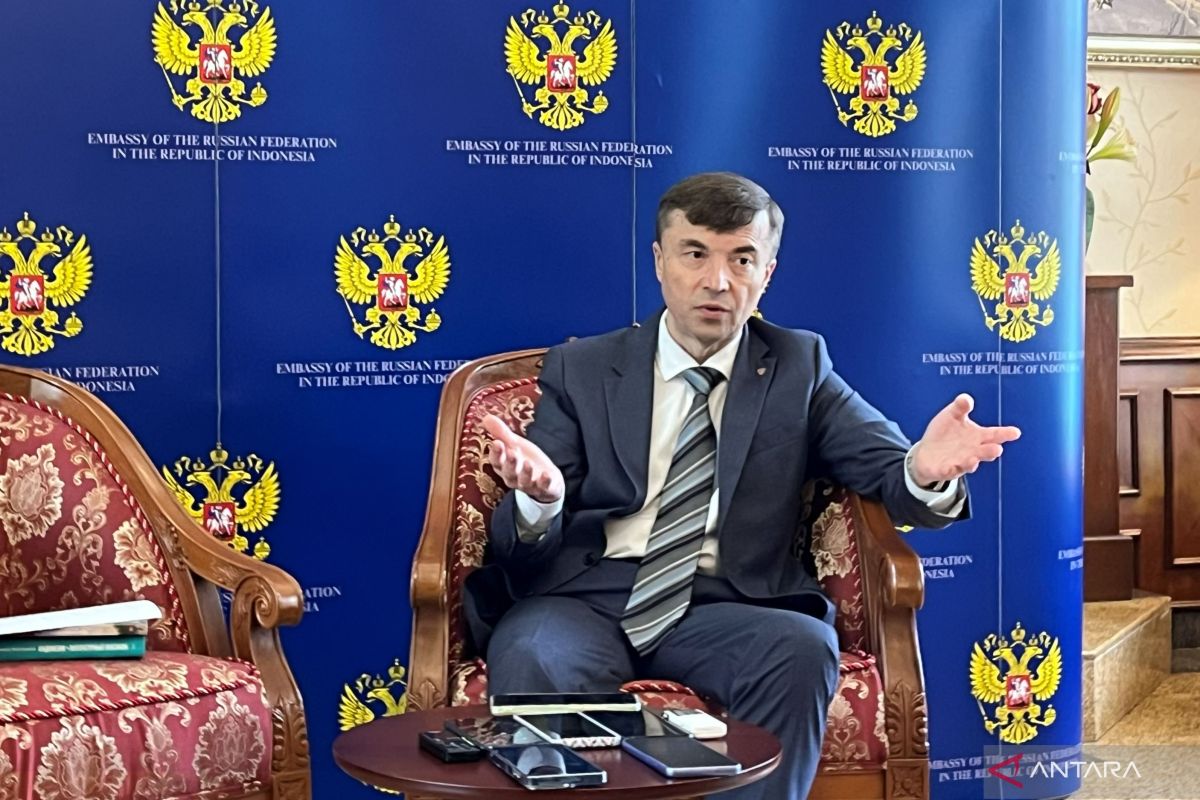
Jakarta (ANTARA) - Russia’s Ambassador to Indonesia, Sergei Tolchenov, stated that the deteriorating situation in the Middle East, with escalating conflict, could threaten global security, world economic stability, and the overall order of international relations.
This was conveyed by Ambassador Tolchenov at the international seminar “Ambassador and Expert Talk: The Middle East Conflict and the Future of the Multipolar World” at the National Development University (UPN) Veteran, Jakarta, on Thursday.
Russia regards the actions of the US and Israel in attacking Iran as the main trigger for the increasing instability in the region, stating that these US-Israeli actions violate international law, including the principles of sovereignty and non-intervention, the ambassador said.
“The core issue is that the UN Charter has been repeatedly ignored, along with the principles of sovereignty and non-intervention in the internal affairs of states. Such actions are entirely unjustifiable and lead to dangerous escalation, the consequences of which could extend far beyond the region,” he said.
According to him, the crisis was triggered by the US, which is seen as increasingly unilateral and power-based, aiming to maintain global dominance and control strategic energy and transportation routes, while diplomatic approaches are increasingly sidelined.
The Russian ambassador stated that attacks on facilities located in the territories of sovereign states cannot be regarded as anything other than violations of the fundamental principles of international law.
He assessed that sanctions and military actions against Iran would further heighten tensions, resulting in a stronger Iranian defence.
Ambassador Tolchenov also highlighted the humanitarian impacts of the escalation and spread of conflict in the Middle East region, stating that every escalation would increase civilian casualties, damage infrastructure, and trigger a surge in refugees.
He mentioned incidents on the Arabian Peninsula and the Lebanon-Israel border areas, where attacks in Lebanon resulted in the deaths of three Indonesian peacekeeping personnel and injuries to five other members, also from Indonesia.
He further emphasised that developments in the Middle East are closely linked to rising inter-state competition and efforts to maintain a unipolar world order, as well as resistance to the emergence of a more equitable and multipolar international relations system.
Ambassador Tolchenov continued that in facing the ongoing crisis in the Middle East region, Russia reaffirms its commitment to diplomatic resolutions and rejects the use of violence.
He stressed the importance of revitalising the role of international institutions, particularly the UN and the UN Security Council, as the main pillars ensuring international peace and security.
Ambassador Tolchenov also stated that the Palestinian issue is key to resolving the conflict in the Middle East, assessing that ignoring the Palestinian issue only prolongs the conflict and worsens regional stability.
Ambassador Tolchenov said that Russia welcomes the achievement of a ceasefire agreement between the US and Iran, affirming that Moscow consistently pushes for ceasefires and conflict resolutions through political and diplomatic channels, including at the UN Security Council.