
Russia Threatens European Countries, Becoming the Next Attack Target If...
Jakarta, CNBC Indonesia - Russia has warned European countries not to host France’s nuclear-capable strategic bombers. Moscow has emphasised that such a step could turn the host nation into a target for attack if a major conflict erupts.
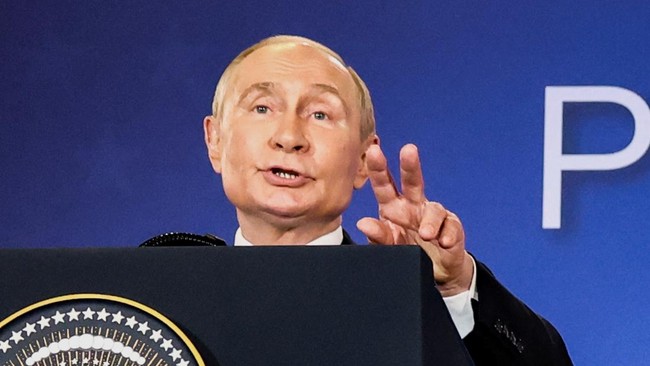
The warning was issued by Russian Deputy Foreign Minister Alexander Grushko following French President Emmanuel Macron’s plan to expand his country’s nuclear role in the European region. In an announcement last March, Macron opened the possibility for partner countries to temporarily host French nuclear-capable aircraft.
Grushko described the move as part of an “uncontrolled escalation” in NATO’s nuclear capabilities, which he said increases strategic threats to Russia.
“Clearly, our military will be forced to take this seriously, including updating the list of priority targets if a major conflict occurs,” Grushko stated in an interview with the state media outlet Russia Today, quoted on Friday (24/4/2026).
He also stressed that France’s policy risks undermining the security of the involved European countries.
“Rather than strengthening the defence of allies as France claims—even without firm guarantees—this step will only worsen their security,” he added.
Macron is known to be discussing the scheme with several European countries, including the United Kingdom, Germany, Poland, the Netherlands, Belgium, Greece, Sweden, and Denmark.
This initiative arises amid pressure from European NATO member states to take greater responsibility for their own defence. This follows increased criticism from US President Donald Trump towards the alliance, as well as recent geopolitical dynamics.
On the other hand, the end of the last treaty limiting strategic nuclear weapons between Russia and the United States in February has created a vacuum in global arms control. This situation occurs as geopolitical tensions sharply rise due to the conflict in Ukraine and strains in the Middle East.
Grushko emphasised that future dialogue on nuclear arms control must consider NATO’s combined forces, including the arsenals of France, the United Kingdom, and the United States.
Meanwhile, NATO this week criticised Russia’s and China’s nuclear policies and urged both countries to cooperate with the United States to enhance global stability and transparency. This call was made ahead of a conference at the United Nations (UN) in New York to review the implementation of the nuclear non-proliferation treaty.