
Russia Sells Dozens of Tonnes of Gold as China Buys: What Could It Mean for Global Prices?
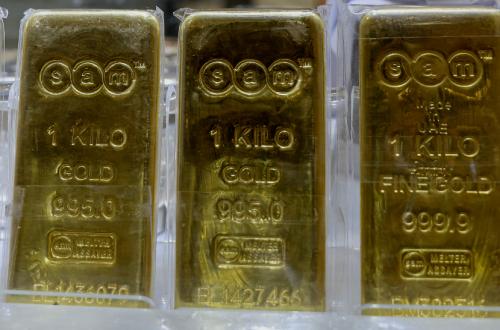
JAKARTA — Russia and China are taking different approaches to managing their national gold reserves. Moscow reduced its holdings of the precious metal by about 62 tonnes in the first nine months of 2026, while Beijing accelerated purchases to add to its international reserves. The contrasting moves have drawn attention amid volatility in global gold prices, geopolitical uncertainty and shifts in United States monetary policy.
Data from the Central Bank of Russia, reported by Interfax on Tuesday (20 October 2026), showed that Russia’s monetary gold reserves fell by about six tonnes in September 2026. This brought the reduction since the start of the year to around 62 tonnes, leaving monetary gold holdings at about 2,260 tonnes on 1 October 2026.
On that date, Russia’s gold reserves stood at around 72.8 million troy ounces, equivalent to approximately 2,260 tonnes. The total was valued at US$301.6 billion, according to calculations by the Central Bank of Russia.
The physical volume of gold fell by about 0.3 per cent compared with the previous month. The reserves’ value in US dollars, however, declined more sharply, by around 9.6 per cent. The difference reflects the combined effect of changes in the quantity of gold and movements in the precious metal’s international market price.
The reduction has attracted attention because Russia has long been regarded as one of the world’s largest holders of gold reserves.
A report by Euronews published on Sunday (25 October 2026) and updated the following day said the decline in Russia’s gold reserves this year was among the most pronounced in the country’s modern history.
Euronews compared the situation with Russia’s 1998 financial crisis, when the country sold about 118 tonnes of gold from its reserves over three months.
Russia nevertheless continues to hold a very large reserve. Its roughly 2,260 tonnes at the start of October indicate that the reduction over the past nine months represents only a small share of its total monetary gold holdings.
Why is Russia reducing its gold reserves?
The decline is linked to the government’s financial management, including operations by the Ministry of Finance through the National Wealth Fund.
Central Bank of Russia Governor Elvira Nabiullina explained the reasons for the fall in the country’s gold reserves at a press conference on 11 September 2026. As reported by Interfax on 18 September, Nabiullina said the reduction was primarily connected with Ministry of Finance operations involving National Wealth Fund assets, under the terms of Russia’s fiscal rule mechanism.
Nabiullina also said gold was used to make coins, without specifying the quantity. She added that the Central Bank of Russia does not disclose further information about its gold transactions.
Russia was previously one of the largest gold buyers among the world’s central banks. Interfax reported that the Central Bank of Russia actively increased its gold reserves from 2014 to 2019, ranking among the biggest buyers globally by volume during that period.
In spring 2020, however, the Central Bank of Russia announced a temporary halt to gold purchases. After that decision, changes in the amount of gold in Russia’s international reserves remained relatively limited for several years, generally around 0.1 million troy ounces, or approximately 3.1 tonnes.
Developments in 2026 mark a shift, with Russia’s gold reserves continuing to shrink. Even so, the fall in the physical quantity of gold does not by itself explain all the details of the transactions or the ultimate use of the assets transferred.
China, by contrast, is adding to its gold reserves
The People’s Bank of China (PBoC) continues to increase its gold holdings. The World Gold Council, in a report dated 15 October 2026, said the PBoC bought a further 23 tonnes in September — its largest monthly purchase since October 2023.
Purchases in the third quarter of 2026 totalled 63 tonnes, the largest quarterly accumulation since the third quarter of 2023. This lifted China’s official gold reserves to about 2,410 tonnes at the end of September, equivalent to around 8.5 per cent of the country’s total international reserves.
The World Gold Council also reported that China had added 103 tonnes of gold between the start of 2026 and the end of September. The country’s central bank has been among the most active gold buyers globally.
September’s purchase extended China’s official gold-buying streak to 23 consecutive months, underlining Beijing’s continued efforts to increase the precious metal’s share of its international reserves.
Gold is a reserve asset with characteristics that differ from bonds and foreign-currency deposits. It does not generate interest income, but it is also not dependent on a debt issuer’s ability to make payments.
These characteristics help preserve gold’s role in diversifying central banks’ international reserves. However, central-bank purchases do not necessarily move in step with consumer demand for gold.
The World Gold Council said China’s wholesale gold demand in the third quarter of 2026 was about 234 tonnes, down 21 per cent from the same period a year earlier. The decline was mainly linked to weaker jewellery consumption. The PBoC’s increased buying therefore came as demand in some segments of China’s domestic gold market remained under pressure.
Source: jawawa.id (https://jawawa.id/newsitem/russia-sells-dozens-of-tonnes-of-gold-as-china-buys-what-could-it-mean-for-global-prices-1793145078)
Originally published by Republika (https://news.republika.co.id/berita/tnl9ta451/rusia-lepas-puluhan-ton-emas-china-justru-membeli-apa-dampaknya-bagi-harga-emas-dunia), translated from Indonesian