
Russia Sanctioned, Europe Also Hit: Who is Actually Losing the Most?
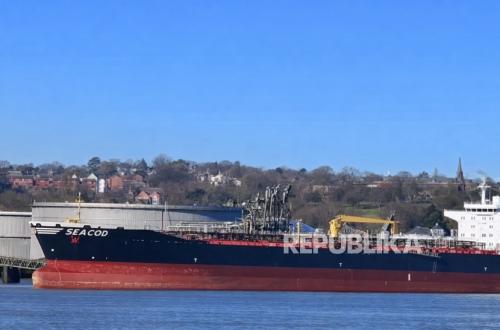
A tanker subject to European Union and UK sanctions continues to leak oil off the coast of Oman after transporting Russian crude oil. The incident illustrates the paradox of the West’s economic warfare against Moscow: while sanctions restrict Russia’s access to Western markets, financing, technology, and shipping services, a portion of the costs and risks are being distributed across European industries and nations not directly involved in the conflict.
Satellite imagery from 28 July 2026 shows dark oil slicks near the vessel Caroline Bezengi and lighter patches north of al-Qibliyyah Island. The island, located near the Omani coast, is part of a protected marine area. As reported by Reuters on Friday, 31 July 20rypt 2026, the vessel loaded Russian oil at the Port of Novorossiysk in the Black Sea before commencing its final voyage. The ship first reported issues near Mukalla, Yemen, on 8 June. Initial assessments from two maritime security sources indicate an explosion occurred on board, though the cause remains unknown.
A remote sensing expert examining the imagery assessed that at least one section of the ship’s hull has leaked. The International Maritime Organization (IMO) stated that the vessel has not broken apart, but relevant authorities are still discussing safety and environmental risks. The monsoon season, which typically peaks in July and August, has the potential to spread the oil spill further.
The incident occurred eight days after the European Union approved its 21st package of sanctions against Russia on Thursday, 23 July 2026. The package added 48 individuals and 170 entities to the restricted list. The EU also included 41 new ships in its list of Russia’s ‘shadow fleet’. The number of restricted vessels has now reached 673, an increase of 41 ships over the previous 632. In addition to the ban on entering EU ports, these vessels are prohibited from obtaining various maritime services from companies within the bloc.
The latest package also froze the assets of 94 major Russian banks and financial institutions, expanded transaction bans to include 33 Russian credit and financial institutions, and targeted crypto-asset platforms and several banks in third-party countries.
However, the lengthening sanctions list does not result in a simple distribution of losses. Russia suffers the strategic loss of markets and economic access. Europe, meanwhile, must pay the costs of energy replacement and industrial restructuring. Shipping companies are losing contracts, farmers are facing more expensive fertilisers, and parts of the trade are shifting to operators and intermediary companies outside the West.
Russia is losing its closest energy markets. The most fundamental loss for Russia is the shrinking of the European energy market, which for decades was connected through pipeline networks, long-term contracts, terminals, refineries, and relatively short shipping routes. The European Commission noted that Russia’s share of EU gas imports fell from approximately 45 per cent in 2021 to 12 per cent in 2025. The volume of gas sourced from Russia shrank from 152 billion cubic metres to 36 billion cubic metres during the same period. Russia’s oil share also dropped from around 27 per cent in early 2022 to 2 per cent in 2025. Russian coal imports have been removed from the EU energy mix through sanctions. Nevertheless, in 2025, the EU was still importing approximately 9.7 million tonnes of Russian crude oil.