
Russia Opens Russian Space at Istiqlal Mosque as Pagar Nusa Promotes Cultural Diplomacy
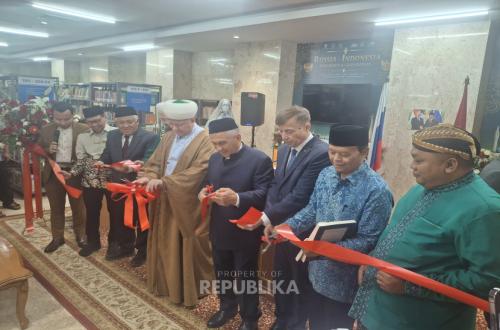
JAKARTA — The opening of Russian Space in the library of Istiqlal Mosque in Jakarta on Friday (6 November 2026) marked an effort to strengthen cultural and educational ties, as well as interfaith dialogue, between Indonesia and the Russian Federation. The facility is expected to introduce visitors to Russian history, language and culture while creating opportunities for knowledge exchange between the peoples of the two countries.
Those attending the opening included Rais of the Republic of Tatarstan Rustam Minnikhanov, Russian Ambassador Sergei Tolchenov, Deputy Speaker of the Indonesian People’s Consultative Assembly Hidayat Nur Wahid, chair of the Spiritual Assembly of Muslims of Russia (SAMR) Albir Hazrat Krganov, Tatarstan Mufti Kamil Hazrat Samigullin, chair of Pagar Nusa’s central board Muchamad Nabil Haroen, chair of the Centre for Dialogue and Cooperation among Civilisations Din Syamsuddin, Religious Affairs Minister’s special staff member Farid F. Saenong, and SAMR representative in Indonesia Arip Sultanmagomedov.
The event began with a recitation of the Qur’an by Ahmed Omarov and was marked by a ribbon-cutting ceremony involving eight Indonesian and Russian figures.
Russian Ambassador Sergei Tolchenov said religious and cultural ties were an important part of the Indonesia-Russia strategic partnership signed by President Vladimir Putin and President Prabowo Subianto in 2025.
“I am confident this room will be a very important step in strengthening interfaith relations between Russia and Indonesia, as well as promoting Russian culture and traditions among Indonesians,” he said.
Pagar Nusa central board chair Muchamad Nabil Haroen, known as Gus Nabil, welcomed Russian Space as an opportunity to expand cultural diplomacy. He said strong international relations could not be built through political and economic cooperation alone, but also required closer ties between people.
“I welcome Russian Space as a new space for strengthening friendship, the exchange of knowledge and cultural dialogue between the people of Indonesia and Russia,” he said.
Gus Nabil said pencak silat could serve as a bridge for Indonesian-Russian diplomacy. As part of Indonesia’s cultural heritage, pencak silat teaches not only self-defence skills but also spiritual values, character-building, self-control and respect for others.
“Pencak silat is not merely a martial art, but also an education in character, self-control and respect for human dignity,” he said.
He said Pagar Nusa, a pencak silat organisation within Nahdlatul Ulama, had opportunities to develop cultural exchanges through pencak silat, traditional arts and character education. Such cooperation could showcase Indonesia’s cultural wealth while building mutual understanding across differences in nationality, language and tradition.
Gus Nabil linked cultural diplomacy to the principle of ta’aruf, or getting to know one another, in the pesantren tradition.
“In the pesantren tradition, we know the principle of ta’aruf, of getting to know one another. From acquaintance comes understanding; from understanding grows trust; and from trust, brotherhood is built,” he said.
He added: “For me, the best diplomacy does not merely bring together the interests of nations, but also brings people closer at heart.”
Meanwhile, SAMR chair Albir Hazrat Krganov outlined plans to develop Russian Space through educational and cultural activities, including in-person and online Russian-language courses. The organisation is also exploring preparatory programmes for Indonesians who want to pursue further education in Russia.
“I know many Indonesians dream of going to Russia to continue their education. This centre could therefore also offer preparatory courses for prospective students who want to study in Russia,” he said.
Albir also said a cultural space for Indonesia could potentially be established at a mosque in Russia as a form of two-way cultural exchange. Russian Space is planning regular monthly activities, although some programmes are still being explored.
He said the facility’s development should take the needs of the community into account to ensure it delivers practical and lasting benefits.
As part of the opening ceremony, Gus Nabil joined the ribbon-cutting and was asked to lead the closing prayer. He expressed hope that Russian Space would become a meeting place that strengthens fellowship, brings together scholarly traditions and advances in education, and fosters peace.
“Languages may differ, but sincerity has the same voice,” read an excerpt from his prayer.
Gus Nabil said he hoped Indonesian-Russian cultural cooperation would go beyond the ceremony and develop through practical activities involving people from both countries.
“May Russian Space become a place that brings together knowledge and culture, tradition and progress, and two nations in a spirit of friendship and peace,” he said.
Source: jawawa.id (https://jawawa.id/newsitem/russia-opens-russian-space-at-istiqlal-mosque-as-pagar-nusa-promotes-cultural-diplomacy-1793976684)
Originally published by Republika (https://khazanah.republika.co.id/berita/to3297430/rusia-resmikan-russian-space-di-masjid-istiqlal-pagar-nusa-dorong-diplomasi-kebudayaan), translated from Indonesian