
Russia, Israel and MAGA vie for influence amid French riots
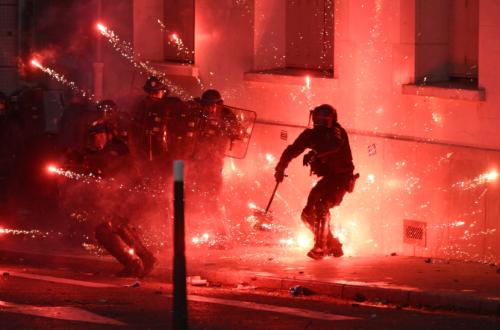
PARIS — The major riots that rocked France in October 2026 became a battleground for influence among several foreign networks. Two internal reports by the European Union and the French Foreign Ministry revealed activity by pro-Russian groups, networks of accounts linked to Israel, and supporters of the Make America Great Again (MAGA) movement in the United States, all seeking to shape public perceptions of the turmoil.
The findings emerged in an exclusive Reuters investigation published on Monday (9 November 2026). Documents obtained by the international news agency showed how various foreign actors exploited the wave of demonstrations and unrest to spread narratives about immigration, radicalism, national security and the weakness of the French government.
However, neither document found evidence that foreign powers had organised or directly provoked the riots. The activity identified mainly involved information manipulation and attempts to exploit social tensions to influence public opinion.
The EU’s internal report focused particularly on information operations linked to Russian interests. Meanwhile, the French Foreign Ministry’s assessment identified the spread of similar narratives through groups of accounts linked to Israel and MAGA political networks in the United States.
The three groups had different characteristics, interests and spheres of influence. There was no evidence that they conducted joint operations or were part of a single command structure seeking to influence the course of the French riots.
Russian network poses as Western media
Reuters reported that the EU document identified activity by a pro-Russian information network known as Operation Overload or Matryoshka. The network had previously drawn the attention of European authorities for using various information-manipulation techniques to undermine the credibility of governments and Western democratic institutions.
During the French unrest, the network was suspected of circulating videos designed to resemble reports by international media. Some content included false claims about sexual violence by immigrants and the threat of imminent terrorist attacks.
The content was spread to create the impression that the French government had lost the ability to maintain domestic security. Allegations in the manipulated material should not be treated as fact, as they form part of an information operation under investigation.
An EU analysis of digital activity from 7 to 21 October 2026 found a pattern of messages portraying France’s leadership as both weak and increasingly authoritarian. The narratives also sought to link domestic discontent with European foreign policy, particularly support for Ukraine.
Analysts said social tensions could be exploited to foster the perception that European governments were neglecting public welfare in order to support the war in Ukraine. Such messages could increase public distrust of political institutions and deepen divisions over international policy.
The Matryoshka network is not new to Europe’s information-security landscape. VIGINUM, the French government agency responsible for addressing foreign information manipulation, has documented the network’s activity since September 2023.
In a technical report published in June 2024, VIGINUM explained that Matryoshka uses fabricated content imitating media outlets and public figures. The material is then circulated on digital platforms, including by targeting journalists and fact-checkers to draw greater attention to the network’s messages.
MAGA- and Israel-linked accounts reach tens of millions
Another notable finding came from an internal French Foreign Ministry report on the spread of narratives about the unrest on X. The document showed that groups of accounts linked to MAGA and Israel achieved far greater reach than the pro-Russian network during certain periods under review.
According to data cited by Reuters, the ten most-viewed posts by pro-Russian groups about the riots generated around 2.8 million impressions between 16 and 18 October 2026. In the same period, the ten top posts from accounts linked to the MAGA movement received more than 49 million impressions.
High figures were also recorded for posts by Israeli officials, government accounts, media outlets and influencers. The ten most-viewed posts from this group received more than 35 million impressions during the same period.
The difference in reach illustrates how messages about a domestic crisis in France can spread through international political communication networks. However, impression counts alone do not prove that a propaganda operation succeeded in changing public opinion, or that all the accounts involved were centrally coordinated.
The report identified several narratives linking the riots to immigration and radical Islamism. These messages could divert public attention from the socio-economic grievances behind the demonstrations towards debates about identity, religion and national security.
Nevertheless, an account’s links to a political movement or a country do not in themselves prove official involvement by that country’s government. The findings about activity by MAGA networks also do not mean that the US government directed the spread of the information.
Source: jawawa.id (https://jawawa.id/newsitem/russia-israel-and-maga-vie-for-influence-amid-french-riots-1794361900)
Originally published by Republika (https://news.republika.co.id/berita/tobbre451/rusia-israel-maga-berebut-pengaruh-di-kerusuhan-prancis), translated from Indonesian