
Russia Faces Fuel Crisis, Will Putin Be Forced to Negotiate?
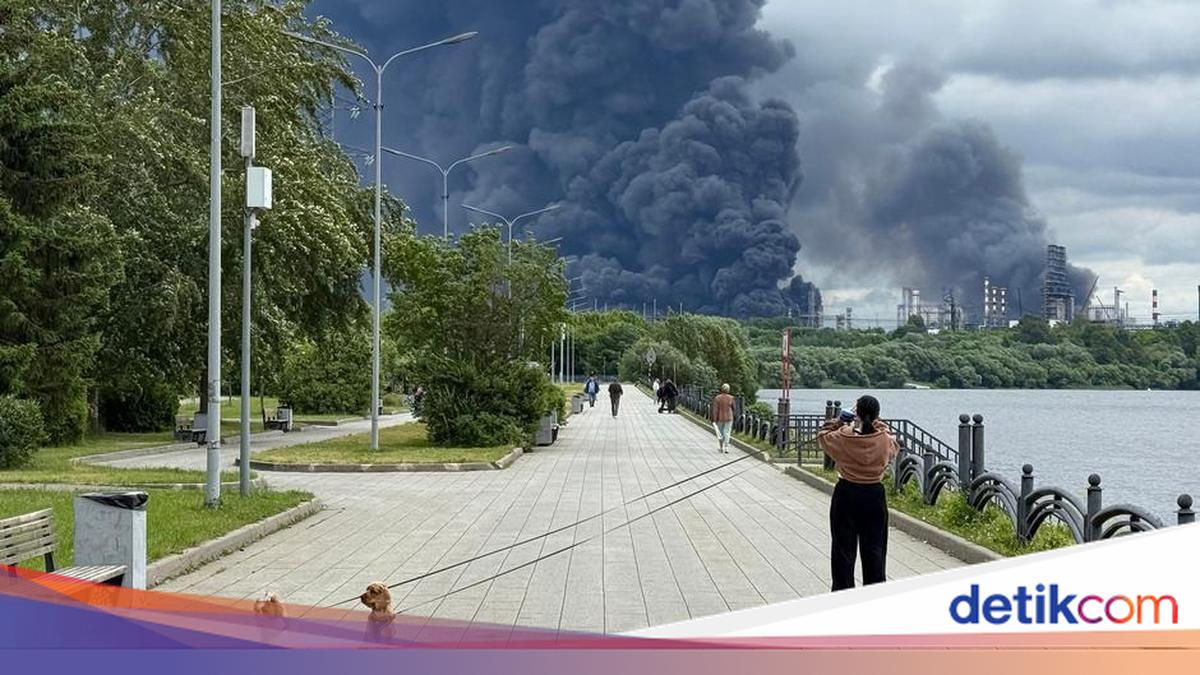
Over the past few months, the Ukrainian armed forces have continued to strike energy infrastructure across Russia, including in annexed Crimea. Russian logistics routes in occupied territories and strategic oil refineries have fallen victim to Ukraine’s long-range attacks.
Throughout June alone, oil refineries in Moscow, Nizhnekamsk, Tyumen, and Volgograd were damaged by strikes. A month earlier, a total of 16 refineries were targeted. As a result, petrol production fell by 25 per cent, Reuters news agency reported. Russia is currently producing only 85,000 tonnes of petrol per day, whilst summer consumption demands reach 110,000 tonnes per day.
‘This summer, Russia is heading towards a fuel crisis that may be the worst in its history,’ said analysts from the American think tank Energy Intelligence.
On 28 June, Russian President Vladimir Putin publicly acknowledged for the first time a ‘certain level of fuel shortage. There is indeed damage,’ he said in an interview with Russian state television. ‘However, all damaged facilities are being repaired quite quickly, and the problems that arise are not of a critical nature,’ Putin stated.
‘Putin was forced to publicly admit that this problem exists,’ said Margarita Zavadskaya, a political scientist at the Finnish Institute of International Affairs. ‘More importantly, he also mentioned the cause—Ukrainian drone strikes,’ Zavadskaya told DW.
According to estimates by the RBC economic portal, restrictions on fuel sales have now been imposed in 40 Russian regions. However, the Russian news portal Wjorstka, which analysed official data and eyewitness reports, claims the number of affected regions reaches 78. In many cities, long queues have been observed at petrol stations.
Christina Harward, an analyst at the Institute for the Study of War (ISW) in Washington, D.C., said Ukraine had actually been trying to attack oil refineries since 2025. ‘The difference this year is that Ukraine has significantly increased both the number and quality of their drones. The range of the drones has been extended, and in recent months they have also been systematically working to detect and destroy Russian air defence systems,’ she told DW.
Simultaneously, the Ukrainian military is also trying to paralyse the supply lines of Russian troops near the front line. According to Harward, the increased attacks on targets within a 20 to 200 kilometre radius inside Russian territory represent a ‘new development from the Ukrainian side in this war’.
She noted that there are now increasing reports indicating that logistical supplies to the front line are beginning to stall. ‘There are reports that soldiers around Huljajpole—east and west of the Zaporizhzhia region—are experiencing shortages of fuel, ammunition, and various other logistical needs,’ Harward said. In the Donetsk region, supplies of artillery ammunition and reconnaissance drones are also facing more frequent disruptions.
Harward also highlighted the Crimean Bridge, which has recently been targeted by Ukrainian attacks. The bridge is a vital logistics route not only for the Russian military but also for civilians on the peninsula. Permanent damage to the Crimean Bridge would ‘truly sever one of the main arteries that Russia possesses,’ she explained.
Since 26 June, the Moscow-installed authorities in Crimea have imposed a state of emergency across the peninsula and the capital, Sevastopol. The emergency status was declared following a series of Ukrainian attacks that triggered fuel and food shortages in Crimea.
According to British historian Mark Galeotti, Ukraine has identified Crimea as Russia’s weak point. ‘Keeping it supplied—with fuel, energy, water, and all other essential needs—is very difficult. Therefore, they hope that pressure on Crimea will force Putin to start serious peace negotiations, of course on their own terms,’ he told DW, explaining Ukraine’s strategy.
Ukrainian President Volodymyr Zelenskyy has described the strikes on fuel depots and refineries as ‘medium and long-term sanctions’ intended to force Moscow back to the negotiating table.
However, Galeotti warned that such a move also risks pushing Putin towards escalation. ‘The assessment of this risk is what now shapes the perspective in Kyiv,’ he said. Nevertheless, he considers speculation about Ukraine militarily recapturing Crimea to be more of a ‘psychological war’.
‘I think it is not only extremely difficult to achieve, but it would also create a situation that forces Putin to respond with escalatory measures. Losing Crimea would be a massive humiliation for him, because the territory is seen as the ’crown jewel’ of all his conquests.’ Therefore, from Ukraine’s point of view, ‘the goal is more about applying pressure than actually seizing the territory,’ Galeotti said.
Addressing the question of what form a possible Russian escalation might take, Galeotti believes Putin still has many options. ‘He could mobilise hundreds of thousands of additional reserve personnel, although that move would be very politically unpopular and potentially trigger unrest. He also still has about 150,000 conscripts who have not yet been sent to the battlefield—and that too would be very unpopular. If you consider other possibilities, there is also the worst-case scenario, which I think is very unlikely, namely the use of tactical nuclear weapons. The options do exist, but all of them will ultimately be detrimental to him. The main question is how far Putin is willing to go.’