
Rural People Don't Use Dollars: Prabowo's Populist Rhetoric
This article is an opinion piece, and all content and opinions reflect the personal views of the author and not the editorial stance.
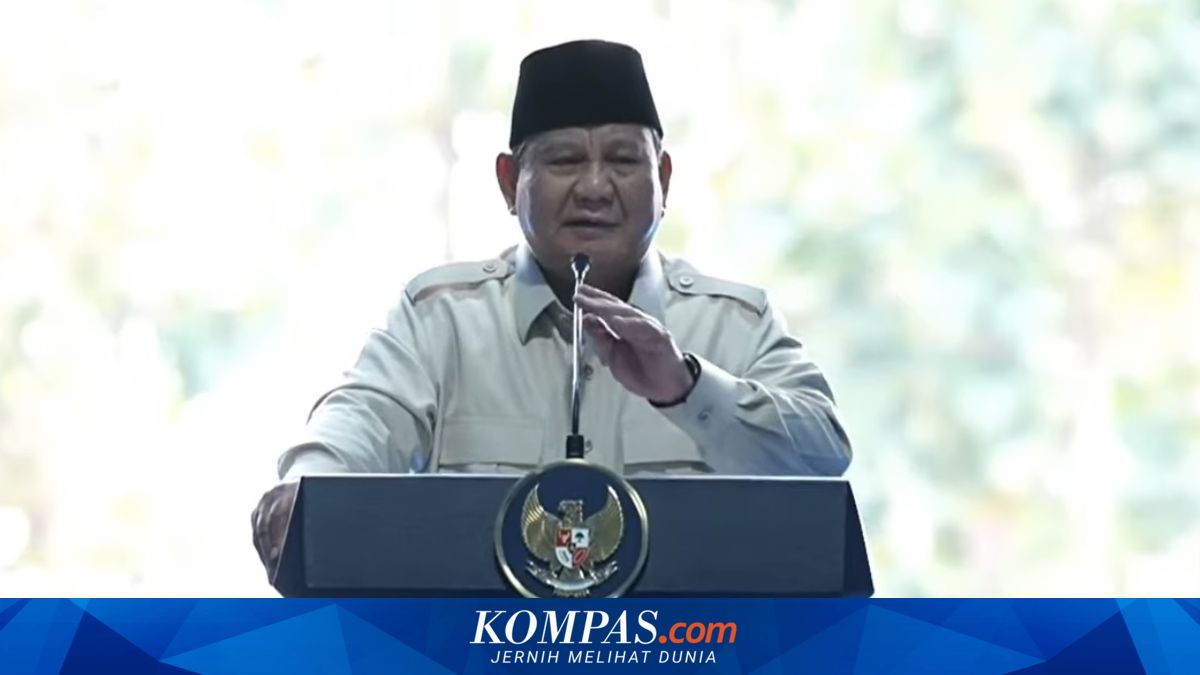
President Prabowo Subianto’s speech in Nganjuk on Saturday, 16 May 2026, immediately went viral. In response to public concerns about the rising US dollar, he said lightly: “rural people don’t use dollars.” The sentence sounded simple, relatable, even amusing. Applause erupted. But that is precisely where the problem lies. When an economic crisis is met with simplifying rhetoric, politics is moving from a rational space to an emotional populist stage. The statement is not just a spontaneous joke. It is a reflection of how power reads the people. In one short sentence, it shows how the state tries to create the illusion that ordinary people are outside the vortex of global capitalism. Villages are positioned as a moral bastion of the national economy: simple, resilient to crises, and far from the turbulence of world markets. But is this really the case? This is why President Prabowo’s speech deserves to be read not as political entertainment, but as an ideological symptom. In What Is Populism?, Jan-Werner Müller explains that populism works by creating a moral opposition between the “pure people” and the “complex elite” (Müller, 2016). The people are understood not as a complex social category, but as a political symbol whose emotions must be constantly maintained. In President Prabowo’s speech in Nganjuk, “rural people” became that symbol. President Prabowo is building a narrative that ordinary people live in the real economy, not in the abstract economy of global markets. At first glance, this narrative sounds patriotic. However, the problem is that today’s Indonesian economy is never truly separate from the dollar. Fuel prices are influenced by world oil geopolitics. The price of animal feed, medicine, and logistics costs are all related to the exchange rate of the dollar. Even the increase in rice prices and basic necessities in village shops is often a domino effect of an invisible global economy. Therefore, when a President says “rural people don’t use dollars,” the problem is not whether it is literally true or false. The problem is the reduction of reality. The state is simplifying structural problems into mass psychology. This is how populism works: not by explaining complexity, but by producing a sense of calm.