
Rupiah's Endless Drama: From Colonial Times, Crisis to Today
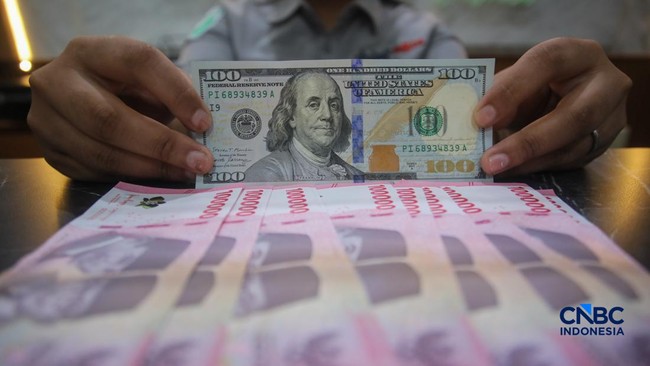
Ahead of the 81st anniversary of the Republic of Indonesia, the rupiah remains an inseparable part of the nation’s journey. The history of payment instruments in Indonesia began long before independence, when the archipelago was adorned with various means of exchange, from seashells, beads, and royal coins to foreign currencies brought through trade. After Indonesia gained independence, the rupiah gradually became a symbol of sovereignty and a unifying tool for the region. Its journey has not always been smooth; Indonesia has several times redenominated and changed the value of its money, tightly controlled exchange rate movements, and faced the collapse of the rupiah during the 1998 monetary crisis.
According to Bank Indonesia, the development of money in Indonesia has progressed alongside changes in power, trade activities, colonialism, and the struggle to build state sovereignty. Before the introduction of money, communities in the archipelago used various items to replace the barter system. Seashells were used in Irian, beads in Bengkulu and Pekalongan, while the people of Bekasi used belincung or stone axes. During the era of the kingdoms, payment instruments began to be made from cloth and metal, including Kampua money from the Buton Kingdom, Krisnala or Ma money from the Jenggala Kingdom, and copper Gobog coins from the Majapahit Kingdom.
Entering the 15th century, Islamic kingdoms such as Samudra Pasai, Aceh, Jambi, Banten, and Sumenep issued their own currencies, most of which used Arabic script. Royal money circulated alongside foreign currencies due to strong international trade activity in the archipelago. When the Dutch East India Company (VOC) dominated trade between 1602 and 1799, the trading company minted Dutch Reals and made the Rijksdaalder the standard payment instrument. The VOC also circulated copper Duit coins in 1727 and introduced paper money in the form of certificates in 1748. During the British interregnum, the Spanish Real was reused before being replaced by the Ropij Jawa in 1813. After the Dutch returned to power, the Netherlands Indies Gulden was issued in 1817. De Javasche Bank, established in 1828, later obtained the authority to issue paper money in denominations of five gulden and above.
The circulation of money changed again during the Japanese occupation. The Japanese government issued large quantities of paper money known as invasion money, leading to a surge in money supply after Indonesia proclaimed independence. The situation became more complex when the Netherlands Indies Civil Administration (NICA) circulated a new currency. The Indonesian government rejected the NICA money through an edict on 2 October 1945 but could not immediately print its own currency. The government finally circulated Oeang Repoeblik Indonesia (ORI) in October 1946. ORI was not merely a means of payment but also a symbol of Indonesian sovereignty. After the Dutch Military Aggression severed links between the central government and several regions, some areas issued regional ORI (ORIDA) from 1947.
The name rupiah bears a resemblance to the Indian rupee, but it is not simply a copy. According to Bank Indonesia Museum, there are two versions of its origin. The first suggests rupiah comes from the Sanskrit word ‘rupya’, meaning silver. The second links it to the Mongolian word ‘rupia’, which also means silver. The term rupiah had long been used by the people of the archipelago to refer to money, a legacy of silver being used as a coinage material since the era of the kingdoms. Archaeological records show silver coins were used in Java from around the 8th century. The ORI circulated in 1946 also used rupiah as its unit of value. On 2 November 1949, the name rupiah was established as the national currency as part of the Round Table Conference agreements.
After the formation of the Republic of the United States of Indonesia (RIS), the government issued RIS money denominated in rupiah. ORI and ORIDA were then withdrawn from circulation starting 1 May 1950. The use of RIS money did not last long; after Indonesia returned to a unitary state in August 1950, the currency was no longer used. The rupiah’s status as the official currency of Indonesia was further reinforced through the Currency Law of 1951. The rupiah then became the national currency, replacing the federal RIS money and various other currencies still in circulation. After Bank Indonesia was established in 1953, it began issuing paper money in denominations of Rp5 and above, while the government still issued paper money below Rp5 and coins. BI later obtained the authority to issue all types and denominations of currency in 1965, and Law Number 13 of 1968 established BI as the sole institution with the right to issue and circulate money. However, not all of Indonesia used the same rupiah; the Riau Islands once used the Riau Islands Rupiah, while West Irian used the West Irian Rupiah. Monetary unification was only completed in 1971 after the West Irian Rupiah was withdrawn, making the rupiah legal tender throughout Indonesia. The rupiah’s journey before the Reformasi era was marked by at least two major events: a series of currency cuts and value changes in 1959 and 1965.