
Rupiah’s depreciation trend mirrors early stages of 1997 Thai Baht crisis
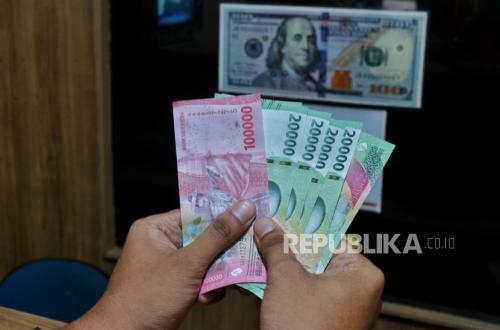
Economists criticise the rupiah’s ongoing depreciation despite continuous central bank interventions. The trend of rupiah weakness is seen as a deep pressure signal for Indonesia and reminiscent of the 1997 Thai Baht crisis.
Yanuar Rizky, an economist, highlighted the struggling Indonesian bond market amid the weakening rupiah. He noted that these pressures are not visible on the surface, leading the government to often claim the rupiah remains stable.
‘Foreign currency savings at banks are in a ‘rate war’ as banks prevent client crowding out. Since February, foreign currency interest rates have risen, especially for priority clients’ large deposits,’ Yanuar said on 29 May 2026.
He added that Bank Indonesia (BI) introduced a dollar purchase threshold of $100,000 per person per month in April 2026, reduced to $50,000, and further to $25,000 from June 2026.
‘Banks are also heavily offering foreign currency government bonds (SBNs). This pressure on the rupiah isn’t apparent on the surface. While SBN yields and BI’s policy rate appear stable, the rupiah is under perceived domestic pressure since January,’ he explained.
Furthermore, Yanuar pointed to rising resident capital outflows in the balance of payments. According to Bright Institute data, foreign capital inflows to Indonesia in Q1 2026 reached $4.2 million, while outflows by Indonesian residents amounted to $9.14 million, resulting in a net outflow of approximately $4.93 million.
‘This signals a situation similar to the 1997 baht crisis, where export proceeds (DHE) were being withdrawn as confidence in the baht collapsed. It’s worth monitoring whether this will act as a shock therapy or become a crisis in itself,’ he said.
As a brief background, the 1997 Baht crisis was Thailand’s currency devaluation that triggered the 1997 Asian Financial Crisis. Prior to the crisis, Thailand’s economy appeared robust. In the early 1990s, it experienced high growth, attracting significant foreign investment.
Thailand’s government maintained a fixed exchange rate against the US dollar, giving investors confidence to borrow in dollars. Thai banks and companies accumulated large dollar-denominated debts, while property and stock markets boomed, and current account deficits widened due to high imports and investment. On the surface, everything seemed fine.
Problems emerged in mid-1996-1997. Thai exports slowed, the property sector weakened, private foreign debt ballooned, and many projects failed to yield adequate returns. Investors began questioning Thailand’s ability to sustain the baht’s value.
As confidence in the baht eroded, speculators sold the currency and bought dollars. The Bank of Thailand tried to defend the exchange rate by selling foreign reserves and buying baht, but the market was too large, depleting reserves. By June 1997, Thailand capitulated, allowing the baht to plummet.
Before the crisis, 1 baht was worth around 25 to the dollar. Afterward, it reached 50 baht per dollar—a nearly 50% depreciation. The collapse was dangerous as many Thai firms held dollar-denominated debts.