
Rupiah Weakness Reflects Underlying Economic Concerns
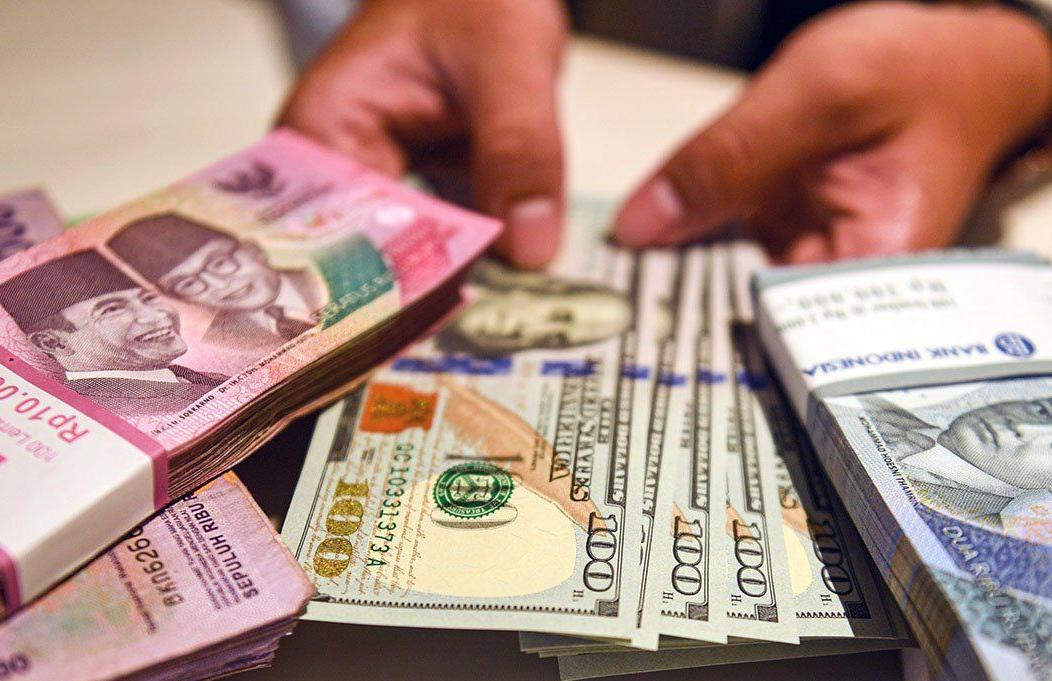
The Rupiah exchange rate, which has weakened to a level of Rp17,600 per US dollar, is not only influenced by short-term sentiment. The weakening also reflects a combination of global and domestic pressures that are occurring simultaneously.
The head of the Macroeconomics and Finance Center at the Institute for Development of Economics and Finance (Indef), Rizal Taufikurrahman, said that the pressure on the Rupiah was triggered by the strengthening of the US dollar amid high global interest rates, geopolitical uncertainty, and capital outflows from emerging markets.
“The weakening of the Rupiah to a level of Rp17,600 per US dollar reflects global and domestic pressures that are occurring simultaneously. From the external side, the US dollar is still very strong due to high global interest rates, geopolitical uncertainty, and capital outflows from emerging markets,” said Rizal when contacted, Friday (15/5).
According to him, from the domestic side, the market has begun to pay attention to a number of fundamental factors, starting from the government’s fiscal credibility, the large need for debt financing, to the trend of declining foreign ownership in Government Bonds (SBN).
“So, the pressure on the Rupiah at this time is not just a momentary sentiment, but has begun to reflect fundamental concerns,” he explained.
Rizal assessed that the weakening of the Rupiah has the potential to have a significant impact on the national economy because Indonesia still has a high dependence on imports of food, energy, and industrial raw materials. According to him, the depreciation of the Rupiah will increase import costs, thus triggering imported inflation and suppressing people’s purchasing power, especially the lower middle class.
“The manufacturing industry is also at risk of facing an increase in production costs which can suppress business expansion and investment,” he said.
In order to face these pressures, Rizal assessed that Bank Indonesia (BI) needs to remain aggressive in maintaining financial market stability through intervention in the foreign exchange market, the Domestic Non-Deliverable Forward (DNDF) instrument, and the stabilization of the SBN market. However, these steps are considered insufficient if the pressure on the Rupiah continues to increase.
“BI also needs to create room for interest rate increases if the pressure continues to increase in order to maintain the attractiveness of domestic assets,” said Rizal.
On the other hand, the government is considered to need to maintain fiscal credibility and strengthen the policy of foreign exchange from exports of natural resources (DHE SDA) in order to strengthen the supply of domestic foreign exchange. In addition, Rizal assessed that efforts to reduce import dependence are also considered important so that the Rupiah does not continue to be vulnerable to global economic shocks.
“The government must maintain fiscal credibility, strengthen DHE SDA, and reduce import dependence so that the Rupiah does not continue to be vulnerable to global shocks,” he said. (E-4)
The Rupiah exchange rate at the close of trading today was recorded to have strengthened to the level of Rp17,476 per US dollar, from the previous position of Rp17,529 per US dollar.
Capital market observer Hendra Wardana highlighted the impact of the May 2026 MSCI rebalancing which triggered a capital outflow of Rp50.63 trillion and pressure on the IHSG.
The Rupiah exchange rate against the US dollar today, May 13, 2026, shows the latest developments in trading. Based on foreign exchange market data,
The Chief Economist of Permata Bank, Josua Pardede, warned of the potential for a surge in the 2026 state budget deficit to Rp200 trillion due to the weakening of the Rupiah and oil prices.
The price of a number of vegetable commodities in traditional markets in Batam City, Riau Islands, was relatively stable on Tuesday (12/5).
The Rupiah exchange rate at the close of trading today was recorded to have strengthened to the level of Rp17,476 per US dollar, from the previous position of Rp17,529 per US dollar.
BI said the weakening of the Rupiah to Rp17,500 per US dollar was triggered by the Middle East conflict, rising oil prices, and domestic seasonal factors. BI remains optimistic that stability will be maintained.
The weakening of the Rupiah exchange rate, which has passed the level of Rp17,400 per US dollar, has become a serious concern for business circles.
The national ceramic industry is facing heavy pressure at the beginning of 2026. The combination of gas supply disruptions and the weakening of the Rupiah is considered to further erode the competitiveness of this sector.
The Rupiah exchange rate closed weaker at Rp17,424 per US dollar, triggered by US-Iran military tensions in the Strait of Hormuz, even though the domestic economy grew 5.61%.