
Rupiah Weakness: House Commission XI Member Stresses Importance of Cross-Sector Policy Coordination
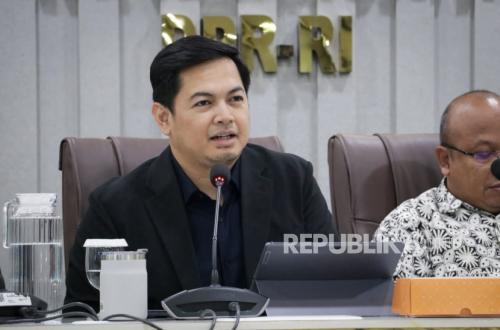
Member of House Commission XI from the PKB faction, Tommy Kurniawan, stated that the Indonesian economy faced considerable external pressure throughout the first half of 2026. This situation arose from global economic uncertainty, high interest rates in advanced economies, heightened geopolitical tensions, and continued volatility in international capital flows.
According to Tomkur, as he is familiarly known, these conditions exerted pressure on the rupiah exchange rate, which briefly touched its weakest level in modern Indonesian history, reaching Rp 18,100 per US dollar. However, the rupiah has since shown strengthening and is currently around Rp 17,700 per US dollar.
“The weakening of the rupiah exchange rate must be a serious concern because it not only impacts the real sector through rising import costs and inflationary pressure, but also has the potential to affect financial system stability through increased market risk, credit risk, and liquidity risk,” Tomkur said during a PKB Faction Public Discussion titled ‘Weakening Rupiah: A Threat to Economic and Banking Stability: Assessing the Readiness of BI and LPS’, held in the PKB Faction meeting room at the Nusantara Building, 4th Floor, on Thursday (18/6/2026).
Tomkur explained that prolonged exchange rate depreciation could increase the liability burden of companies with foreign currency debt, especially sectors dependent on imported raw materials and external financing. If not managed properly, this condition could potentially reduce debtor repayment capacity and impact the quality of banking assets.
“Therefore, the weakening of the rupiah must be viewed as a cross-sector issue requiring strong policy coordination between monetary, fiscal, and financial services sector authorities,” he stressed.
Despite facing global pressures, Tomkur assessed that the national banking sector’s performance up to the first half of 2026 remained quite resilient. Based on Financial Services Authority (OJK) data up to April 2026, bank credit grew 9.98 percent year-on-year to Rp 8,755 trillion, while Third Party Funds (DPK) increased 11.39 percent to Rp 10,077 trillion.
“This data shows that economic activity and public confidence in the banking system remain well maintained even though global financial markets are under pressure,” he said.