
Rupiah Weakness and the Urgent Need to Strengthen National Economic Fundamentals
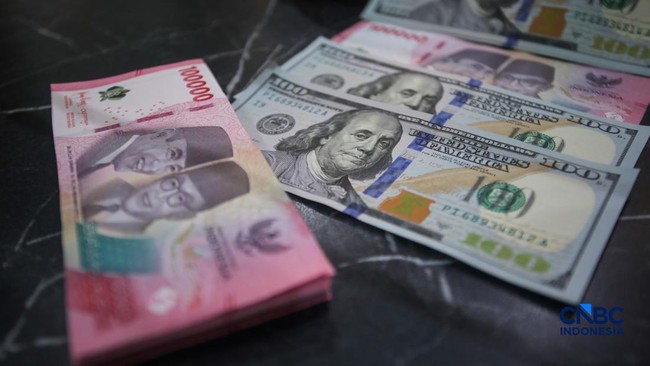
The rupiah’s depreciation to Rp18,183 per US dollar on 28 October 2026 was not merely exchange-rate volatility, but a sign of the fragility of the national economic structure amid global pressures. The decline was among the steepest in recent years and put significant pressure on state spending, particularly expenditure sensitive to exchange-rate movements.
Energy subsidies and foreign debt repayments have been among the areas most affected. However, the government’s response has tended to treat the rupiah’s weakness as a temporary external shock. In fact, the depreciation has spread to the real economy and people’s welfare.
Threats to the economy
According to economists, the rupiah’s weakness is the result of several pressures building simultaneously — a “perfect storm”. Geopolitical conflicts and the US Federal Reserve’s high interest-rate policy have strengthened the US dollar.
This has triggered capital outflows from developing countries, including Indonesia, as investors tend to turn to the US dollar as a safe-haven asset amid rising global economic uncertainty.
In Indonesia, the rupiah’s weakness has also caused renewed concern, particularly among businesses and the public. The economic structure remains highly vulnerable to external shocks because of its reliance on imported raw materials, a weak manufacturing industry, incomplete downstream processing, a commodity-based economy and foreign capital flows. These factors make domestic economic stability more susceptible to disruption.
A sharp rise in production input costs is unavoidable, as 70 per cent of the raw materials used in the national manufacturing sector are still imported. The same applies to the food and beverage, construction, energy, education and healthcare sectors. In these circumstances, businesses are likely to adopt a more defensive approach, postponing expansion and reducing production capacity to preserve liquidity.
These pressures also have a direct effect on the public, particularly the middle class, which is vulnerable to rising living costs — especially for basic necessities — and uncertainty over employment. On average, 70 per cent of household expenditure goes towards food.
This will put pressure on purchasing power and micro, small and medium-sized enterprises (MSMEs), an engine of growth. If left unchecked, the consequences could include redundancies and the emergence of new poverty.
This would run counter to the government’s priority of eliminating extreme poverty by 2026. The effects could also spill over into public services that directly affect people, such as education and healthcare.
On the other hand, the rupiah’s depreciation could increase revenues for businesses in commodity sectors such as coal, palm oil, nickel and natural gas. However, Statistics Indonesia (BPS) data show that exports grew by only 0.34 per cent in the first quarter of 2026 compared with the same period in 2025.
Meanwhile, imports grew by 10.05 per cent in the same quarter compared with the corresponding period in 2025. This points to an imbalance between export and import growth, potentially putting pressure on the trade balance. The situation could also place pressure on state spending and widen the state budget deficit.
Higher prices for imported goods could encourage import substitution and strengthen domestic industry, provided local production capacity can respond. This could spur growth in domestic raw-material industries and reduce dependence on global supply chains. In the long term, lower imports could narrow the trade deficit or ease pressure on the current account deficit (CAD).
Maintaining stability
The rupiah’s weakness is not merely an exchange-rate figure; it threatens welfare and development. If it is not addressed seriously, it could deepen social inequality, create new poverty and hamper development targets by narrowing fiscal space.
Bank Indonesia has taken steps to maintain exchange-rate stability, including market intervention, monetary operations, interest-rate increases and other instruments. These measures are important to curb short-term volatility. However, monetary instruments have limitations when the pressure stems from structural and fiscal factors.
As long as the budget deficit, dependence on imports and trade imbalances remain high, pressure on the rupiah is likely to recur.
Further intervention is therefore important, with the government and relevant authorities needing to safeguard macroeconomic stability and market confidence.
One measure would be to provide incentives for domestic raw-material industries and accelerate manufacturing downstreaming to reduce dependence on imports. Consistent fiscal and monetary policies, alongside policy certainty for businesses and investors, are also short-term priorities amid global economic uncertainty. Investors and businesses are highly sensitive to countries that lack a clear and consistent long-term policy direction or economic “grand design”.
Stronger coordination between institutions, greater policy transparency and faster structural reform are also important to bolster economic resilience over the medium term. Efforts to keep inflation under control, stabilise the exchange rate, and broaden the export and investment base should continue to ensure that economic growth remains inclusive and sustainable.
In the long term, exports need to be diversified, as Indonesia remains heavily dependent on coal, palm oil and nickel. Prices for these commodities are highly volatile, so greater emphasis should be placed on exporting technology and higher-value-added products. Strengthening food security and renewable energy is also crucial, as these sectors can trigger inflation most quickly when the rupiah weakens.
Source: jawawa.id (https://jawawa.id/newsitem/rupiah-weakness-and-the-urgent-need-to-strengthen-national-economic-fundamentals-1793274692)
Originally published by CNBC Indonesia (https://www.cnbcindonesia.com/opini/20261029174520-14-780689/pelemahan-rupiah-dan-urgensi-penguatan-fundamental-ekonomi-nasional), translated from Indonesian