
Rupiah Weakens This Morning, US Dollar Rises Again to Rp17,900 Range
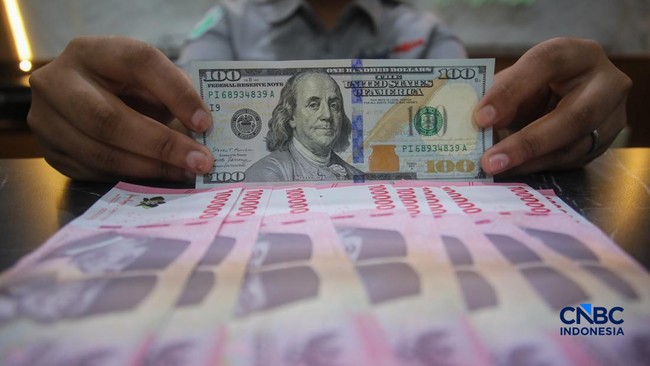
The rupiah exchange rate opened weaker against the US dollar in trading on Wednesday (22/7/2026), amid market anticipation of the Bank Indonesia (BI) interest rate decision. According to Refinitiv, the rupiah opened depreciating 0.22% to Rp17,920 per US dollar. In the previous session, the Garuda currency had closed up 0.28% at Rp17,880 per US dollar. Meanwhile, the US dollar index (DXY), which measures the greenback’s strength against six major world currencies, was seen slightly weaker by 0.02% at 101.161 at 09.00 WIB. The DXY had previously closed up 0.22% in trading on Tuesday (21/7/2026). The rupiah’s movement today is still overshadowed by developments in the Middle East conflict and the BI interest rate decision to be announced this afternoon. Externally, the US dollar strengthened in Tuesday’s trading, recording gains for four consecutive days. The escalation of attacks in the Middle East has again lifted oil prices and raised concerns that inflationary pressures will persist longer. Two tankers carrying Saudi Arabian crude oil to Asia were reported to have turned around in the Red Sea following threats from the Iran-backed Houthi group in Yemen. The widening conflict is beginning to disrupt shipping lanes at two crucial points for global energy trade. The US military also stated it had completed its latest strikes on Iran on Monday, marking attacks for ten consecutive nights. US crude oil prices rose 2.09% to US$84.97 per barrel, while Brent strengthened 1.88% to US$90.90 per barrel. Brent even briefly touched US$91.99 per barrel, its highest position since 11 June 2026. Oil prices had previously fallen in early May amid optimism over a peace deal between the US and Iran. Lower US inflation data had also dampened expectations of an interest rate hike by the US central bank (The Federal Reserve) at its meeting next week. However, oil prices have turned back up in recent days after tensions in the Middle East increased. Several Fed officials, including Fed Chair Kevin Warsh, also reiterated the risk of inflationary pressures. Domestically, BI will announce the results of its July Board of Governors Meeting this afternoon. The meeting took place over two days on Tuesday-Wednesday (21-22 July 2026). Based on a CNBC Indonesia poll of 14 institutions and agencies, the majority of respondents expect BI to raise its benchmark interest rate again. Eight respondents project the BI Rate will increase by 25 basis points (bps) from 5.75% to 6.00%. Meanwhile, six other respondents expect the interest rate to be held at 5.75%. If the majority projection materialises, this month’s hike would be BI’s fourth tightening throughout 2026. Previously, the central bank had cumulatively raised interest rates by 100 bps since May to reach 5.75% in June. Pressure on the rupiah is one of the main reasons the majority of economists expect BI to raise interest rates again. CIMB Niaga economist Mika Martumpal said the BI Rate is expected to rise 25 bps to 6.00% to ensure rupiah exchange rate stability amid reheating geopolitical risks in the Middle East. Valbury Asia Futures Chief Economist Fikri C. Permana also sees the need for a rate hike. According to him, besides rupiah volatility, BI also needs to anticipate the possibility of further global monetary policy tightening.