
Rupiah Weakens, President Instructs 7 Strategies to BI Governor
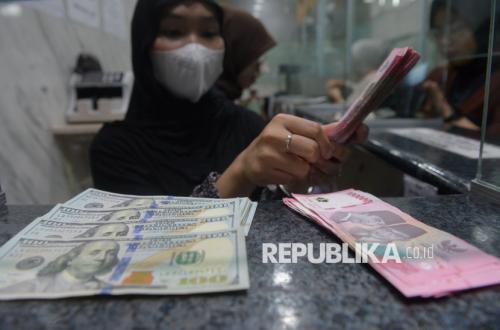
JAKARTA – Bank Indonesia Governor Perry Warjiyo, along with members of the Financial System Stability Committee (KSSK), met with Indonesian President Prabowo Subianto at the State Palace on Tuesday evening (5/5/2026) to discuss economic data, including the depreciation of the rupiah’s exchange rate. Perry revealed that Prabowo provided directives for various steps to stabilise the rupiah’s value.
“We reported to the President, and he approved it, then provided reinforcement for seven important steps that BI will take to strengthen the rupiah and ensure its stability going forward,” Perry stated, quoted from the official YouTube channel of the State Secretariat on Tuesday (5/5/2026).
First, BI will continue interventions, both in the domestic market through the spot market and domestic non-deliverable forward (DNDF), as well as in the offshore market through non-deliverable forward (NDF). These interventions will be conducted, among others, in Hong Kong, Singapore, London, and New York.
“Our foreign exchange reserves are more than sufficient to carry out the stabilisation of the rupiah’s exchange rate,” he said.
Indonesia’s foreign exchange reserves stood at USD 148.2 billion at the end of March 2026, down from USD 151.9 billion at the end of February 2026. However, BI assesses that the amount remains high.
Second, using Bank Indonesia Rupiah Securities (SRBI) instruments to attract foreign funds inflow (capital inflow), as an effort to offset capital outflow from Government Securities (SBN), bonds, and stocks.
“Currently, there is outflow from SBN, and although stocks have seen inflow in recent weeks, year-to-date it is still outflow. Therefore, we agreed that for now, SRBI needs inflow to cover the outflow from SBN and stocks. This is to strengthen the rupiah’s exchange rate,” he explained.
Third, BI will continue to purchase SBN from the secondary market. This is a step that BI has been taking since the beginning of the year, as a result of coordination between fiscal and monetary authorities. According to Perry, year-to-date up to now, BI has purchased SBN from the secondary market amounting to Rp 123.1 trillion.
“Fourth, we, along with the Minister of Finance (Purbaya Yudhi Sadewa), are maintaining liquidity in the banking sector and market more than adequately, as indicated by the double-digit growth in primary money,” he said.