
Rupiah Weakens, Parliament Questions Effectiveness of Bank Indonesia Interventions
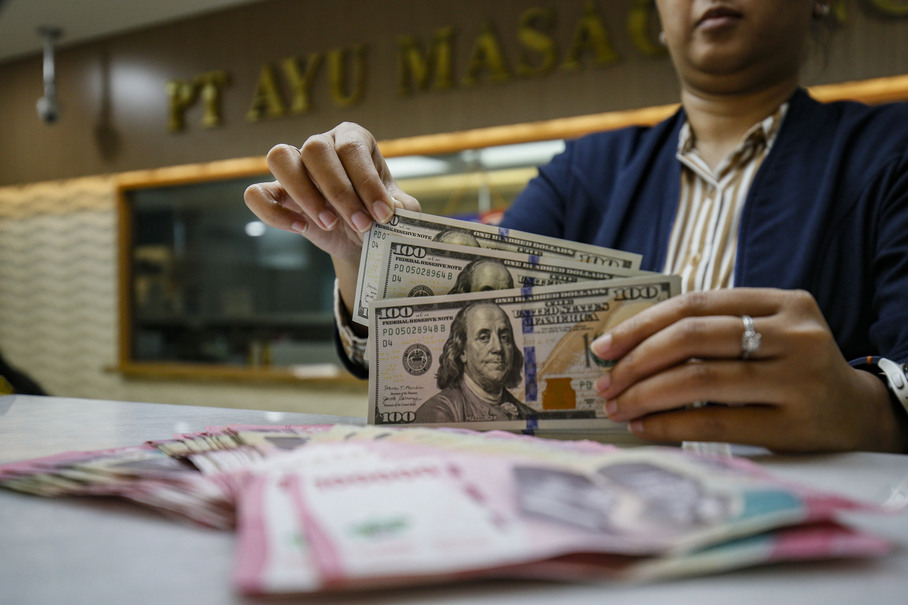
The rupiah exchange rate has come under renewed pressure, breaching the range of Rp17,600 per US dollar. This condition has drawn scrutiny from Parliament, which is questioning the effectiveness of various stabilisation measures implemented by Bank Indonesia (BI), ranging from market interventions to adjustments in monetary instruments.
Harris Turino, a member of Commission XI of the House of Representatives (DPR RI) from the PDI Perjuangan faction, noted that although BI has deployed various instruments, the rupiah’s weakness persists. He mentioned that several steps have been taken, including large-scale interventions in the foreign exchange market and significant purchases of government securities.
“All the instruments available to BI have been utilised. However, why does the rupiah continue to experience depreciation?” Harris stated during a working meeting with the Governor of Bank Indonesia on Monday.
He explained that these interventions are reflected in the decline of foreign exchange reserves from approximately US$156 billion to US_146 billion by the end of April 2026, the increase in the Bank Indonesia Rupiah Securities (SRBI) interest rate to 6.41%, and the purchase of Government Securities (SBN) reaching Rp332 trillion in 2025, with an additional Rp133 trillion. BI has also tightened dollar purchase transactions from US$50,000 to US$25,000.
Despite these efforts, he assessed that both external and internal pressures continue to burden the rupiah. While acknowledging significant global pressures, Harris noted that domestic issues cannot be ignored, such as the current account deficit, capital outflows, and weakening investor confidence in the Indonesian economy.
He emphasised that maintaining rupiah stability remains BI’s responsibility, even though the central bank does not adopt a direct exchange rate targeting policy. He also noted that while the current situation differs from the 1998 crisis, the pressure on the rupiah warrants caution, suggesting that foreign capital movement patterns indicate an issue of market confidence.
Furthermore, Charles Meikyansah, a member of Commission XI from the NasDem faction, expressed appreciation for BI’s performance in maintaining economic stability amidst global pressures, citing controlled inflation and economic growth around 5%. However, he questioned the stability indicators used by BI, noting that while BI claims stability is maintained, the factual weakness of the rupiah beyond the Rp17,000 level contradicts this claim.
Macroeconomic and financial observer from the Institute for Development of Economics and Finance (Indef), Abdul Manap Pulungan, warned that the weakening rupiah could lead to losses for businesses. Meanwhile, the national ceramics industry is facing heavy pressure due to the combination of gas supply disruptions and the weakening exchange rate, which is eroding the sector’s competitiveness.