
Rupiah Weakens, Here's the Impact on Fuel and Airline Ticket Prices
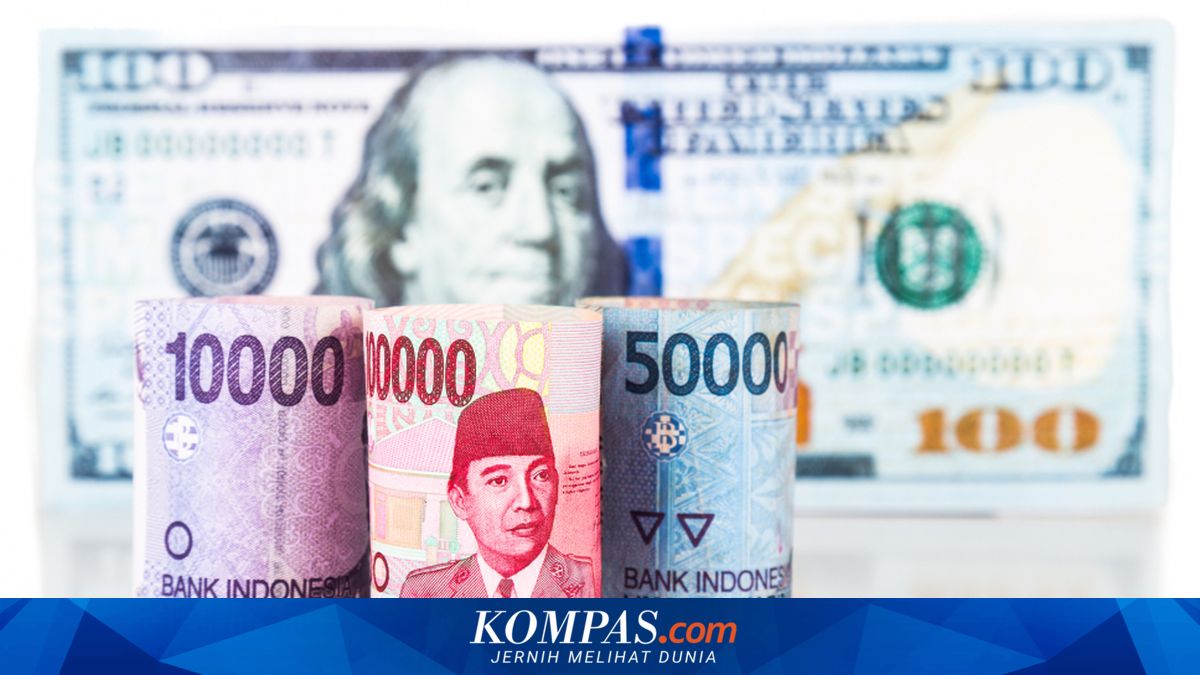
JAKARTA, KOMPAS.com - The rupiah’s exchange rate continues to weaken, breaching the Rp17,600 per US dollar level on Friday (15/5/2026), beginning to trigger chain effects across various sectors.
Two of the most directly affecting the public are fuel (BBM) prices and airline ticket prices.
The rupiah’s weakening increases energy import costs because transactions for purchasing crude oil or BBM are conducted in US dollars.
This condition makes the energy and air transport sectors the most sensitive to exchange rate fluctuations.
Pressure on BBM prices does not only come from rising global oil prices but also from the rupiah’s depreciation.
Economist from the Center of Reform on Economics (CORE), Yusuf Rendy Manilet, stated that the surge in global oil prices directly enlarges the energy subsidy burden. At the same time, the rupiah’s weakening raises BBM import costs in rupiah terms.
According to him, this situation further limits the government’s fiscal space, particularly if global oil prices continue to rise and the rupiah weakens further.
Indonesia still relies heavily on energy imports.
Indonesia’s oil needs reach around 2.1 million barrels per day (bpd), while domestic production is insufficient, resulting in imports of about 1.5 million bpd.
“This means the government must prepare a much larger budget for energy imports, especially with distribution constraints due to tensions in the Strait of Hormuz,” said Ibrahim to Kontan.co.id.
The deepening exchange rate pressure is increasingly concerning the government. The Ministry of Energy and Mineral Resources (ESDM) acknowledges it is still assessing the impact of the rupiah’s weakening on energy subsidy schemes.
Director General of Oil and Gas (Migas) at the Ministry of ESDM, Laode Sulaeman, said the rupiah’s weakening is now a concern for the economic ministers in the Red and White Cabinet.
Nevertheless, the government has not decided on any adjustment to subsidised BBM prices.
“There’s no other information yet besides what’s current. So we’ll see further developments later,” Laode said.
Previously, the government assured that subsidised BBM prices would not rise until the end of 2026, despite global energy price fluctuations due to geopolitical conflicts.
“Insya Allah, our stocks are above the minimum standard, whether diesel, petrol, or LPG. Insyaallah safe, and once again I say that we have agreed on the direction from the President that subsidised BBM prices will not be raised until the end of the year,” said Bahlil.