
Rupiah Weakens, Experts Warn of Rising Prices for Imported Goods and Non-Subsidised Fuel
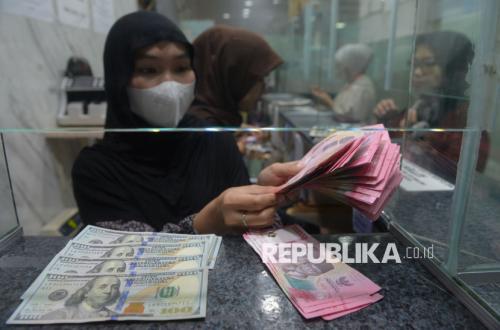
REPUBLIKA.CO.ID, JAKARTA – The exchange rate of the Rupiah against the US dollar continues to weaken, breaking through the psychological level of Rp17,500 per US dollar in mid-May 2026. This currency depreciation is expected to have a direct impact on the prices of imported goods and non-subsidised fuel.
Economist and business expert from Hasanuddin University, Hamid Paddu, said that the Rupiah’s depreciation greatly affects the cost of importing raw materials for energy. This condition occurs because Indonesia has been a net importer of oil since 2004.
National oil consumption needs reach around 1.6 million barrels per day, while domestic production is only around 650 thousand barrels per day. This means that more than half of the national energy needs still depend on imports.
“Well, imports are of course purchased with foreign currency, in this case the US dollar. That’s why the exchange rate greatly affects fuel prices,” said Hamid in a statement, Saturday (16/5/2026).
Hamid assessed that the pressure on the energy sector is currently occurring in layers because the exchange rate and world oil prices are both exceeding the assumptions in the 2026 State Budget (APBN). The government has set an exchange rate assumption of Rp16,500 per US dollar, while the current world oil price is around 105 US dollars per barrel, far above the APBN assumption of 70 US dollars per barrel.
“This means that for imports, the energy burden has increased twice. First, it increased due to world oil prices, and then due to the exchange rate,” said Hamid.
According to Hamid, this condition opens the opportunity for an increase in the price of non-subsidised fuel by business entities, including Pertamina, because the selling price follows market mechanisms.
“It’s automatic, because this is the market. So the government does not interfere with the selling price of non-subsidised fuel. For the past five years, private companies and Pertamina have always adjusted the price of non-subsidised fuel to market prices. So when the raw materials increase, they have to raise fuel prices,” said Hamid.
He assessed that delaying price adjustments actually risks putting pressure on the financial condition of energy companies. The burden of imports with a high dollar exchange rate makes the cost of procuring energy increase significantly.
“Once you buy new supplies at new prices, new exchange rates, the cost is already very high,” said Hamid.
On the other hand, Hamid assessed that public energy literacy is currently improving. The public is considered to understand that the price of non-subsidised fuel moves according to market mechanisms so that price changes no longer trigger major unrest.
“That’s why there have been no major upheavals in the past few years when the price of non-subsidised fuel changes. People already know that non-subsidised fuel is in accordance with market mechanisms. If the price of raw materials increases, the fuel price will also increase,” said Hamid.