
Rupiah Weakens, Economist Urges Public to Strengthen Personal Financial Resilience
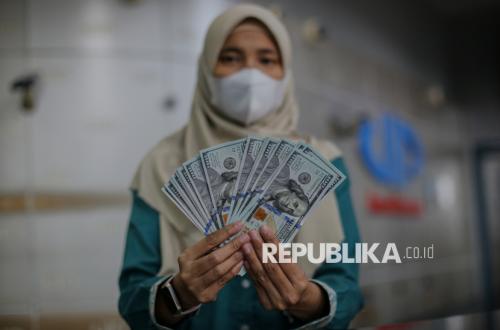
Permata Bank Chief Economist Josua Pardede stated that the weakening rupiah must be met with strengthened personal financial resilience, not extreme asset transfers. “The weakening rupiah needs to be responded to by strengthening personal financial resilience, not by extreme asset shifts,” he said in Jakarta on Tuesday (23/6/2026).
According to him, the rupiah’s depreciation directly impacts imported goods such as gadgets, electronic items, vehicles and spare parts, certain medicines, imported foodstuffs like wheat, soybeans, sugar, and milk, as well as household consumer goods still dependent on foreign supply. This is because importers must spend more rupiah to purchase the same goods in US dollars.
In this case, he noted, the impact of the rupiah’s weakening does not always appear on the same day because businesses usually still have old inventory, price contracts, or partially hold back price increases so consumers do not immediately pull back. However, if the depreciation persists, the rise in import costs is considered almost certain to be passed on to selling prices gradually.
He explained that the rupiah’s depreciation also indirectly affects daily consumer goods through raw materials, energy, transport costs, fertiliser, animal feed, packaging, and production costs. “So, goods that appear local can also increase in price if their raw materials still contain imported components. For example, processed foods based on wheat, dairy products, certain meats, packaged foods, cosmetics, medicines, to household necessities,” he revealed.
In the context of June 2026, this risk is deemed increasingly relevant as Bank Indonesia (BI) recorded May 2026 inflation rising to 3.08 percent, with pressure from volatile food prices at 6.24 percent and administered prices at 2.07 percent, partly due to adjustments in LPG, non-subsidised fuel oil (BBM), and avtur in line with rising global energy prices.
Nevertheless, he continued, not all consumer goods will rise by the same magnitude. Goods with a high import portion and limited competition usually rise faster. Meanwhile, goods largely produced domestically with sufficient supply tend to be more restrained. For basic necessities, Josua said the rupiah’s weakening is not the sole price determinant because harvest factors, distribution, weather, government stocks, and price policies are also highly decisive.
Therefore, he argued that the greatest pressure for households likely comes not from a single specific item, but from the accumulation of small indirect increases across many spending categories such as processed foods, transport, and electricity through business costs, instalments, and durable goods. From a purchasing power standpoint, the risk is that the public becomes more selective, as BI’s May 2026 Consumer Survey still shows strong consumer confidence with a Consumer Confidence Index (IKK) of 120.9, but down from 123.0 in April, while the assessment of current economic conditions also fell to 112.2 from 116.5. May 2026 retail sales are also forecast to remain contracted by 3.2 percent year-on-year, although improving month-on-month.
“This means consumption has not collapsed, but households are starting to be more cautious, especially for secondary goods and durable goods,” Josua said. He further explained that the increase in the BI benchmark interest rate to 5.75 percent must also be seen as a response to curb the rupiah’s weakening and prevent imported inflation from widening. This policy is considered appropriate from a stability perspective, but there are consequences for funding and credit costs. Banking interest rate assessment data shows rupiah lending rates are still slightly declining, but new lending rates are starting to rise due to risk adjustments and bank funding conditions. This means the rupiah’s depreciation and interest rate hikes could pressure households from two directions simultaneously: imported goods prices rise and new financing costs become more expensive.
In response to the rupiah’s weakening, Josua assessed that the public does not need to panic and shift funds into gold, property, or assets considered safe, but should review their asset composition according to goals, time horizon, cash needs, and risk tolerance.
Source: jawawa.id (https://jawawa.id/newsitem/rupiah-weakens-economist-urges-public-to-strengthen-personal-financial-resilience-1782201259)
Originally published by Republika (https://ekonomi.republika.co.id/berita/th2pfc370/rupiah-melemah-ekonom-imbau-masyarakat-perkuat-ketahanan-keuangan-pribadi), translated from Indonesian